
Mountain ash rust
Gymnosporangium cornutum
Description
Symptoms
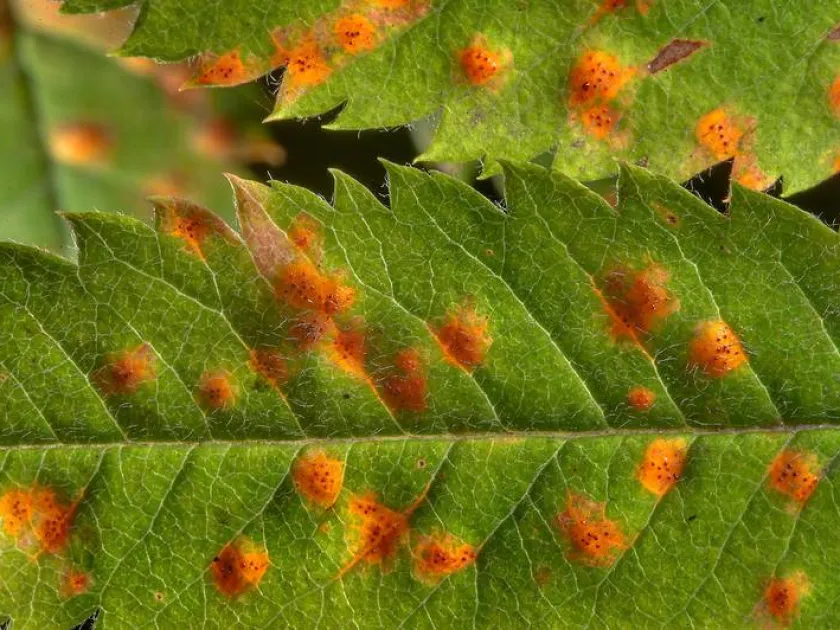
Initial symptoms are characterized by small, yellow to orange spots appearing on the upper surface of the leaves during the early summer months.
On the undersides of these spots, characteristic cone-shaped structures called aecia develop, releasing masses of dusty orange-colored spores.
As the infection progresses, affected leaves may become chlorotic, twisted, or distorted, leading to premature leaf drop during the growing season.
In cases of severe infestation, the disease can spread to petioles and young shoots, causing stunting and sometimes tissue necrosis.
Fruits infected by the fungus display similar rust-colored lesions, rendering them unsightly and unsuitable for harvest or consumption.
Pathogen
Mountain ash rust is caused by the heteroecious basidiomycete fungus Gymnosporangium cornutum, which requires two distinct hosts to complete its complex life cycle.
The fungus produces aeciospores on the mountain ash (Sorbus), while its teliospores overwinter on various species of juniper, which serves as the alternate host.
During the spring, basidiospores are wind-dispersed from infected juniper tissues to the leaves and fruits of the mountain ash trees.
Once the host tissue is penetrated, the fungal mycelium begins to develop, eventually forming reproductive structures known as aecia.
Understanding the biology of this pathogen is crucial for effective management, particularly the link between nearby juniper plants and rust outbreaks on Sorbus.
Conditions for development
The development and spread of Gymnosporangium cornutum are highly dependent on cool, wet weather conditions during the spring season.
High relative humidity and prolonged periods of leaf wetness are necessary for the spores to germinate and successfully infect host tissues.
Poor air circulation within the tree canopy creates a localized humid microclimate, which significantly promotes the establishment and growth of the fungus.
Proximity to infected juniper bushes is the primary risk factor, as they provide a constant source of inoculum for the mountain ash trees.
Temperatures ranging from 15 to 22 degrees Celsius are considered optimal for the pathogen to cause rapid infection and spread across the tree.
Why it matters
The primary harm caused by mountain ash rust is the loss of photosynthetic leaf area, which weakens the tree's overall vigor and long-term health.
Premature defoliation reduces the tree's ability to store necessary carbohydrates, making it more susceptible to winter injury and environmental stress.
The disease significantly diminishes the aesthetic appeal of the trees, which is a major concern in landscaping and ornamental garden settings.
Heavy infection on fruit-bearing varieties leads to direct crop loss and reduced fruit quality, negatively impacting production in nurseries.
Chronic annual infection can lead to branch dieback and eventually tree decline, leaving the specimen vulnerable to secondary pathogens and pests.
Protection
The most effective long-term strategy is the spatial separation of mountain ash trees from juniper plants, which breaks the fungus's life cycle.
Sanitation practices, such as the removal and destruction of fallen leaves and the pruning of heavily infected branches, help reduce inoculum levels.
Fungicide applications, particularly those containing copper or systemic active ingredients, can protect foliage if applied during the early spring.
Improving canopy airflow through strategic pruning helps to minimize leaf wetness duration and creates a less hospitable environment for the fungus.
- Planting resistant or less susceptible cultivars where possible.
- Balanced fertilization to support tree vigor and stress resistance.
- Monitoring the garden for nearby juniper infections to time preventative sprays.
Discussion
No discussions yet — be the first.