
Juniper and Hawthorn Rust
Gymnosporangium confusum
Description
Symptoms
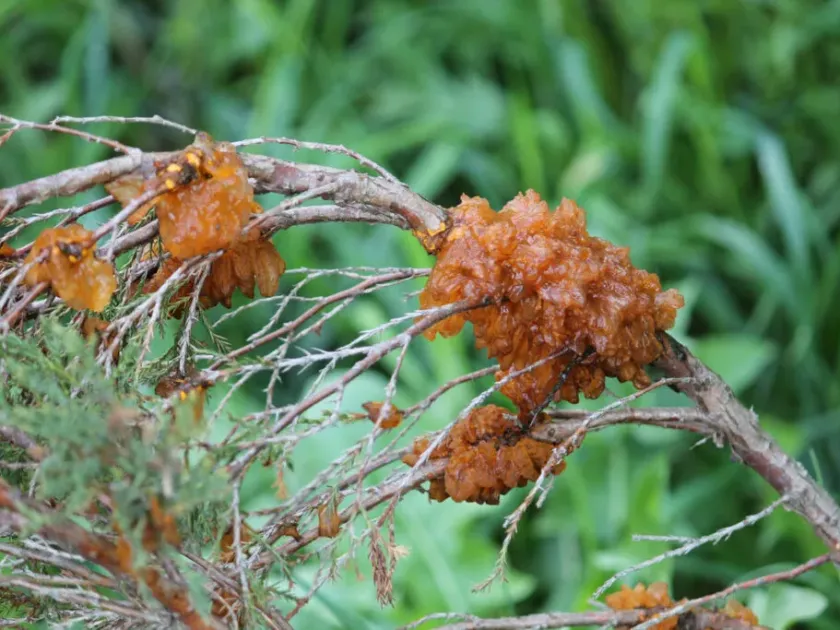
On juniper, the disease manifests as swellings and galls on branches and trunks. During damp spring weather, these areas rupture to reveal gelatinous, orange-brown growths.
On hawthorn leaves and fruit, the infection appears as bright yellow or orange spots. Over time, small black dots, known as pycnidia, form in the center of these lesions.
By mid-summer, cone-shaped structures called aecia emerge on the underside of infected leaves. These structures release masses of dusty, rusty-brown spores that are easily carried by the wind.
Severe infections lead to premature yellowing and dropping of foliage in fruit trees. Infected juniper branches often exhibit distorted growth and may wither and die over several seasons.
Visual inspection is most effective during the active growing season when symptoms are prominent. Gardeners should monitor both coniferous and deciduous plants to detect the disease early.
Pathogen
The causative agent of the disease is the heteroecious basidial fungus Gymnosporangium confusum. This pathogen requires two distinct host species to complete its complex biological life cycle.
In the spring, the fungus develops on juniper, producing aecia. These spores are then wind-dispersed to nearby pomaceous fruit trees, which serve as the second host for the fungus.
On deciduous hosts, such as hawthorn, the fungus completes its reproductive cycle. It develops further spore stages that can eventually re-infect juniper plants, sustaining the infection in the area.
The mycelium of the fungus can persist within the tissues of juniper for many years. This perennial nature of the infection makes junipers a constant reservoir for the disease in landscape settings.
The spores of this fungus are highly volatile and can travel long distances via air currents. This makes containment difficult, especially in residential areas with a high density of host plants.
Conditions for development
The development of the disease is strictly dependent on high humidity levels. Spores require moisture from heavy rain or prolonged fog in the spring to germinate successfully.
Optimal temperatures for spore dispersal and infection range between 15 and 20 degrees Celsius. In hot and dry weather, the activity of the fungus is significantly hindered.
Proximity between juniper and susceptible fruit trees is the primary factor for disease outbreaks. The closer these host plants are grown together, the higher the risk of severe infection.
Poor ventilation within the plant canopy and dense planting schemes create microclimates that trap moisture. Dew on needles and leaves facilitates the penetration of the fungus.
Repeated waves of infection can occur during the summer if there are frequent rainy spells. These environmental conditions are critical to the success of the pathogen's life cycle.
Why it matters
The primary damage caused by this fungus is the suppression of physiological processes in host plants. Impaired photosynthesis weakens the plant and leaves it vulnerable to other stressors.
Hawthorn and other fruit trees experience a significant drop in crop yield due to fruit damage and early leaf loss. The quality of any remaining fruit is often poor and deformed.
Juniper plants lose their aesthetic value and landscape appeal when infected. Chronic infestation leads to branch dieback and, in extreme cases, the total death of the tree.
The disease causes physical deformation of shoots and branches. This is particularly problematic for nurseries and young trees, which may be permanently stunted by the infection.
Without intervention, the rust will spread rapidly throughout the garden. The cumulative damage over several years can result in the loss of valuable ornamental plantings.
Protection
The most effective strategy is spatial isolation. It is highly recommended to plant junipers at least 300 to 500 meters away from susceptible fruit trees to break the life cycle.
Sanitation through pruning is essential for disease management. Gardeners must identify, remove, and destroy all infected juniper branches containing galls to reduce the spore load.
Chemical protection includes the use of copper-based fungicides or systemic chemical treatments. Applications should be timed to coincide with the budding and flowering stages.
- Regular removal of symptomatic plant parts during the season.
- Preventive spraying before the onset of spring rains.
- Application of phosphorus and potassium fertilizers to enhance the plant's natural resistance.
Collecting and disposing of fallen leaves in autumn is a critical step in reducing the inoculum for the following year. Composting should be done away from the garden to prevent spore spread.
Discussion
No discussions yet — be the first.