
Atlantic juniper rust
Gymnosporangium atlanticum
Description
Symptoms
The most characteristic symptom is the development of spindle-shaped galls on the branches of the juniper. These swellings cause severe distortion of the stems and are often the first sign of an ongoing infection.
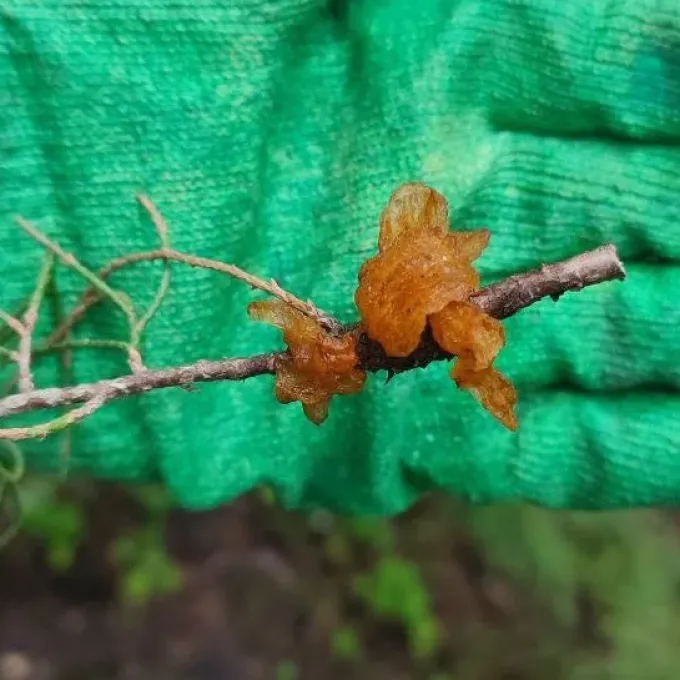
In spring, particularly after rainy spells, bright orange or brown tongue-like projections emerge from these galls. These are gelatinous spore-producing masses that signal the peak of the disease's active phase.
As the disease progresses, the bark on the affected branches cracks and begins to peel. This disruption in vascular flow causes the needles on the infested branches to turn yellow, dry out, and eventually shed prematurely.
The affected branches become brittle and lose their structural integrity. Under the weight of snow or during strong winds, these weakened limbs frequently break, leading to a ragged and unhealthy appearance of the shrub.
If the infection reaches the main trunk, the entire plant may be at risk of decline. Regular visual inspections are necessary to detect these galls before they release the mass of spores that can infect other parts of the garden.
Pathogen
The causal agent of this disease is the fungus Gymnosporangium atlanticum, which belongs to the Basidiomycota phylum. It is a highly specialized pathogen that requires an alternate host to complete its complex biological life cycle.
Juniper species are the primary host where the fungus spends the dormant stage and develops its perennial mycelium. The life cycle involves distinct spore stages that facilitate the spread of the disease between plants within the garden or forest ecosystem.
The mycelium of the pathogen penetrates deep into the tissues of the juniper, primarily targeting the bark and stems. This systemic colonization allows the fungus to persist in the host plant for several years without killing it immediately.
During the spring, the fungus develops specialized fruiting bodies that emerge through the bark of the host plant. These structures are responsible for producing vast quantities of basidiospores that are disseminated by wind and rain.
The resilience of the fungus is high, as it can survive within the plant tissues even during unfavorable climatic conditions. Once moisture levels rise, the pathogen resumes its activity, producing new masses of spores.
Conditions for development
The development of Atlantic juniper rust is highly dependent on humidity levels. Prolonged wet weather, high humidity, and frequent morning fogs in spring are the primary drivers for spore germination and infection.
Warm temperatures, generally between 15°C and 20°C, accelerate the production of basidiospores. The presence of water film on the needles for an extended duration is essential for the fungal spores to successfully colonize new tissues.
Poor air circulation, often caused by overly dense planting or lack of pruning, creates a stagnant microclimate that retains moisture. This humidity is the key factor in the rapid spread of the rust fungus within a single juniper bush.
The proximity of susceptible alternate hosts, such as various species of Rosaceae, provides a perfect environment for the completion of the fungus's life cycle. This proximity leads to continuous re-infection cycles.
Dry and sunny conditions can slow down the disease progression, but they do not eliminate the fungal mycelium hidden inside the branches. The pathogen remains dormant, waiting for the next humid window to erupt again.
Why it matters
The primary concern is the significant loss of ornamental value, which makes the juniper undesirable for landscaping and residential gardens. The unsightly galls and drying branches ruin the plant's aesthetic shape.
The disease depletes the plant's resources, as the fungus continuously siphons nutrients from the host. This chronic stress makes the juniper more susceptible to secondary attacks by pests and other diseases.
In ornamental nurseries, Atlantic juniper rust can cause substantial financial losses. Infected batches are often rejected for sale, and strict quarantine measures may be necessary to prevent spreading the pathogen to other locations.
Long-term infection leads to the death of major branches, which significantly reduces the plant's resistance to environmental stress, including winter frost and summer drought. The weakening of the root system and vascular structure can ultimately lead to death.
Beyond the direct harm to the juniper, the constant presence of the fungus creates a persistent source of inoculum that can jeopardize neighboring plantings of fruit trees, leading to broader agricultural damage.
Protection
The most effective strategy is the physical separation of juniper species from members of the Rosaceae family. A distance of at least 300-500 meters is recommended to significantly reduce the risk of cross-infection.
Sanitary pruning is essential; all visible galls and affected branches must be removed promptly. It is crucial to cut into the healthy tissue and safely dispose of the debris by burning it to prevent spore dispersion.
Chemical control involving systemic fungicides, especially copper-based or triazole-based products, should be applied during the spring growth phase. These applications help prevent the colonization of new shoots by airborne spores.
Maintaining high plant vigor through proper fertilization and watering improves the natural resistance of the juniper. A healthy plant is often better equipped to localize the infection and recover after sanitary measures.
- Regular pruning to improve air circulation within the crown.
- Sanitizing pruning tools with alcohol or bleach after each cut.
- Monitoring the garden during the spring months for early signs.
- Removing fallen debris and weeds from the base of the bushes.
Discussion
No discussions yet — be the first.