
Pear rust
Gymnosporangium asiaticum
Description
Symptoms
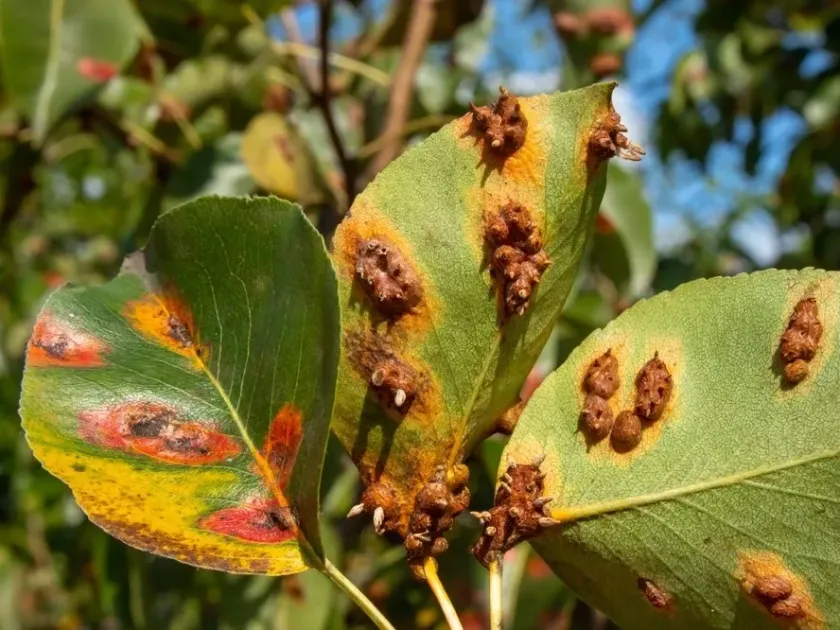
Symptoms on pear trees typically appear in early summer. The initial signs are small, circular, yellow-to-orange spots on the upper side of the leaves, which gradually enlarge over time.
Black spots, known as spermogonia, eventually develop within these orange lesions. On the underside of the leaves, orange, cone-shaped structures called aecia protrude from the leaf surface.
Severe infection causes premature leaf drop, which significantly weakens the tree's vitality. Young shoots may also become infected, resulting in stunted growth, cracking, and deformation.
Fruit can occasionally be infected, displaying orange, necrotic spots with pustules, rendering the fruit aesthetically unappealing and unsuitable for commercial sale.
On the juniper host, the presence of the disease is marked by branch swelling, bark cracking, and the development of brown, gelatinous spore-producing growths during wet spring weather.
Pathogen
The disease is caused by the rust fungus Gymnosporangium asiaticum. It is a heteroecious pathogen, meaning it requires two different hosts to complete its life cycle: juniper species and pear trees.
The fungus overwinters as mycelium in the tissues of juniper branches. In spring, after rainfall, these swell into gelatinous masses that release teliospores, which are then dispersed by wind.
Upon reaching pear leaves, the spores germinate and initiate infection. During the season, the fungus produces aecia on the underside of pear leaves, releasing aeciospores that re-infect the juniper host.
This biological cycle is dependent on the close proximity of the two hosts. Without the presence of juniper, the pathogen cannot survive, as it must alternate between hosts to continue its development.
Understanding this dependence is crucial for effective control, as the juniper serves as the primary reservoir for the infection that plagues the pear orchard year after year.
Conditions for development
The development and spread of pear rust are heavily influenced by environmental factors, primarily humidity and temperature. Moist conditions during spring are optimal for spore germination.
The disease is most prevalent in years with frequent spring rains and moderate temperatures. In dry weather, the release and dispersal of spores are significantly restricted, slowing the infection rate.
Poor air circulation within the orchard and dense canopy structure create microclimates that favor the colonization of leaves by fungal spores. Damp, stagnant air is ideal for pathogen survival.
Proximity is a critical risk factor; spores can travel by wind over several hundred meters. Orchards located near landscapes with abundant juniper are at the highest risk of recurring infections.
Tree vigor plays a role, as stressed or poorly nourished trees are more susceptible to severe infection than those maintained with optimal horticultural practices.
Why it matters
The economic impact of pear rust is substantial, primarily due to the reduction in tree productivity. Early defoliation prevents the tree from storing energy, leading to decreased winter hardiness.
Trees that lose their foliage early are more likely to suffer from cold damage during winter. Additionally, the overall yield can be significantly reduced due to the stress placed on the tree.
Repeated infection over multiple seasons weakens the tree structure, leading to premature branch dieback. This ultimately reduces the lifespan of the tree and increases the cost of maintenance.
Fruit quality is compromised, not only in appearance but often in sugar content and storage capability. This results in significant post-harvest losses and lower market value for the grower.
In nurseries, this disease is particularly devastating, as it can ruin entire batches of saplings, making them unsellable and causing major financial setbacks for the producers.
Protection
The most effective management strategy is spatial isolation. Removing susceptible juniper species within a 500-meter radius of the orchard can effectively break the pathogen's life cycle.
Sanitation is equally important; prune and dispose of infected pear branches and remove galls from nearby junipers to reduce the overall inoculum pressure within the environment.
Fungicide applications are necessary for control in high-risk areas. Both copper-based contact fungicides and systemic options, such as triazoles or strobilurins, are highly effective.
- Apply copper fungicides during early spring before bud break.
- Use systemic fungicides at the green tip and pink bud stages.
- Follow up with post-bloom applications if infection conditions persist.
Maintaining strong tree health through balanced fertilization and proper irrigation helps improve the tree's natural defense mechanisms against fungal attacks.
Discussion
No discussions yet — be the first.