
Serviceberry rust
Gymnosporangium amelanchieris
Description
Symptoms
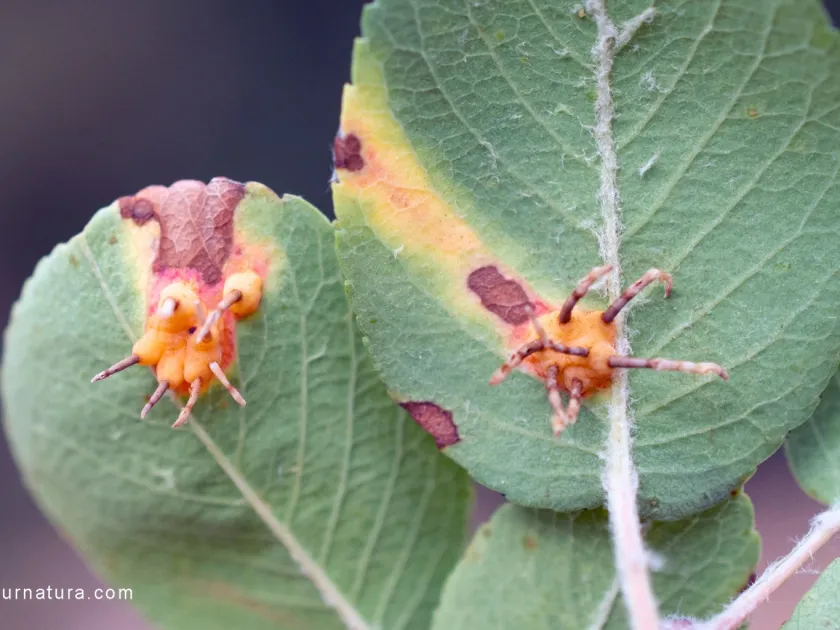
Early symptoms appear in late spring as small, bright yellow or orange spots on the upper surface of the serviceberry leaves.
As the infection progresses, distinct, cone-shaped projections called aecia develop on the undersides of the leaves, releasing dusty, orange-colored spores.
Severe infestations cause premature yellowing of the foliage, leading to extensive leaf drop and a weakened overall tree structure.
Infected shoots and twigs may exhibit abnormal swelling, distortion, or curling, which significantly degrades the aesthetic value of the ornamental shrub.
- Bright orange leaf spots.
- Cone-shaped aecia on the leaf undersides.
- Premature defoliation during the summer.
- Distorted and stunted shoot growth.
Pathogen
The causal agent of this disease is the heteroecious rust fungus Gymnosporangium amelanchieris, which requires two hosts to complete its complex life cycle.
Serviceberry (Amelanchier) serves as the primary host, where the fungus produces aecia and aeciospores during the growing season.
Juniper species act as the alternate host, allowing the fungus to overwinter as teliospores, which germinate in spring to produce basidiospores.
The fungus is an obligate parasite, extracting nutrients directly from the living plant tissue, which causes physiological stress and tissue damage.
Wind dispersal of spores from infected junipers to serviceberry trees is the primary mechanism of infection in residential and nursery settings.
Conditions for development
The proximity of infected juniper trees is the most critical factor, as they act as a persistent reservoir for the fungal spores.
High humidity levels and extended periods of leaf wetness, such as those caused by spring rains or morning fogs, are essential for spore germination.
Temperatures ranging from 15°C to 20°C create an ideal environment for the fungus to penetrate the leaf tissue and establish infection.
Poor site management, including planting in overcrowded areas with limited air circulation, promotes the development of the pathogen.
Plant stress, often resulting from poor soil fertility or environmental neglect, makes the host more susceptible to initial fungal colonization.
Why it matters
Serviceberry rust severely diminishes the ornamental beauty of the shrubs, making them look unattractive and sickly during the growing season.
Early leaf loss inhibits the plant's ability to produce energy, potentially resulting in reduced winter hardiness and increased mortality risk.
Continuous infections weaken the structural integrity of the plant, leading to stunted growth and reduced capacity to produce flowers or fruits.
The disease creates pathways for secondary invaders, such as wood-boring insects or other opportunistic fungal pathogens that exploit the weakened state.
Without intervention, repeated annual cycles of the rust can lead to the slow decline and eventual death of the affected serviceberry specimens.
Protection
Strategic spatial isolation, specifically removing susceptible juniper hosts from the immediate vicinity of the serviceberry, is the most effective long-term solution.
Sanitation practices, such as pruning and disposing of infected twigs and clearing away fallen leaves, help reduce the local spore population.
Chemical control involving copper-based fungicides or systemic triazole applications should be applied during the primary infection windows in spring.
Regular monitoring of the garden is essential to catch the first signs of the rust, allowing for timely treatment before the disease becomes widespread.
Promoting overall plant vigor through balanced fertilization and appropriate watering techniques helps the plant better withstand and recover from rust infections.
Discussion
No discussions yet — be the first.