
Pear rust
Gymnosporangium
Description
Symptoms
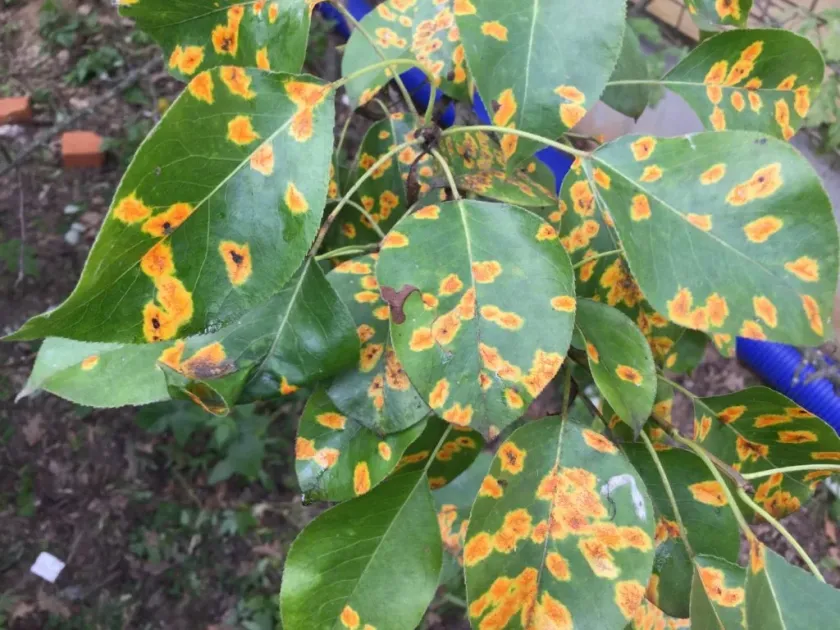
The first visual symptoms of pear rust typically appear in late spring or early summer. Bright yellow-orange, circular spots emerge on the upper surface of the leaves, which gradually darken over time.
Small black dots, known as spermogonia, soon develop within these colored spots. The leaf tissue in these areas often begins to thicken and swell, causing localized malformation of the foliage.
On the underside of the leaves, cone-shaped projections called aecia appear directly beneath the initial infection spots. These structures produce spores that are later dispersed by the wind to complete the cycle.
In severe cases, the infection spreads to petioles, stems, and young shoots. This leads to twisting, stunted growth, and premature defoliation of the tree during the mid-summer period.
Fruits can also be infected, resulting in distorted shapes, cracked skin, and poor quality. Infected pears often become hard, unpalatable, and susceptible to secondary rotting, making them unfit for market.
Pathogen
Pear rust is caused by the basidiomycete fungus Gymnosporangium sabinae. It is a heteroecious parasite, meaning it requires two different host plants to complete its complex biological life cycle.
The primary alternative host for this pathogen is the juniper. The fungus overwinters as mycelium within the branches and stems of infected juniper trees, where it remains dormant until the spring season.
In spring, the fungus develops orange, gelatinous telial horns on the juniper. When these horns are moistened by rain, they release basidiospores that are carried by the wind to nearby pear trees.
Upon landing on young pear leaves, the spores germinate and penetrate the tissue, establishing new infection sites. This process is highly dependent on humidity and weather conditions during the blossoming period.
The infection cycle continues year after year if both hosts are present in the same locality. Without controlling the pathogen on the juniper host, eliminating the disease from the orchard is extremely challenging.
Conditions for development
The development of pear rust is strongly correlated with high humidity and frequent spring rainfall. These conditions are necessary for the release of spores from juniper and their subsequent germination on pear leaves.
The ideal temperature range for rapid fungal development is between 15 and 20 degrees Celsius. Within this thermal window, the rate of spore germination and tissue colonization reaches its peak.
Spores are capable of traveling up to several kilometers via wind currents. Consequently, a pear orchard can become infected even if there are no junipers on the property itself, provided they are in the vicinity.
Lack of proper pruning and dense canopy structure contribute to poor air circulation. This creates a moist microclimate within the tree that provides perfect conditions for fungal spores to thrive and multiply.
Dry weather during the spring can inhibit the initial infection process. However, the fungus can persist within the plant tissues, waiting for favorable conditions to manifest as active symptoms.
Why it matters
The most significant impact of pear rust is the reduction of the leaf surface area capable of photosynthesis. As a result, the tree loses the ability to produce enough energy for healthy growth and fruit development.
Early leaf drop severely weakens the tree, reducing its ability to store carbohydrates for the winter. This significantly lowers the cold hardiness of the tree, making it vulnerable to winter frost damage.
Continuous infection leads to branch dieback, general tree stress, and a substantial decrease in overall orchard productivity. If left unmanaged, the tree may eventually decline and die after several years.
Financial losses for commercial growers are substantial due to the degradation of fruit quality. Distorted and diseased fruit cannot be sold as fresh produce and often do not meet quality standards for processing.
In nursery settings, pear rust can destroy entire batches of young trees. The constant presence of inoculum necessitates rigorous chemical management and sanitation practices to keep the nursery stock healthy.
Protection
The most effective strategy for pear rust control is spatial separation. Growers should avoid planting susceptible juniper species within a 500-meter radius of the pear orchard to break the infection cycle.
Sanitary pruning is essential for disease management. Removing and destroying infected branches from both pear and juniper trees reduces the amount of overwintering inoculum in the local environment.
Fungicide applications are crucial during the critical stages of tree development. Targeted treatments before and after bloom, as well as during fruit set, provide the best protection against infection.
Systemic fungicides belonging to the triazole and strobilurin classes have proven highly effective. It is recommended to rotate different modes of action to prevent the fungus from developing resistance.
- Dormant season: Remove infected plant debris and sanitize the area.
- Vegetative season: Use preventive fungicide sprays based on weather monitoring.
- Orchard health: Ensure balanced nutrition and proper spacing to improve tree vigor.
Discussion
No discussions yet — be the first.