
Pear rust
Gymnosporangiaceae
Description
Symptoms
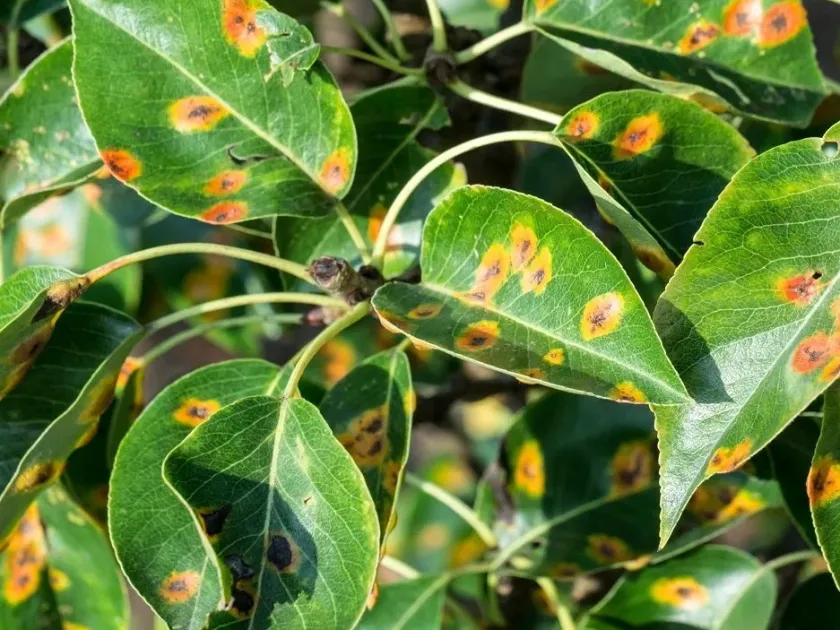
Initial symptoms appear in spring as bright orange or reddish circular spots on the upper side of the pear leaves, often surrounded by a dark margin.
Over time, small black dots known as spermogonia develop within these spots, which gradually increase in both number and surface area.
By mid-summer, cone-shaped structures called aecia develop on the underside of the leaves, where the next generation of spores is produced.
Severe infections can spread to leaf stalks, young shoots, and fruits, causing significant deformation and premature fruit drop.
As autumn approaches, the infected areas dry out, leading to leaf necrosis and potentially premature defoliation of the entire tree.
Pathogen
The causal agent of pear rust is the basidial fungus Gymnosporangium sabinae. It is an obligate parasite that requires two different hosts to complete its life cycle: pear and juniper.
The fungus is heteroecious, meaning it spends part of its cycle on juniper, where it overwinters as mycelium, producing orange gelatinous telia in spring.
During the spring, wind-borne aeciospores are carried from infected juniper trees to young pear leaves and fruit, initiating primary infection.
Following infection, the fungus develops mycelium within the pear leaf tissue, eventually forming aecia on the underside of the leaves for further dispersal.
Understanding that the fungus cannot survive without a juniper host allows for effective orchard management through spatial isolation.
Conditions for development
Disease development is highly dependent on warm and humid weather conditions during the spring, particularly during the flowering and fruit set phase.
The rapid spread of spores is facilitated by gusty winds, which transport them from infected juniper bushes to nearby pear orchards.
High relative humidity following rainfall or heavy morning dew provides an ideal environment for spore germination on the leaf surface.
Neglecting orchard sanitation and allowing the close proximity of ornamental juniper species significantly increases the risk of an outbreak.
Trees that are already stressed due to poor nutrition or inadequate irrigation are significantly more susceptible to successful pathogen colonization.
Why it matters
The primary damage caused by pear rust is a drastic reduction in photosynthetic capacity, which weakens the overall health of the tree.
Premature leaf loss prevents the tree from accumulating sufficient energy reserves for bud development, reducing potential yield for the following year.
Infection of young shoots causes cracking, structural deformation, and dieback, which limits the development of the tree canopy over time.
Affected fruits often become deformed and stunted, losing their market value and suitability for storage or processing.
Repeated severe infections over several consecutive seasons can lead to tree death due to chronic exhaustion and increased susceptibility to cold damage.
Protection
The most effective long-term strategy is to remove juniper bushes from the vicinity of the orchard to break the fungus's life cycle.
Preventative spring fungicide applications should be performed before bud break, using copper-based or other recommended protective treatments.
During the growing season, systemic fungicides from the triazole group are highly effective, provided pre-harvest intervals are strictly observed.
Pruning and burning infected branches as soon as symptoms are detected helps to reduce the local inoculum pressure within the orchard.
- Regular monitoring of foliage for early signs of disease.
- Balanced fertilization to boost the tree's natural immunity.
- Selection of disease-resistant pear cultivars for new plantings.
Discussion
No discussions yet — be the first.