
Gymnodinium aeruginosum
Gymnodinium aeruginosum
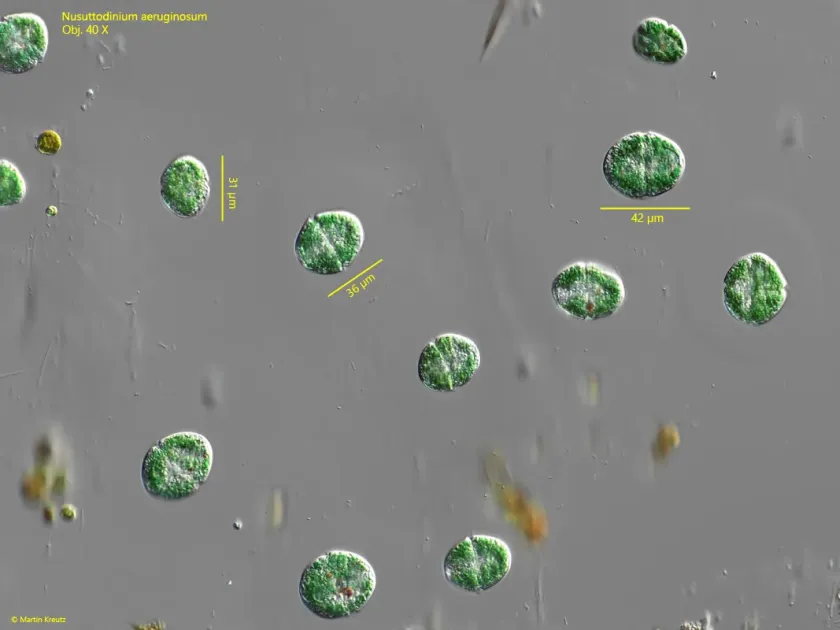
Description
Pathogen
Gymnodinium aeruginosum is a single-celled organism belonging to the dinoflagellate class of algae, commonly found in freshwater environments.
This microscopic organism is a key component of the phytoplankton community and can proliferate rapidly under favorable environmental conditions.
Biologically, these algae are motile due to flagella, allowing them to adjust their position within the water column based on light availability.
While they are natural inhabitants of aquatic ecosystems, their sudden population spikes are often associated with environmental disturbances.
Identifying this species is crucial for water quality monitoring, especially in agricultural sectors where water reservoirs are used for irrigation purposes.
Conditions for development
Optimal growth for Gymnodinium aeruginosum occurs in warm water temperatures typically ranging from 20 to 25 degrees Celsius during summer months.
Excessive nutrient levels, particularly phosphorus and nitrogen runoff from agricultural fields, act as a primary catalyst for algal blooms.
Stagnant water in irrigation channels or storage ponds creates a perfect environment for the rapid reproduction of this dinoflagellate species.
High intensity of solar radiation promotes photosynthesis, significantly accelerating the life cycle and division rate of these algal cells.
Low water velocity allows for the accumulation of biomass and organic matter, which further supports the proliferation of the population.
Why it matters
Algal blooms reduce dissolved oxygen levels in water, which can lead to hypoxic conditions that disrupt the overall aquatic balance.
When contaminated water is used for irrigation, organic residues may deposit on foliage, potentially obstructing leaf stomata and reducing plant respiration.
System clogging is a major issue, as algal biomass can interfere with drip irrigation emitters, filters, and other mechanical distribution equipment.
Toxic metabolites produced by decomposing algal colonies can cause phytotoxic stress, negatively impacting the growth and yield of sensitive crops.
Changes in water chemistry, including fluctuations in pH and nutrient availability, can complicate fertigation processes in controlled environments.
Protection
Effective management begins with nutrient control, ensuring that runoff from fields is prevented from entering irrigation water storage units.
Implementing artificial aeration systems is highly recommended to maintain oxygen levels and prevent stagnation in irrigation reservoirs.
Ultraviolet (UV) sterilization systems are widely considered an effective method for neutralizing algae and other microorganisms in irrigation water.
Regular mechanical maintenance, such as dredging channels and cleaning filtration screens, is essential to keep irrigation systems operational.
If chemical control is necessary, select environmentally safe algaecides and apply them strictly according to agricultural regulations and dosage guidelines.
Discussion
No discussions yet — be the first.