
Grovesiella canker
Grovesiella abieticola
Description
Symptoms
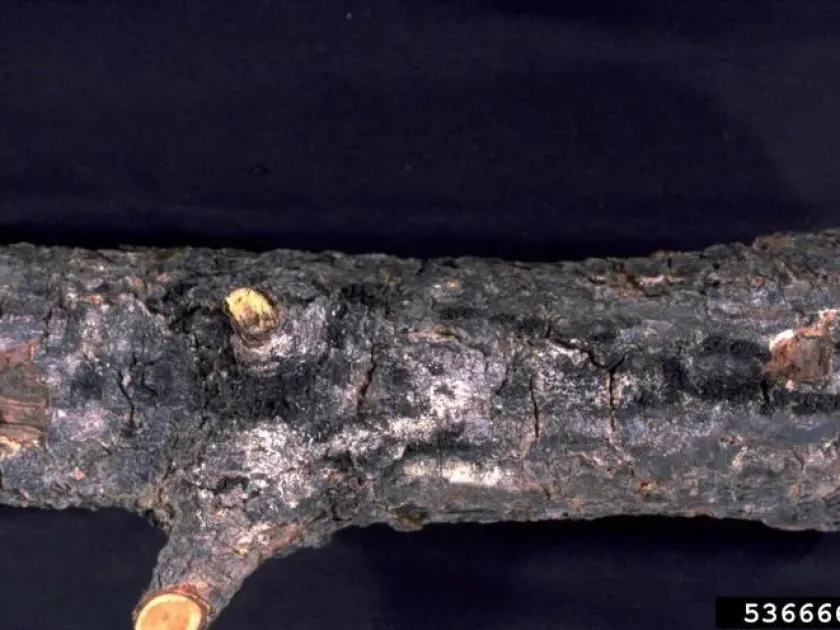
The most distinctive symptom is the formation of cankers on the stems and branches. The affected bark becomes dark, necrotic, and eventually splits, exposing the wood underneath.
Significant resinosis (resin flow) is often observed around the infection site as the tree attempts to wall off the invading fungus. However, the pathogen usually overcomes these chemical defenses.
During wet seasons, tiny black apothecia (fruiting bodies) appear on the bark surface. These are telltale signs of the fungus and can be identified with a magnifying glass.
The foliage above the canker area gradually begins to lose its vibrant green color, turning yellow or brown before eventually dropping off, leaving the affected branches barren.
When the bark is carefully peeled away at the edge of the canker, a layer of white or grey fungal mycelium can typically be found, confirming the presence of the pathogen.
Pathogen
The disease is caused by the ascomycete fungus Grovesiella abieticola, which specifically targets species of the Pinaceae family, particularly firs. It functions as a chronic parasite that colonizes the bark and cambium layers.
The fungus reproduces through apothecia, small cup-shaped fruiting bodies that emerge from the bark of infected branches or trunks. These structures release spores that serve as the primary inoculum for the spread of the disease.
Transmission occurs primarily via wind and rain splashes. Once the spores land on a vulnerable spot, such as a bark fissure or a mechanical wound, the mycelium begins to penetrate the inner tissues.
This pathogen is characterized by a slow growth rate, often remaining dormant in the host tissue during unfavourable periods. It is highly adapted to the host, allowing it to survive through harsh winters.
Secondary infections occur when the mycelium bridges the gap between trees or branches during periods of close contact, leading to localized clusters of infected individuals within a forest stand.
Conditions for development
High humidity and cool temperatures are the most critical factors favoring the development and spread of Grovesiella abieticola. Persistent fog and rain facilitate spore germination.
Trees that are already under stress due to drought, poor soil conditions, or inadequate sunlight are significantly more susceptible to successful colonization by this fungus.
Poor air circulation within dense plantations creates a stagnant microclimate where spores accumulate, leading to rapid disease transmission between adjacent trees.
Topography plays a role; trees in depressions or low-lying areas where moisture collects and air movement is restricted are consistently at a higher risk of infection.
Physical injuries caused by ice storms, snow breakage, or animal feeding create entry points, drastically increasing the likelihood of infection in a localized area.
Why it matters
Grovesiella canker causes gradual decline and mortality in young fir stands. The loss of young trees leads to significant gaps in the forest canopy and economic loss in timber production.
The infection of the cambium interrupts the transport of water and nutrients, which, if the canker encircles the trunk, leads to the rapid death of the entire tree.
Even if the tree survives, the necrotic tissue serves as a permanent defect in the wood, reducing the structural integrity and commercial value of the timber for the forest industry.
The ecological impact involves the degradation of fir-dominated ecosystems, as infected trees become weak and attract secondary pests, further accelerating the collapse of the stand.
The persistent nature of the fungus ensures that once a site is infected, it acts as a reservoir for spores, making it extremely difficult to maintain healthy fir populations without intervention.
Protection
The primary management strategy is rigorous sanitation. Infected branches and trees should be removed and destroyed immediately to reduce the overall inoculum load in the forest.
Preventative care is essential: avoid mechanical damage to the bark during forestry operations, as open wounds are the most common entry points for the fungal spores.
Maintain optimal stand density through periodic thinning. This practice promotes better airflow, reduces local humidity, and prevents the rapid spread of spores between trees.
In high-value nursery or ornamental settings, localized fungicide applications may be utilized during the wet season to protect healthy trees from primary infections.
Enhancing tree vigor through proper fertilization and site selection is the best long-term strategy, as healthy, resilient trees are far more capable of resisting fungal invasion.
Discussion
No discussions yet — be the first.