
Gremmeniella shoot blight
Gremmeniella abietina
Description
Symptoms
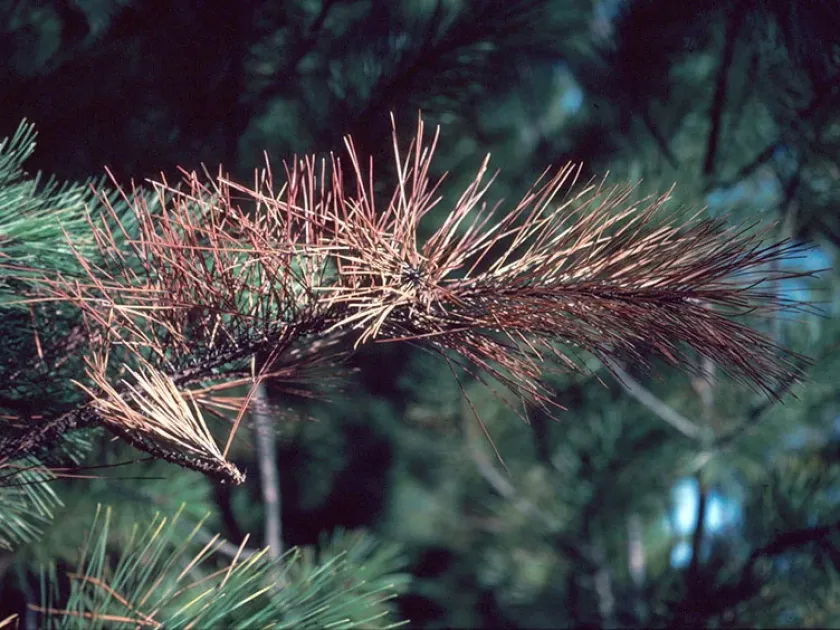
Early symptoms include the yellowing of needles at the base of the shoot during the spring, which eventually progresses to a reddish-brown color. The needles may eventually fall off, leaving the shoot bare.
Cankers and necrotic lesions appear on the bark of infected twigs and branches. A classic sign of the disease is the presence of resin flow (gummosis) leaking from the cracks of these infected areas.
The infected branches lose their flexibility and become brittle, often snapping under the weight of snow or wind. If the bark is peeled back, the underlying tissue will show a dark, discolored, and necrotic appearance.
During wet weather, small, black, pinhead-sized structures (pycnidia) become visible on the dead bark. These contain the fungal spores that will be splashed by rain onto neighboring healthy tissues.
If left untreated, the disease spreads downward toward the main stem. As it progresses, the foliage wilts, the branches die back, and the tree eventually succumbs to systemic infection and mortality.
Pathogen
The disease is caused by the ascomycete fungus Gremmeniella abietina, commonly known as the agent of Scleroderris canker. It is an obligate parasite that severely affects various conifer species, particularly pines and spruces.
The fungus produces two types of spores: asexual conidia for quick summer spread and sexual ascospores formed in apothecia for survival. This reproductive strategy allows it to persist in various environmental conditions.
The pathogen infects trees primarily through buds or wounds in the bark. Once inside, the mycelium invades the vascular tissues, effectively disrupting the flow of water and nutrients throughout the branch.
High humidity and cool, damp weather provide the ideal environment for spore germination and colonization. It is highly active in regions with significant annual rainfall, especially during the spring and early summer months.
The fungus is highly aggressive, with the ability to kill young trees within a few years of infection. While it can infect trees of all ages, it is most destructive in young, dense forest stands.
Conditions for development
Cool, rainy summers combined with mild, wet winters significantly increase the risk of an outbreak. Such conditions prevent the drying of foliage, which is necessary to inhibit fungal spore germination.
Dense plantations with limited airflow are high-risk areas. The stagnant, humid microclimate created by overcrowding allows the fungus to spread rapidly from one tree to the next.
Trees that are already under physiological stress are more susceptible to infection. Poor soil quality, nutrient deficiencies, and waterlogging weaken the tree's defensive mechanisms against fungal invasion.
Mechanical injuries caused by logging equipment or wildlife provide easy access points for the fungus. Every breach in the bark integrity represents an opportunity for the mycelium to establish a new infection site.
The pathogen is highly resilient and can survive for several seasons on dead organic matter, including fallen needles and woody debris. This allows it to persist in the forest environment long after the primary infected wood has been cleared.
Why it matters
The economic impact of Gremmeniella shoot blight is profound, especially in forestry and timber production. The loss of young seedlings and saplings compromises future harvests and forest productivity.
In addition to tree mortality, the disease causes significant growth reduction. Trees that survive the infection often exhibit deformed crowns and reduced wood quality, making them unsuitable for industrial lumber.
Ornamental and urban forests also suffer heavily. The loss of aesthetics and the cost of maintaining sick trees represent a major financial burden for park management and nursery operators.
Environmental damage includes the disruption of forest ecosystems. When large numbers of trees die, the loss of canopy cover leads to changes in local temperature, moisture, and biodiversity.
Regulatory costs also arise due to quarantine measures. Since the fungus is considered a high-risk pathogen in many countries, international trade in plant materials is strictly controlled to prevent spread.
Protection
Sanitation is the most effective management tool. Removing and destroying infected branches and trees prevents the build-up of the inoculum and reduces the chance of spread to healthy neighbors.
Chemical control can be effective in nurseries and high-value plantations. Fungicide sprays applied during the critical infection window in the spring help protect new shoots from spore colonization.
- Regular monitoring of tree stands for early symptoms.
- Burning or deep burying of infected plant debris.
- Ensuring proper spacing to improve air circulation within stands.
- Applying fertilizers to keep tree vigor high and resistant to stress.
- Avoiding unnecessary mechanical damage to the tree bark during site maintenance.
It is crucial to source planting materials only from certified nurseries that practice strict disease screening. Using resistant species or local varieties adapted to the site can also reduce long-term risk.
Finally, implementing a monitoring program helps detect outbreaks early. Early intervention is key to preventing a local problem from becoming an uncontrolled epidemic across the entire forest area.
Discussion
No discussions yet — be the first.