
Scleroderris canker
Gremmeniella
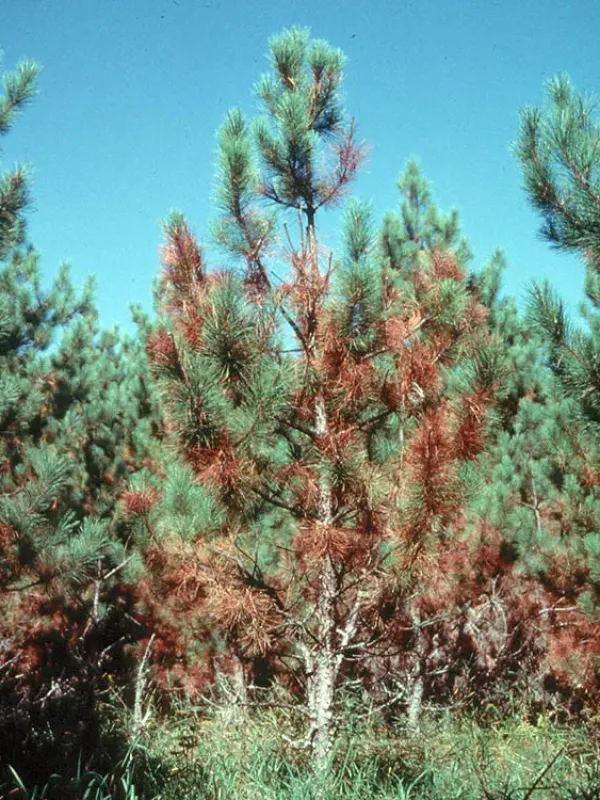
Description
Symptoms
Initial symptoms often include the discoloration of needles, which turn orange-brown at the base and eventually drop off.
Resin bleeding from the bark, particularly around the nodes of the branches, is a characteristic indicator of an ongoing infection.
Small black fruiting bodies, known as pycnidia, can be found breaking through the bark surface on infected branches.
Death of the terminal leader or branches, leading to a stunted or deformed crown, is common in young, severely infected trees.
In older trees, the disease typically targets the lower canopy first, gradually spreading upwards if conditions remain favorable for the fungus.
Pathogen
The disease is caused by the fungus Gremmeniella abietina, a serious pathogen that affects various conifer species worldwide.
The fungus produces both asexual conidia and sexual ascospores, allowing it to adapt to different environmental conditions for spread.
It colonizes the cambium and bark of twigs and stems, effectively cutting off nutrient transport within the infected parts of the tree.
The pathogen thrives in temperate climates and is particularly destructive in northern forests where host trees are subjected to cold stress.
Survival occurs through mycelium in infected tissues and reproductive structures like pycnidia that develop on dead needles and branches.
Conditions for development
High humidity and cool, wet weather are essential for the dispersal of spores and the initiation of new infections.
Poor air circulation in dense forest stands or nurseries facilitates the buildup of inoculum and increases the rate of disease spread.
Cold-air drainage pockets, where moisture persists, provide an optimal environment for Gremmeniella abietina to infect susceptible hosts.
Trees that are weakened by environmental stress, such as frost or nutrient deficiency, are significantly more vulnerable to infection.
Extended periods of rainfall act as a primary catalyst for splashing conidia onto healthy foliage and stems.
Why it matters
Scleroderris canker causes significant mortality, particularly in young pine plantations, leading to substantial economic loss.
It drastically reduces the growth rate of surviving trees, resulting in loss of wood volume and decrease in timber quality.
The disease can cause widespread dieback, turning once productive forests into unproductive, open stands with dead limbs.
Weakened trees become more susceptible to secondary infestations by bark beetles and other wood-boring insects, further damaging the stand.
Management of infected areas requires expensive sanitation programs and often leads to premature harvesting of the affected timber.
Protection
Proactive management includes planting resistant conifer species and varieties that are less susceptible to local strains of the fungus.
Regular monitoring and rapid removal of infected debris are crucial for reducing the fungal inoculum within the forest ecosystem.
In nursery settings, fungicide applications during the peak sporulation period can effectively protect young seedlings from early infection.
Promoting diverse forest structures and avoiding monocultures helps to slow down the transmission of the disease between hosts.
Maintaining optimal spacing between trees ensures better airflow and light penetration, which naturally suppresses the fungal growth environment.
Discussion
No discussions yet — be the first.