
Kuroshium wilt
Graphium kuroshium
Description
Symptoms
The initial signs of infection are small entry holes on the bark of the trunk or branches. These are often accompanied by wet spots or sap exudates, which indicate the presence of beetle infestation.
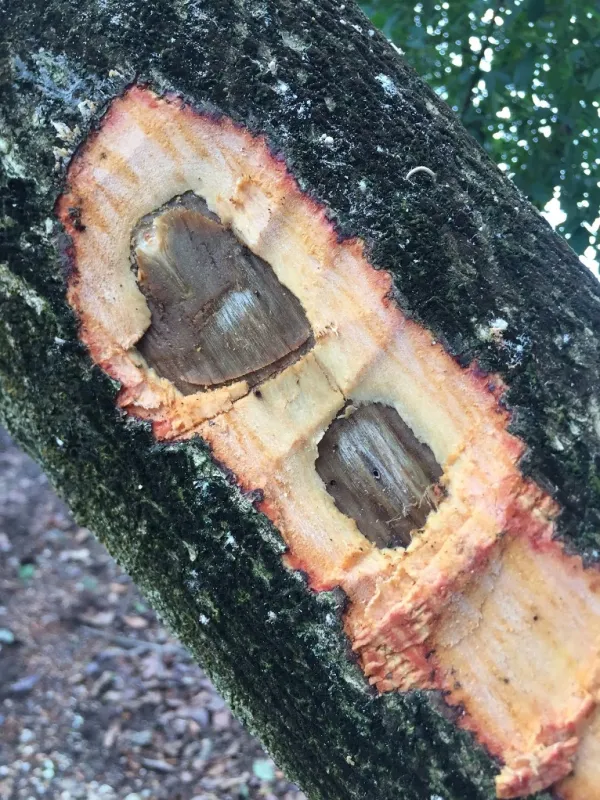
When the bark is stripped away, dark staining or black discoloration of the sapwood is clearly visible. This discoloration is the result of the tree's reaction to the fungus and the beetle's presence in the conductive tissues.
As the infection progresses, leaves in the upper canopy begin to yellow, wilt, and eventually drop prematurely. The affected branches become brittle and dry due to the severe disruption of water supply.
In the final stages, the tree exhibits "dieback," where branches die off from the tips towards the main stem. Without intervention, entire mature trees can succumb to the infection within a few years.
A cross-section of a diseased branch reveals characteristic dark rings or radial streaks, which are diagnostic markers of the pathogen's systemic spread throughout the vascular system.
Pathogen
The causal agent of this disease is the fungus Graphium kuroshium, an ascomycete that thrives within the xylem of host trees. It maintains a complex symbiotic relationship with invasive ambrosia beetles, specifically the Euwallacea kuroshio.
The fungus colonizes the vascular system of the plant, producing a thick mycelium that obstructs the vessels. This mechanical blockage prevents the movement of water and nutrients, leading to rapid systemic wilting.
Clinically, it is classified as a vascular wilt disease. The fungus enters the tree through the tunnels created by the beetles as they burrow into the trunk and branches to cultivate their fungal food source.
The life cycle of the pathogen is intrinsically linked to its insect vector, which carries spores in specialized structures called mycangia. This ensures efficient transfer from one host tree to another during beetle dispersal flights.
Outside the host and the beetle, the fungus can produce conidia that may be spread by air currents or water splash, though beetle activity remains the primary driver of transmission.
Conditions for development
The primary factor facilitating the spread of Kuroshium wilt is the abundance of the insect vector. If the beetle population is high, the risk of disease transmission within an area increases significantly.
Environmental stress, particularly prolonged drought or extreme heat, makes trees more susceptible to attack. Healthy trees are better able to defend themselves, while stressed trees provide ideal conditions for beetle colonization.
High planting densities of susceptible species contribute to the rapid spread of the pathogen, as the beetles can easily move from one tree to the next in search of new nesting sites.
Lack of proper forest or garden hygiene, such as leaving dead or dying wood in place, allows the fungus to continue sporulating and serves as a nursery for the beetle vectors.
Temperature patterns that favor the flight activity and reproductive cycle of the ambrosia beetle are key drivers for the expansion of the disease into new territories.
Why it matters
Kuroshium wilt poses a severe threat to a wide variety of hardwood trees, including avocado, willow, plane trees, and many other ornamental and native species in urban landscapes.
The high pathogenicity of Graphium kuroshium leads to rapid tree mortality, resulting in significant ecological degradation and the loss of critical shade and habitat in urban environments.
For the agricultural sector, particularly avocado production, this disease is a catastrophic risk that can devastate orchards and result in massive economic losses for growers.
The disease is notoriously difficult to manage once established, as systemic infection is hard to eradicate with standard chemical treatments, often necessitating the removal of the tree.
Beyond the loss of individual trees, the disease carries significant costs associated with monitoring programs, tree removal, disposal of infested wood, and potential long-term reforestation efforts.
Protection
Strict quarantine measures are the most effective way to prevent the spread of the disease. This includes regulating the transport of wood, chips, and nursery stock from infested regions.
Prompt identification and removal of infested trees is critical. Felled material should be chipped to specific sizes, burned, or buried to prevent the beetles from emerging and attacking neighboring trees.
The use of pheromone-based traps is useful for monitoring beetle populations and detecting the arrival of the pest in previously uninfested areas before an outbreak becomes uncontrollable.
For high-value or heritage trees, trunk injection of fungicides and systemic insecticides may be employed to suppress fungal growth and control the beetle population, though this requires consistent, professional maintenance.
Cultural practices that improve tree vigor, such as appropriate irrigation and soil management, help plants withstand beetle pressure and maintain their natural defensive barriers against fungal infections.
Discussion
No discussions yet — be the first.