
Septoria blotch of cereals
Graminopassalora graminis
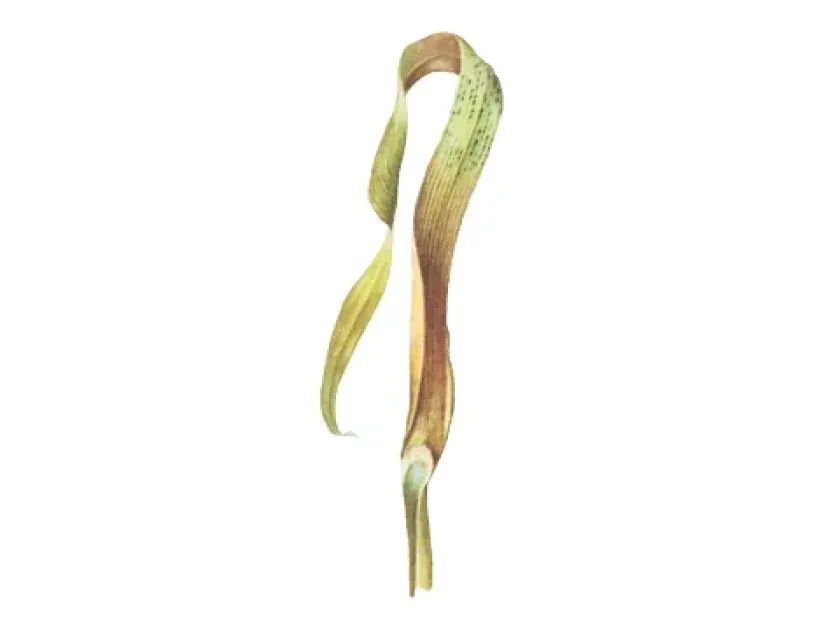
Description
Symptoms
Initial symptoms appear as small light-green or yellowish spots that gradually expand, becoming elongated or irregular in shape.
As the disease progresses, the lesions turn brown or reddish-brown, often surrounded by a light-colored halo, with black pycnidia emerging inside.
Infected leaves yellow and die prematurely, starting from the lower canopy, which significantly weakens the overall physiological state of the plant.
Infection can spread to leaf sheaths, stems, and heads if high humidity levels persist for an extended period during the growing season.
Lesions may coalesce in severe cases, covering the entire leaf surface and leading to complete necrosis of the tissue.
Pathogen
The causative agent of the disease is the fungus Graminopassalora graminis, which affects the vegetative parts of cereal crops throughout their growth cycle.
The infection survives as pycnidia and pseudothecia on crop residues, volunteer plants, and winter wheat, ensuring continuity of the disease cycle.
In moist conditions, the fungus produces conidia, which are disseminated by rain splash or wind, infecting neighboring healthy plants.
The life cycle of the pathogen involves both asexual and sexual reproduction, which enhances its ability to adapt to varying environmental conditions.
This pathogen has a broad host range including wheat, barley, rye, and various wild grasses, making management a complex agronomic task.
Conditions for development
The development of Septoria blotch is strongly correlated with high humidity and the presence of leaf wetness, which is required for spore germination.
The optimal temperature for pathogen development ranges from +15 to +22 degrees Celsius, although the fungus remains active in cooler weather.
Dense crop stands and excessive nitrogen fertilization contribute to a microclimate that facilitates the rapid spread of the disease.
Frequent rainfall during the tillering and jointing growth stages creates ideal conditions for epidemic development in cereal fields.
Surface crop residues serve as the primary reservoir for the pathogen, necessitating proper field sanitation practices.
Why it matters
The damage caused by the disease manifests as a significant reduction in leaf photosynthetic area, directly impacting grain filling and yield.
Infection leads to lower grain weight and compromised quality metrics, such as protein content and overall grain grade.
Early infection of the flag leaf can result in substantial yield losses, often ranging from 30% to 50% depending on disease pressure.
Weakened plants are more susceptible to lodging and other biotic or abiotic stresses, reducing the overall economic efficiency of the crop.
Economic losses are compounded by the necessity of applying multiple fungicide treatments to protect the yield potential.
Protection
Crop rotation is the fundamental preventive measure to interrupt the infection cycle carried over by crop residues.
Thorough tillage and incorporation of crop residues into the soil help significantly reduce the initial inoculum load in the field.
The use of resistant cereal varieties is the most sustainable way to manage the disease and mitigate the impact of environmental factors.
Timely application of systemic fungicides, such as triazoles or strobilurins, is crucial during the jointing and heading stages when symptoms appear.
Balanced plant nutrition and optimized seeding rates improve the plant's natural defense mechanisms against fungal pathogens.
Discussion
No discussions yet — be the first.