
Golovinomyces latisporus
Golovinomyces latisporus
Description
Symptoms
The primary symptom is the appearance of white, powdery fungal growth on the leaves, stems, and sometimes floral parts, which creates a characteristic dusty appearance.
As the infection progresses, these white patches may expand and merge, eventually covering large portions of the plant's surface area, hindering its physiological functions.
Affected leaves often show signs of chlorosis, curling, or distortion, and in severe cases, they may prematurely wilt and drop from the plant entirely.
Close inspection might reveal tiny, dark-colored fruiting bodies embedded within the white mycelial mat, indicating that the fungus is reaching its sexual maturity.
The infestation significantly impairs the plant's ability to photosynthesize, as the thick layer of fungal growth physically blocks light and depletes the plant of carbohydrates.
Pathogen
Golovinomyces latisporus is an obligate parasitic fungus within the Erysiphaceae family, recognized as a significant causative agent of powdery mildew disease in various host plants.
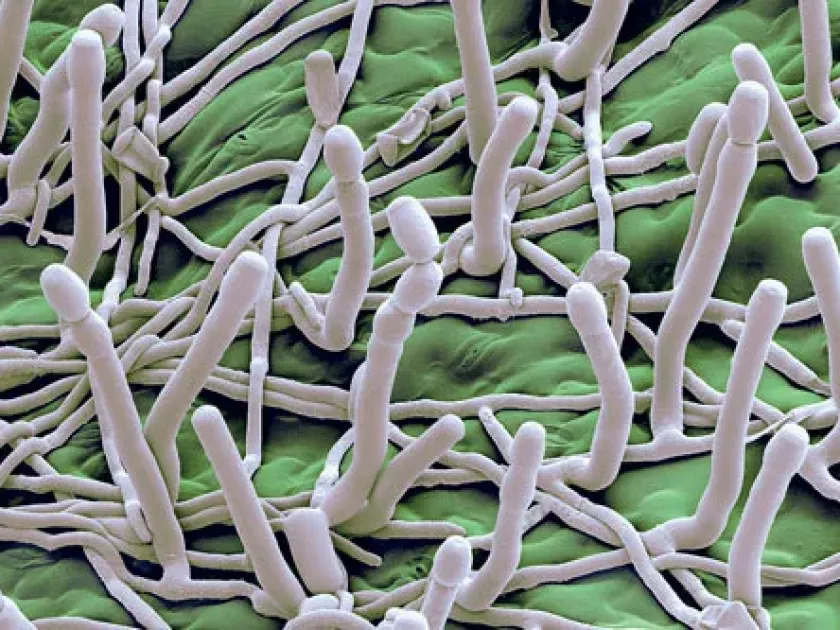
The fungus develops its mycelium predominantly on the surface of plant tissues, forming an extensive network of hyphae that draws nutrients through specialized structures called haustoria.
Reproduction occurs primarily through the production of conidia, which are disseminated by wind currents to reach new, susceptible host tissues during the growing season.
The fungus also enters a sexual reproductive phase, producing chasmothecia (cleistothecia), which allow the pathogen to survive during periods of dormancy or harsh winter conditions.
As a specialized pathogen, it shows considerable adaptability, allowing it to colonize diverse plant species within the Asteraceae family and beyond under favorable conditions.
Conditions for development
The development of Golovinomyces latisporus is highly favored by environments with moderate temperatures and relatively high relative humidity, such as those found during warm, moist springs.
Poor ventilation, caused by high planting density or lack of canopy management, allows humidity to build up, creating an optimal microclimate for spore germination and colonization.
The presence of infected debris from previous seasons provides the necessary primary inoculum, facilitating early spring infections if environmental conditions permit.
Plants subjected to excessive nitrogen fertilization exhibit rapid, succulent growth that is particularly susceptible to fungal penetration and rapid disease progression.
Frequent dew or light rainfall followed by warm sunny days often accelerates the disease cycle, leading to rapid spread of the pathogen throughout a plot.
Why it matters
The pathogen causes significant economic damage by reducing overall yield and plant vigor, as it diverts energy from growth and development toward the fungal colony.
The aesthetic value of ornamental plants is severely diminished, often rendering them unsalable or unsuitable for landscape purposes due to the unsightly mildew covering.
By interfering with the plant's metabolism, the disease leads to a reduction in the quality of the produce, including lower sugar content or diminished size of fruits and flowers.
Severe and prolonged infections can lead to the death of the host plant, especially in young seedlings or species that have low inherent tolerance to fungal pathogens.
Secondary infections by opportunistic fungi or bacteria frequently occur in tissues weakened by powdery mildew, further exacerbating the damage caused to the crop.
Protection
Integrated pest management (IPM) is essential for effective control, starting with the thorough removal and destruction of crop residues to eliminate overwintering sites.
Selecting and planting resistant cultivars is the most sustainable long-term strategy for managing powdery mildew and reducing reliance on chemical fungicides.
Systemic fungicides, particularly those containing triazoles, can be effective in suppressing the disease if applied at the first sign of visible infection.
Biological control agents, such as certain hyperparasitic fungi (e.g., Ampelomyces quisqualis), offer a natural approach to reducing pathogen pressure in the field.
- Maintaining proper spacing between plants to improve airflow and reduce leaf wetness.
- Implementing balanced fertilization programs to ensure strong plant cell structure.
- Conducting regular field inspections to identify and treat hotspots early.
Discussion
No discussions yet — be the first.