
Powdery mildew of houndstongue
Golovinomyces cynoglossi
Description
Symptoms
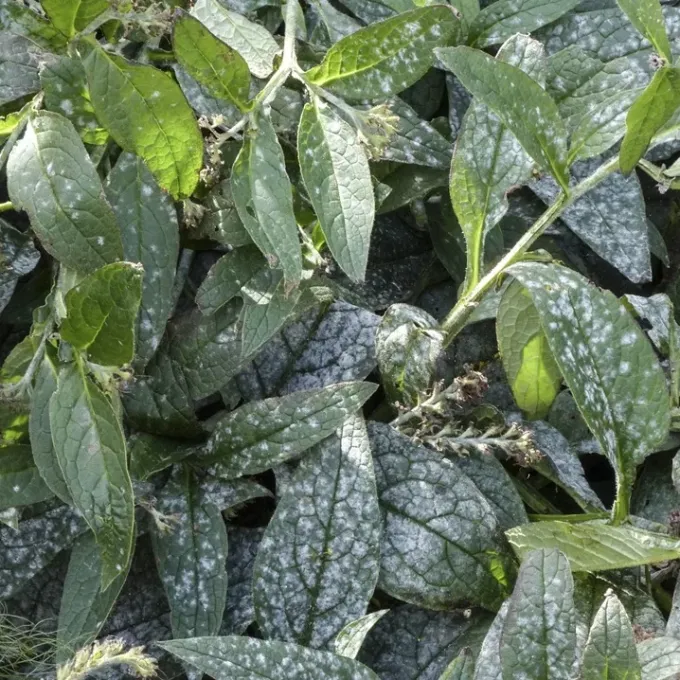
The disease typically manifests as small, white, web-like spots on the leaves, which gradually expand into a thick, powdery white or grayish fungal coating.
As the infection progresses, the leaves may curl, yellow, and develop necrotic patches, severely impairing the plant's ability to undergo photosynthesis.
In advanced cases, the entire surface of the stem, leaves, and flower stalks can be covered with the dense mycelial mat, significantly affecting the plant's aesthetics.
Small dark spheres, the fruiting bodies of the fungus, become visible within the mature powdery layer toward the end of the infection cycle.
- white mycelial spots
- leaf chlorosis and necrosis
- stunted growth
- deformed floral parts
Pathogen
The causative agent of the disease is the fungus Golovinomyces cynoglossi, an obligate parasite that specifically infects members of the Boraginaceae family.
This pathogen belongs to the Erysiphales order, which thrives on the surface of plant tissues, penetrating the epidermis with its specialized absorption structures known as haustoria.
The fungal life cycle involves both asexual reproduction, producing white conidia, and sexual reproduction, resulting in the formation of cleistothecia for overwintering.
The fungus extracts nutrients directly from the host plant cells, which eventually leads to the weakening and gradual decline of the infected organs.
Dissemination occurs primarily via wind dispersal, allowing the spores to travel across agricultural plots and infect healthy plants under suitable environmental conditions.
Conditions for development
Powdery mildew development is favored by warm, dry daytime weather followed by cool nights that encourage dew formation on the foliage.
High humidity within the plant canopy, caused by poor air circulation or overcrowding, creates an ideal microclimate for the rapid colonization of the fungus.
Plants subjected to environmental stress or those with lush, nitrogen-rich tissue are significantly more susceptible to successful infection by fungal spores.
Fluctuating temperatures between 18°C and 25°C provide the most conducive thermal window for the germination of fungal spores on leaf surfaces.
The presence of overwintering fungal structures on soil debris ensures that the pathogen remains present in the environment for subsequent seasons.
Why it matters
The primary impact of powdery mildew is the reduction of plant vigor, leading to poor growth and a significant loss in the plant's overall market value.
Severe infestations can result in the premature death of foliage, which limits the energy reserves needed for blooming and subsequent seed production.
Weakened plants are more prone to secondary infections by other opportunistic pathogens and become sensitive to harsh environmental stress like winter frost.
For medicinal varieties of houndstongue, the infection compromises the quality and quantity of secondary metabolites, making the crop unfit for use.
Financial losses occur due to both the direct reduction in harvest yield and the ongoing costs associated with repeated fungicide applications.
Protection
Effective control starts with sanitation: removing and destroying infected plant debris reduces the primary inoculum for the following year.
Proper spacing and regular pruning are essential to improve air circulation, thereby reducing humidity levels around the foliage and discouraging fungal growth.
Chemical control involving sulfur-based fungicides or systemic triazole compounds can be used when the infection pressure exceeds manageable thresholds.
Monitoring the plants regularly allows for early detection, enabling spot treatment before the fungus can spread to the entire garden or field.
Integrated pest management strategies, such as promoting plant health and avoiding excessive nitrogen fertilization, help keep the disease pressure low naturally.
Discussion
No discussions yet — be the first.