
Powdery mildew of Lamiaceae
Golovinomyces biocellatus
Description
Symptoms
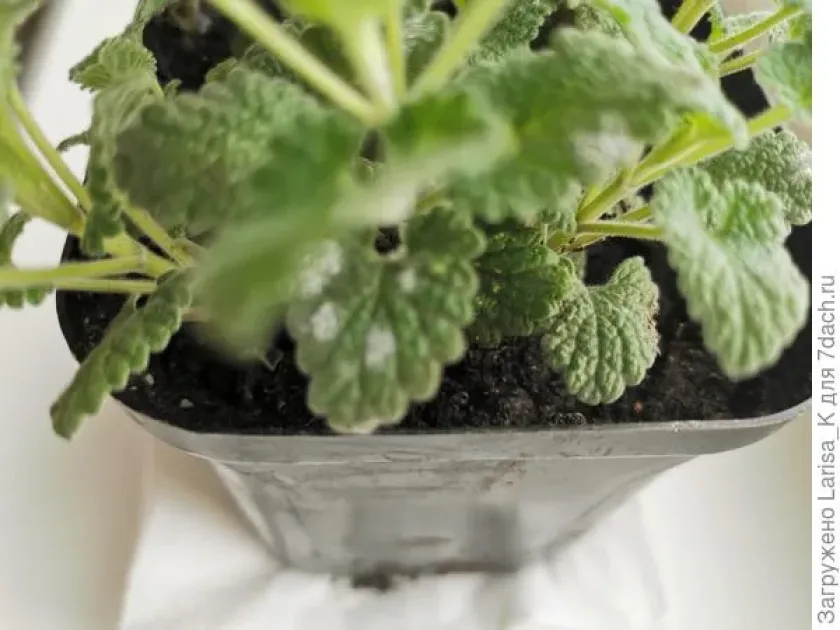
The primary symptom is the appearance of white, powdery fungal patches on the leaf surface, often resembling a light dusting of flour.
These patches start small but quickly expand and coalesce, eventually covering the entire leaf, as well as petioles, stems, and sometimes flower spikes.
Infected leaves often become stunted, distorted, and may exhibit yellowing or chlorosis as the underlying tissue is deprived of nutrients by the fungal hyphae.
Under magnification, tiny dark fruiting bodies (cleistothecia) appear embedded within the white mycelial mat, signaling the later stages of the infection.
Severe infestations lead to premature leaf drop and the collapse of young shoots, drastically reducing the overall vitality of the affected herb plant.
Pathogen
The causal agent of this disease is Golovinomyces biocellatus, an obligate biotrophic fungus that exclusively infects plant species within the Lamiaceae family.
This pathogen extracts nutrients directly from the host's epidermal cells, creating a network of mycelium that spreads across the surface of leaves and stems.
Reproduction occurs via asexual conidia, which are easily dispersed by wind, allowing the fungus to infect healthy tissue rapidly during favorable weather.
In colder seasons, the fungus produces overwintering structures known as cleistothecia, which reside in plant debris and soil to reinitiate the cycle in spring.
Because it is an obligate parasite, the pathogen requires living plant tissue to survive, making crop rotation and field sanitation essential management strategies.
Conditions for development
Powdery mildew thrives in conditions characterized by warm temperatures, typically between 18°C and 25°C, combined with fluctuating humidity levels.
Poor airflow, often caused by overcrowding or planting in dense clusters, promotes the buildup of moisture around the foliage, which favors spore germination.
High nitrogen fertilization stimulates rapid, succulent plant growth, which provides an ideal nutritional source for the fungus to establish itself quickly.
Conditions like shade and poor light exposure inhibit the plant's natural defense mechanisms, making it much more susceptible to the fungal invasion.
While the disease is commonly associated with dry weather, the presence of nighttime dew is sufficient for the fungus to penetrate the host epidermis successfully.
Why it matters
The disease significantly lowers the quality of herbal crops by causing leaf deformation and unsightly fungal growth, rendering the produce unmarketable.
In plants grown for essential oils, such as mint or basil, the infection reduces the concentration of secondary metabolites, destroying the economic value of the harvest.
The reduction in photosynthetic capacity leads to stunted plant growth and a significant loss in total biomass, which is detrimental to commercial growers.
Infected plants exhibit reduced hardiness and increased susceptibility to secondary stressors, including pests and other opportunistic pathogens.
Persistent presence of the fungus in a garden environment creates a reservoir of inoculum, making it difficult to establish new crops in contaminated areas.
Protection
Effective management begins with maintaining good sanitation practices, such as removing and destroying all infected plant material after the growing season.
Improving air circulation through proper spacing and pruning ensures that leaves dry out quickly, significantly reducing the chances of successful spore colonization.
Utilizing resistant plant varieties or cultivars is the most sustainable approach to preventing powdery mildew in large-scale herb production.
Fungicidal sprays, including sulfur-based products or systemic triazoles, can be used to treat active infections, provided safety intervals are strictly followed.
- Use drip irrigation to keep foliage dry.
- Promote balanced fertilization to harden plant tissues.
- Implement biological controls such as Bacillus subtilis-based treatments.
Discussion
No discussions yet — be the first.