
Powdery mildew
Golovinomyces
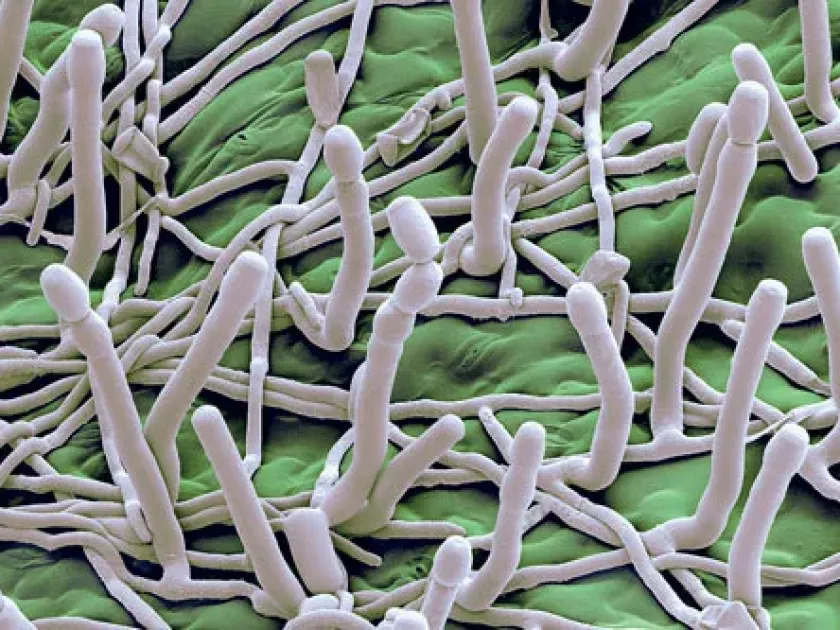
Description
Symptoms
The most distinctive symptom of a Golovinomyces infection is the appearance of white to grayish, powdery patches on the leaves. These patches are composed of mycelium and a vast number of conidia, giving the plant a "dusted" appearance.
As the infection progresses, the powdery spots expand and merge, covering entire leaf blades, petioles, and young stems. In severe cases, the infected plant organs may appear stunted, curled, or chlorotic, indicating a significant physiological stress.
When examined closely, especially on older lesions, tiny black specks may be visible within the white mycelial mat. These are the cleistothecia, marking the transition from the asexual growth phase to the sexual reproductive phase of the fungus.
Infected foliage often turns yellow or brown and eventually drops prematurely. This defoliation reduces the plant's ability to perform photosynthesis, which directly impacts the growth rate and the ability to set fruit or seeds successfully.
Fruits affected by powdery mildew may exhibit surface disfigurement, cracking, or reduced shelf life. In many cases, infected produce loses its aesthetic appeal and nutritional quality, rendering it unsuitable for commercial sale.
Pathogen
Powdery mildew is a plant disease caused by obligate biotrophic fungi of the genus Golovinomyces, belonging to the order Erysiphales. These pathogens are highly specialized parasites that rely entirely on living host tissue to complete their life cycle.
The life cycle involves the production of conidia, which are asexual spores dispersed primarily by wind. Once a conidium lands on a susceptible leaf surface, it germinates and forms a germ tube, which then penetrates the plant's epidermis using specialized structures called haustoria.
By inserting haustoria into the epidermal cells, the fungus absorbs essential nutrients and water directly from the host. This process allows the mycelium to expand rapidly across the surface of leaves, stems, and fruits without initially causing the death of the host tissue.
Overwintering occurs through the formation of cleistothecia, which are small, dark, fruiting bodies that contain ascospores. These structures can survive on fallen leaves or in soil, providing a source of primary inoculum when weather conditions become favorable in the following season.
The taxonomy of Golovinomyces is complex, with various species targeting different plant hosts. Their obligate nature makes them particularly challenging to manage, as the pathogen's survival is intrinsically linked to the presence of susceptible host plants throughout the year.
Conditions for development
Golovinomyces fungi thrive in moderate temperature conditions, typically between 18°C and 25°C. While they do not require high levels of surface moisture for germination, high relative humidity in the air is essential for optimal growth and spore production.
Densely planted crops or those in areas with poor airflow are at a higher risk of severe outbreaks. Stagnant air allows the humidity to build up around the foliage, providing the perfect microclimate for the fungus to spread rapidly.
Shaded environments further exacerbate the problem, as plants under lower light intensity tend to have softer, more succulent tissues that are easier for the pathogen to penetrate. Weakened plants have fewer defense mechanisms, making them ideal hosts.
Fluctuating weather patterns, particularly those involving warm days followed by cool, humid nights, promote the release and germination of spores. These conditions often create a cyclical pattern of infection that can rapidly encompass entire fields.
Excessive nitrogen application can also promote soft, rapid growth that is highly susceptible to powdery mildew. Balancing soil nutrients and maintaining proper plant spacing are crucial factors in mitigating the environmental favorability for this disease.
Why it matters
The primary harm caused by Golovinomyces is the severe reduction in photosynthetic surface area. By covering the leaves, the fungus blocks light and depletes the plant's stored energy, leading to decreased yields and overall crop vitality.
Infection leads to premature senescence of leaves, which places additional stress on the plant. This loss of foliage can expose fruits to sunscald and prevent the plant from accumulating enough reserves for the next growing season, causing long-term damage.
The market value of the produce is significantly affected by the visual symptoms of the disease. Blemished fruits and stunted growth result in lower quality grades, leading to direct economic losses for the farmer and the agricultural operation.
In greenhouses and high-value indoor crops, an outbreak of powdery mildew can be catastrophic, often resulting in total crop failure if not managed early. The airborne nature of the spores allows the infection to spread throughout a facility within days.
Management costs, including fungicides and specialized labor for inspection and sanitation, add a significant financial burden. These inputs are necessary to maintain production levels but inevitably increase the overall cost of production per unit.
Protection
Effective management requires an integrated approach starting with the removal of crop debris to eliminate overwintering sites. Rotating susceptible crops with non-host species is essential for breaking the pathogen's life cycle.
Fungicides are a primary control tool, particularly those in the triazole and strobilurin classes. To minimize the risk of the fungus developing resistance, growers should rotate products with different modes of action.
Choosing resistant or tolerant plant varieties is the most sustainable way to manage the disease. When selecting seeds or cultivars, priority should be given to those with documented resistance to local strains of the pathogen.
Pruning and plant spacing are critical cultural practices that improve ventilation and light penetration. This helps to reduce the relative humidity within the plant canopy, making the environment less favorable for fungal spores.
- Implementation of biopesticides containing hyperparasitic fungi like Ampelomyces quisqualis.
- Balanced fertilization, avoiding excessive nitrogen that promotes succulent growth.
- Use of drip irrigation to keep the foliage dry and reduce microclimate humidity.
- Regular field scouting to detect and remove the first signs of infection.
Discussion
No discussions yet — be the first.