
Raspberry Gnomoniopsis blight
Gnomoniopsis idaeicola
Description
Symptoms
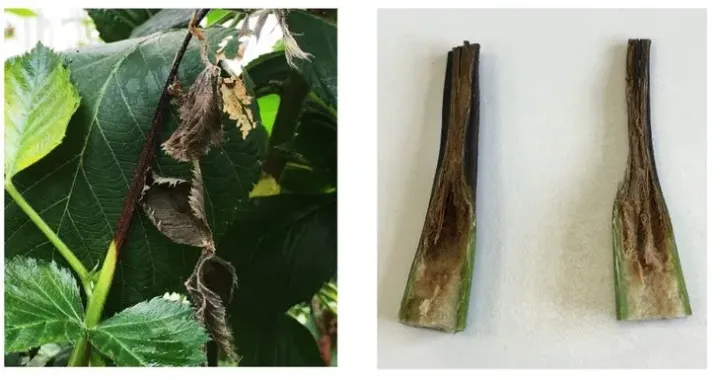
Initial signs of the disease appear as small brown or purplish spots on primocanes, which gradually enlarge over time.
A characteristic symptom is the darkening of tissues around leaf petioles, which frequently causes premature defoliation of the plant.
Small black dots, representing the fungal fruiting bodies (pycnidia or perithecia), develop on the infected areas of the canes and are clearly visible upon inspection.
In cases of severe infection, the tips of the canes may wither, curl, and turn a grayish color due to the degradation of the bark and cambium layers.
On leaves, the disease manifests as round or angular spots with dark margins, which may eventually coalesce and cause localized necrosis of the leaf blade.
Pathogen
The causal agent of Gnomoniopsis blight is a highly specialized ascomycete fungus known as Gnomoniopsis idaeicola. This pathogen belongs to the Gnomoniaceae family and primarily affects the aerial parts of the raspberry plant.
The life cycle of the pathogen is closely linked to plant debris, where the fungus overwinters in the form of perithecia. During the spring, spores mature and are dispersed by wind and rain splashes.
The fungus invades plant tissues through mechanical wounds on canes or through natural stomata. Mycelial growth within the tissues disrupts the plant's normal metabolic processes.
Infection can persist in plantings for years if infected canes are not properly disposed of. The pathogen can attack raspberries at any stage of development, which makes disease control challenging.
Biological traits of the fungus make it difficult to reach with contact fungicides, as the majority of the mycelium is located deep within the cane or underneath the plant epidermis.
Conditions for development
The development of Gnomoniopsis blight is favored by high humidity and frequent rainfall during the spring and summer seasons, which are essential for spore dispersal.
The optimal temperature range for the intensive growth of the fungal mycelium is between +18 and +24 degrees Celsius.
Dense, poorly ventilated raspberry patches create an ideal microclimate for conidia germination and the rapid spread of the infection to healthy canes.
Damage to canes by pests or mechanical injuries from improper pruning significantly increases the risk of plant infection.
Prolonged foggy weather and heavy night dews contribute to moisture retention on the surface of the canes, facilitating the successful colonization of spores.
Why it matters
The primary damage involves the suppression of primocane growth, which leads to a significant decrease in the overall yield of the raspberry plantation.
Infected canes become brittle and often die during the winter due to a loss of cold hardiness and a general weakening of the plant's immune system.
The infection negatively impacts fruit quality: berries become smaller, lose their marketability and flavor, and may occasionally drop prematurely.
In cases of massive infestation, the entire bush may show premature drying, potentially leading to the complete death of the plant over several growing seasons.
Infected areas act as a constant source of inoculum for neighboring plants, necessitating the removal and burning of the entire affected bush.
Protection
The primary method of control is strict adherence to agricultural practices, including regular row cleaning and the removal of all infected canes.
Sanitary pruning of floricanes should be performed immediately after harvest, ensuring no high stumps are left where spores can overwinter.
Preventive applications of copper-based fungicides during the bud-break stage help to significantly lower the infection pressure within the plot.
It is crucial to maintain good ventilation in the patch through timely trellising and thinning, which reduces humidity in the cane zone.
- Use only certified, disease-free planting material.
- Implement timely control measures against insect pests.
- Apply balanced fertilization to strengthen plant immunity.
- Collect and destroy all fallen leaves and plant debris.
Discussion
No discussions yet — be the first.