
Alder gnomoniella leaf spot
Gnomoniella tubiformis
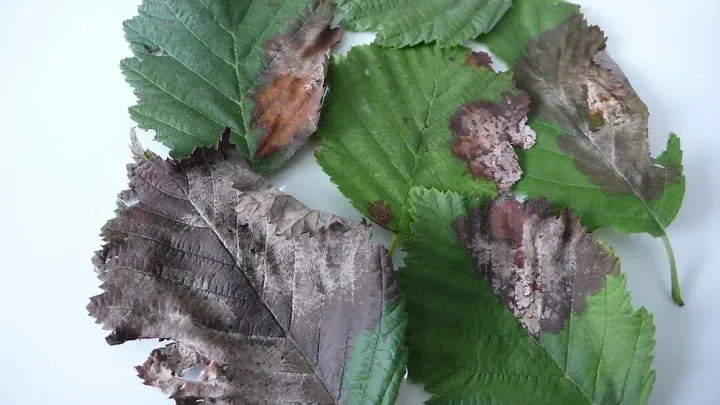
Description
Symptoms
The primary symptom of this disease is the appearance of distinct spots on the alder leaves, which typically begin as brownish or discolored areas with indefinite margins.
As the infection progresses, these spots often develop a darker, well-defined border, and the central tissue may turn necrotic, leading to premature drying of the affected leaf area.
The characteristic sign of the presence of the pathogen is the formation of minute black fruiting bodies, known as perithecia, scattered across the upper surface of the leaves.
In cases of severe infestation, individual lesions coalesce, covering a large portion of the leaf surface, which causes the foliage to curl and eventually wither.
Premature leaf drop is a hallmark of this condition, often resulting in significant defoliation of the alder trees by late summer, which is abnormal for a healthy tree.
Pathogen
The causative agent of alder leaf spot is the fungus Gnomoniella tubiformis, a member of the Ascomycota phylum known for its host-specific parasitic behavior.
The life cycle of the pathogen is closely synchronized with the phenology of the host alder trees, ensuring its survival from one growing season to the next.
During the spring, the fungus releases ascospores from overwintered perithecia, which are the primary inoculum source for new infections on the emerging leaves.
Once the infection is established, the fungus produces conidia, facilitating secondary infections and spreading the disease throughout the canopy during the summer.
The fungus is highly adapted to temperate environments and relies on leaf litter to complete its sexual reproduction phase before the cycle restarts the following spring.
Conditions for development
High humidity and consistent rainfall are the most critical factors for the rapid development and spread of Gnomoniella tubiformis within alder stands.
Dense forest stands with limited airflow create a favorable microclimate, as the retained moisture on leaf surfaces allows spores to germinate and penetrate the host tissue.
Temperatures ranging from 15°C to 22°C are considered optimal for the pathogen's metabolic activity and the subsequent colonization of the foliage.
Tree stress, often caused by drought, poor soil nutrient status, or previous infestations, significantly increases the tree's susceptibility to the leaf spot pathogen.
The accumulation of moist leaf litter on the forest floor provides an ideal environment for the fungus to overwinter, ensuring high inoculum pressure for the next season.
Why it matters
The premature loss of leaves significantly reduces the tree's photosynthetic capacity, which impairs its ability to store necessary energy reserves for winter dormancy.
Chronic annual infection weakens the tree's overall vigor, resulting in reduced radial growth and an increased risk of long-term decline in the forest stand.
Compromised trees are frequently targeted by secondary pests, such as wood-boring insects, which can cause even more structural damage than the fungal pathogen itself.
The aesthetic value of alder trees in public parks and ornamental landscapes is severely diminished by the presence of widespread foliar necrosis and early defoliation.
In ecosystem terms, the disease disrupts the nutrient cycling process by prematurely removing organic matter from the canopy and altering the foliage quality on the ground.
Protection
The most effective management strategy is the sanitation of the area, specifically the removal and destruction of fallen leaves to eliminate the primary source of inoculum.
Improving stand aeration through selective pruning or thinning helps reduce the moisture levels in the canopy, making the environment less hospitable for fungal growth.
Promoting tree health through appropriate fertilization and soil management can enhance the host's natural resistance to the pathogen.
In nurseries or high-value landscapes, the targeted application of protective fungicides during the early spring may be used to prevent initial infections.
Long-term planning should focus on site selection and the use of site-adapted species to maintain resilient stands that can naturally withstand common fungal pressures.
Discussion
No discussions yet — be the first.