
Gloeosporium rot of apple
Gloeosporium laeticolor
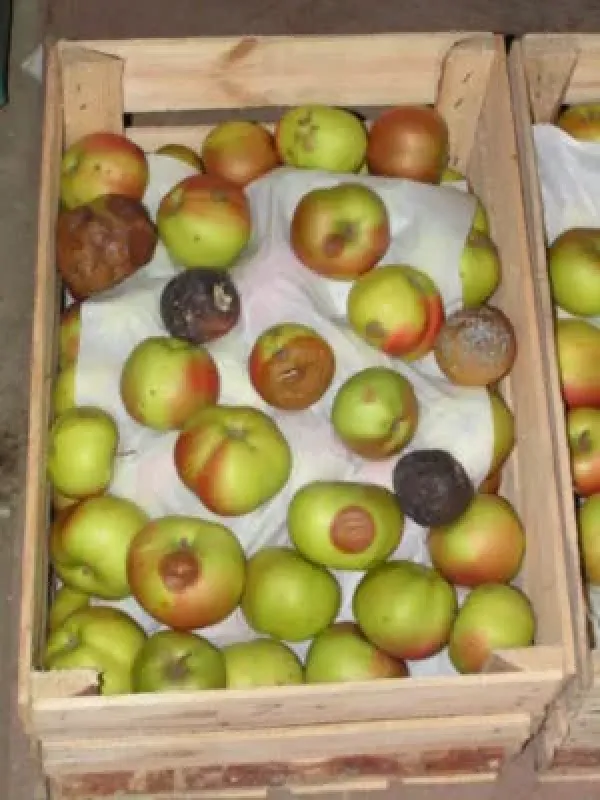
Description
Symptoms
Symptoms typically do not manifest until the apples have been in cold storage for several weeks or months. The first sign is the appearance of small, circular, slightly sunken lesions on the skin of the fruit.
These spots gradually enlarge and take on a brown color. A distinct characteristic is that the infected tissue has a bitter taste, which is a hallmark of this specific fungal infection, differentiating it from other storage rots.
A key diagnostic feature is the development of concentric circles of cream or white fungal spore masses in the center of the lesions. Under moist conditions, these spore pustules become very prominent and can easily spread to adjacent fruits.
When an infected apple is sliced open, a cone-shaped region of decayed tissue is visible, extending deep into the flesh toward the seed cavity. The flesh becomes soft, discolored, and develops an off-flavor.
In advanced stages, the entire fruit may rot, eventually shriveling and becoming a hardened, mummified structure covered in spores. These mummies are extremely dangerous as they can continue to release spores if not removed from the storage facility.
Pathogen
The causal agent of Gloeosporium rot in apples is the fungus Gloeosporium laeticolor (often associated with Neofabraea alba). This pathogen is a major contributor to post-harvest fruit decay, commonly referred to as bitter rot or storage rot.
The fungus overwinters as mycelium in the bark of infected branches, on mummified fruit left on the tree, and within orchard debris. In the spring and summer, the fungus produces conidia, which are disseminated by rain splash, wind, and insects to developing fruits.
Infection is often latent, meaning the fungus penetrates the skin of the apple in the orchard but remains dormant or grows very slowly. It enters through lenticels, micro-cracks, or insect wounds on the fruit surface.
The disease is classified as a post-harvest decay pathogen. Upon entering the fruit, the fungus secretes enzymes that break down the cell walls, eventually colonizing the internal tissue as the fruit ripens and is placed in storage.
The life cycle of the pathogen is heavily dependent on the presence of moisture during the pre-harvest period. High humidity levels during the final stages of fruit maturity are the primary drivers for significant infection rates in the harvested crop.
Conditions for development
Optimal conditions for infection include frequent rainfall and high relative humidity during the late summer and early autumn. These conditions are essential for the germination of fungal conidia on the surface of the fruit.
Warm temperatures in the orchard favor the initial infection process. Conversely, the cooler environment of a cold storage facility, typically maintained between +1°C and +4°C, is conducive to the long-term, albeit slow, growth of the pathogen.
Humidity levels in storage exceeding 90% are critical for the development of fungal sporulation. Keeping the environment relatively drier can help suppress the rapid spread of spores between individual apples in storage containers.
Stress factors that weaken the fruit skin, such as hail damage, insect stings, or excessive nitrogen fertilization, increase susceptibility to Gloeosporium laeticolor penetration.
Proper aeration within the storage room is necessary to manage humidity and temperature uniformly. Without adequate airflow, pockets of high moisture develop, creating perfect conditions for the pathogen to thrive and spread throughout the pallet.
Why it matters
The primary damage caused by Gloeosporium rot is the significant loss of marketable fruit during the storage period. This can result in severe financial losses for growers and retailers, as large portions of a crop may become unsalable.
Because the disease often remains latent until after harvest, producers may be unaware of the infection level during the initial sorting phase, leading to unforeseen waste once the produce reaches the supply chain.
Infected apples are often unsuitable for processing into juice or cider due to the bitter compounds produced by the fungus. This eliminates the possibility of reclaiming losses through secondary product manufacturing.
Labor costs associated with grading, inspecting, and re-sorting fruit in storage increase dramatically when Gloeosporium rot is present. This reduces the overall profit margin for the orchard operation.
The spread of the disease within containers creates a ripple effect. If a single infected apple is missed during sorting, it can serve as a primary inoculum source, leading to the decay of neighboring fruits and potentially an entire lot.
Protection
Effective control begins with orchard hygiene. Removing infected branches and clearing away mummified fruit are essential steps to reduce the primary inoculum load in the orchard.
Timely application of fungicides during the growing season is a standard practice. Specifically, protective sprays applied in the final weeks before harvest are highly effective at preventing the penetration of the fungus.
Careful handling during harvest is paramount. Avoiding skin abrasions and bruises reduces the number of entry points available for the pathogen to settle and grow.
Rapid cooling of the apples to the recommended storage temperature immediately after harvest is a vital step in inhibiting the activity of latent infections.
Strict sanitation protocols in storage facilities are necessary. Disinfecting bins, walls, and storage equipment helps minimize the background spore count and maintains the quality of the stored harvest.
Discussion
No discussions yet — be the first.