
Gloeosporium citrus blight
Gloeosporium citri
Description
Symptoms
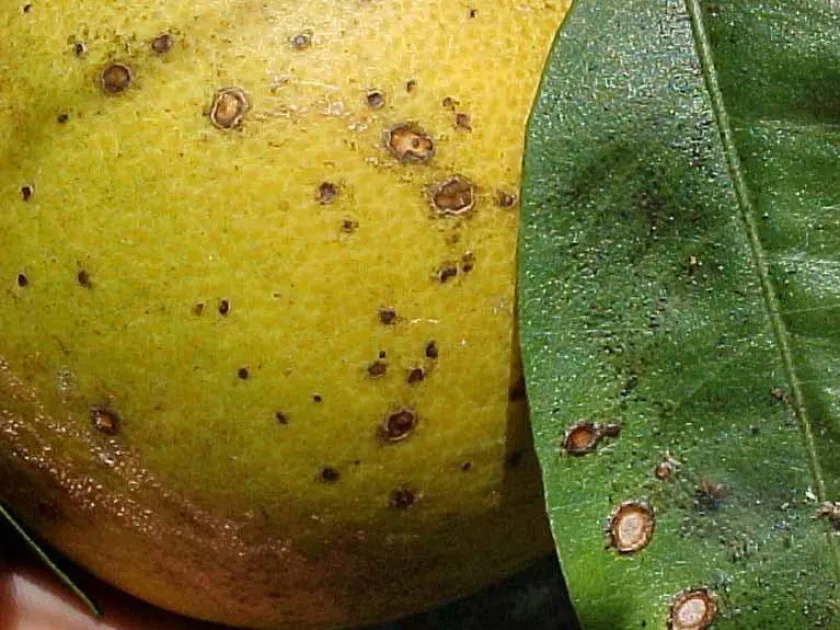
Early symptoms appear as small, circular, light-brown spots on leaves, which gradually enlarge and darken, often developing a distinct dark-brown or black border.
Tiny dark dots begin to appear on the surface of the lesions; these are the fungal fruiting bodies, which may release pinkish or orange spore masses in humid conditions.
Twigs affected by the fungus tend to wither from the tips downward. The bark may show signs of cracking, leading to dieback of entire branches in severe cases.
Infected fruits exhibit sunken, necrotic spots that grow rapidly. These spots eventually lead to fruit decay and premature fruit drop, compromising the harvest.
Blossoms and young fruit sets are also susceptible to the infection, often resulting in their blackening and early abscission from the stems.
Pathogen
The causative agent of this disease is the fungus Gloeosporium citri, which is frequently associated with Colletotrichum gloeosporioides, a common plant pathogen.
The fungus survives in dead plant debris, twigs, and fallen leaves, serving as a reservoir for infection during the next growing season.
Spores are primarily disseminated through water droplets, such as rain or overhead irrigation, as well as by wind gusts that carry them to healthy tissues.
The pathogen enters the host through natural openings like stomata or via physical wounds on the surface of leaves, shoots, and developing fruits.
Once inside, the fungus develops its mycelium throughout the host tissue, eventually producing acervuli, which are specialized structures for mass spore production.
Conditions for development
High relative humidity and frequent rainfall are the most critical factors for the rapid development and spread of Gloeosporium citrus blight.
The fungus thrives in temperatures between 20°C and 25°C, making warm and rainy weather windows the most dangerous times for citrus orchards.
Dense, unpruned canopies lack proper air circulation, creating a humid microclimate that traps moisture and facilitates the infection process.
Citrus trees weakened by poor soil quality, drought, or nutrient deficiencies exhibit significantly reduced resistance to fungal invasion.
Physical trauma, such as that caused by mechanical harvesting, storm damage, or pest infestations, creates optimal entry points for fungal spores to colonize the tree.
Why it matters
The disease causes extensive defoliation, which severely limits the tree's photosynthetic capacity and weakens its overall vigor and health.
Dieback of branches leads to a permanent reduction in the productive canopy, forcing the tree to expend energy on repair rather than fruit production.
Fruit quality is drastically reduced, making the citrus unfit for fresh market consumption and prone to post-harvest decay during transit.
Yield loss can be catastrophic in neglected orchards, as the infection affects both the current season's fruits and the overall health of the tree for future years.
Management of chronic infections requires ongoing investment in protective sprays and labor-intensive sanitation, increasing the total cost of production.
Protection
Strict sanitation is the foundation of management: all infected twigs, leaves, and fallen fruits must be removed from the orchard and destroyed.
Proactive application of copper-based fungicides during the growing season helps to create a protective layer on fruit and foliage surfaces.
Providing balanced nutrition and maintaining optimal soil moisture levels are essential for boosting the tree's natural defense mechanisms against fungal diseases.
If an infection is detected, applying systemic fungicides can help stop the internal growth of the mycelium and prevent further damage to the tree.
- Pruning for better canopy ventilation.
- Disinfecting pruning tools between trees.
- Monitoring for insect pests that cause wounds.
- Strategic irrigation management.
Discussion
No discussions yet — be the first.