
Gloeophyllum odoratum
Gloeophyllum odoratum
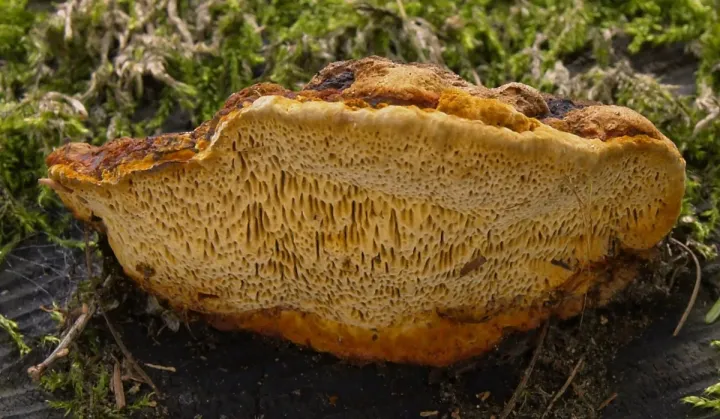
Description
Symptoms
The initial stage of the disease is marked by a clear discoloration, shifting from the natural tone of the wood to a yellowish or dark brown shade.
A definitive sign of an advanced infection is the cubic cracking of the wood, where it breaks into small brittle prisms due to the loss of cellulose.
Brown, leathery fruiting bodies typically emerge from cracks on the timber surface, serving as visible evidence of an established fungal colony.
The infected wood loses its structural strength and becomes light and brittle, crumbling easily when subjected to physical pressure.
- Discoloration of the timber.
- Characteristic cubic cracking pattern.
- Distinct anise scent.
- Presence of hard, perennial fruiting bodies.
- Loss of mechanical strength and density.
Pathogen
Gloeophyllum odoratum is a species of fungus in the family Gloeophyllaceae, recognized as a primary agent of brown rot in woody substrates.
The fungus acts as a specialized degrader of cellulose, extracting vital nutrients while leaving the more resistant lignin largely unaffected.
As a biological agent, it colonizes dead wood and timber, causing significant structural changes that lead to the eventual failure of the material.
Its mycelium develops through the wood fibers, systematically breaking down the structural integrity and stability of the infected timber.
The fruiting bodies of this fungus are perennial, tough, and leathery, often emitting a distinct and pleasant anise-like scent in the environment.
Conditions for development
Gloeophyllum odoratum flourishes primarily in environments where wood moisture content remains consistently between 30 and 50 percent.
The ideal temperature range for mycelial growth is between +20 and +28 degrees Celsius, though the fungus displays high resilience to environmental shifts.
The fungus spreads via wind-dispersed spores that can travel over long distances to colonize new, vulnerable wooden surfaces.
Poor ventilation and high humidity, particularly in storage warehouses or enclosed building structures, significantly accelerate the colonization process.
Constant contact with damp soil provides a continuous source of moisture and inoculation, making ground-contact wood highly susceptible.
Why it matters
The fungus poses a severe threat to the structural integrity of timber buildings, causing premature decay and potential collapse of load-bearing elements.
In forestry and agriculture, it damages wooden fences, stakes, and storage facilities, leading to recurring financial losses and maintenance costs.
Infected timber is entirely unsuitable for construction, as its physical properties, including tensile and compressive strength, are severely compromised.
The economic impact of this decay includes not only the loss of materials but also the high costs associated with labor, replacement, and structural repairs.
Failure to identify and remediate the infection in time can result in extensive damage to surrounding healthy wood via spore dissemination.
Protection
The most effective strategy for prevention is maintaining a wood moisture content below 20 percent, which effectively prevents fungal activation.
Proper architectural design, including adequate ventilation and moisture barriers, is essential to protect wooden components from ambient humidity.
Regular application of wood preservatives, fungicides, and anti-rot treatments provides a chemical barrier against spore germination and colonization.
Any identified areas of decay should be removed and disposed of safely, ideally by incineration, to minimize the risk of spreading the fungal spores.
Routine inspection of wooden structures and timber inventories is recommended to ensure early detection and prompt removal of potential decay sites.
Discussion
No discussions yet — be the first.