
Gigaspora margarita
Gigaspora margarita
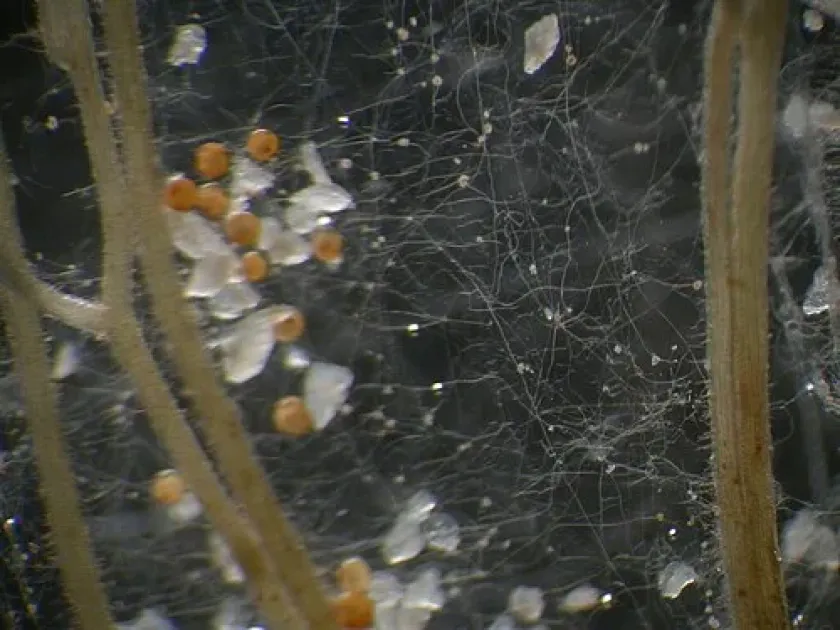
Description
Pathogen
Gigaspora margarita is not a plant pathogen or a disease-causing agent. It is a well-known species of arbuscular mycorrhizal (AM) fungi.
These fungi form a symbiotic relationship with the roots of the majority of terrestrial plants, exchanging soil nutrients for plant-derived carbohydrates.
The fungus colonizes the root cortex and forms specialized structures known as arbuscules, which serve as the primary site for nutrient exchange.
There are no symptoms of disease associated with this organism, as it is naturally adapted to coexist with host plants without causing damage.
It plays a fundamental role in the soil ecosystem, contributing significantly to plant growth and soil structural stability.
Conditions for development
The development of Gigaspora margarita is highly dependent on the presence of a host plant, as it cannot complete its life cycle independently.
Factors such as soil moisture, temperature, and texture significantly influence the colonization efficiency of the root system.
High levels of soluble phosphorus in the soil act as a negative regulator, reducing the plant's dependency on the mycorrhizal fungus.
Soil disturbance, such as deep plowing, negatively affects the mycelial network, making it difficult for the fungus to establish in the field.
Maintaining a stable organic matter content and balanced pH is essential for sustaining populations of these beneficial microorganisms.
Why it matters
This organism does not cause any harm to plants, crops, or agricultural yield. It is considered an essential beneficial fungus in agroecology.
The main benefit provided by Gigaspora margarita is the significant increase in the uptake of nutrients, especially phosphorus and micronutrients.
It enhances plant tolerance to various environmental stresses, including drought, salinity, and extreme temperatures.
Mycorrhizal colonization creates a biological barrier that can help protect the roots from invasion by soil-borne pathogens and pests.
In addition to nutrition, the fungus helps improve soil aggregation, contributing to better air and water permeability in the root zone.
Protection
Control measures are not required for Gigaspora margarita because it is not a pest or a disease agent.
Management strategies should focus on encouraging the activity of these fungi rather than eliminating them from agricultural fields.
Reducing the application of broad-spectrum fungicides and excessive synthetic fertilizers helps maintain the natural mycorrhizal population.
Implementation of conservation tillage practices preserves the delicate extraradical mycelium of the fungus, promoting better plant health.
The use of mycorrhizal inoculants is a recommended practice to improve plant growth and yield in soils where native populations are low.
Discussion
No discussions yet — be the first.