
Gigaspora heterogama
Gigaspora heterogama
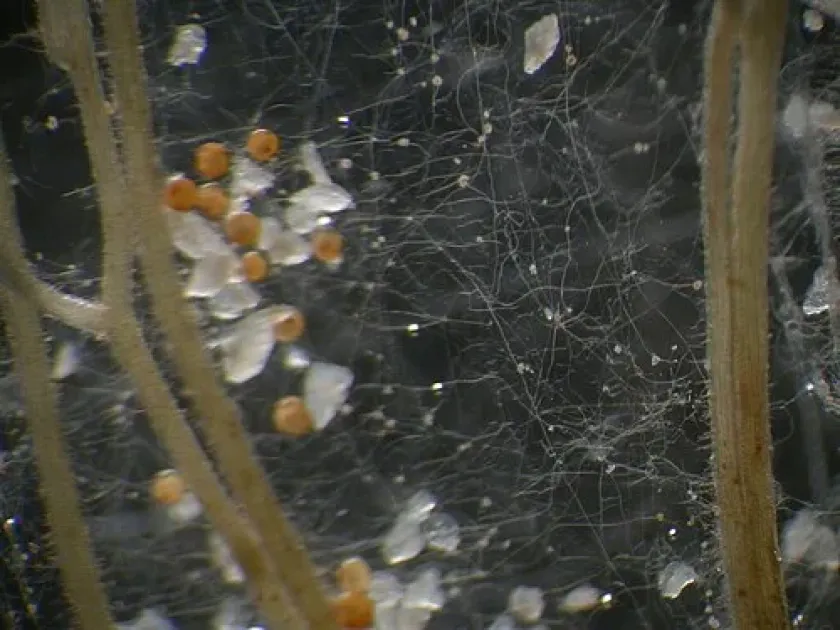
Description
Symptoms
Since this fungus is beneficial, it does not produce disease symptoms such as blight, wilting, or necrotic lesions on the plant foliage or roots.
The primary indicator of its presence is the improved vigor of the plant, which often shows greener leaves and faster biomass accumulation compared to non-mycorrhizal plants.
Examination of the root system may reveal dense branching and an increased number of fine root hairs, which are typical signs of an active mycorrhizal association.
Microscopic analysis of root fragments will show the presence of characteristic arbuscules, which appear as branching, tree-like structures inside the root cells.
Presence can also be confirmed by the identification of large, thick-walled spores in the rhizosphere soil surrounding the roots.
Pathogen
Gigaspora heterogama is a species of fungus belonging to the phylum Glomeromycota. It is not a plant pathogen but a vital arbuscular mycorrhizal fungus (AMF).
The fungus establishes a mutualistic symbiotic relationship with plant roots, where it develops intracellular structures called arbuscules for efficient nutrient exchange.
This biological interaction allows the plant to provide the fungus with carbohydrates, while the fungus enhances the plant's uptake of water and essential minerals, particularly phosphorus.
The life cycle involves the production of large, resilient spores in the soil, which serve as the primary inoculum for colonizing the roots of host plants in subsequent seasons.
In modern agriculture, this organism is recognized as a key component of soil health, contributing to the sustainability and resilience of various crop systems.
Conditions for development
The development of Gigaspora heterogama depends strictly on the presence of living host plant roots to provide the necessary carbon sources for its growth.
Soils with moderate phosphorus levels are ideal; high concentrations of synthetic phosphate fertilizers often inhibit the formation of mycorrhizal associations.
Adequate soil moisture and good aeration are critical for the spore germination process and the subsequent growth of the fungal mycelium into the root cortex.
The fungal activity is significantly influenced by soil pH, with neutral to slightly acidic conditions generally supporting the best colonization rates.
Soil temperature also plays a major role, as the fungus thrives during the periods of active plant growth when soil temperatures are warm and stable.
Why it matters
The term "harmful" is inaccurate for Gigaspora heterogama, as it is a beneficial symbiotic organism that promotes agricultural productivity.
Any negative impact would be purely circumstantial, such as potential resource competition if excessive, non-native microbial inoculants are introduced into the soil.
There are no known instances where this fungus causes damage to crop tissues or interferes with plant physiological processes in a detrimental way.
The use of certain fungicides can negatively impact the populations of these fungi, indirectly harming the crops by removing their primary source of nutrient uptake enhancement.
Therefore, the lack of this fungus in heavily managed or sterile soils is a significant ecological disadvantage that often necessitates soil restoration efforts.
Protection
Management strategies for Gigaspora heterogama focus on preserving existing fungal populations rather than eradication or control.
Farmers are encouraged to practice reduced tillage to prevent the physical disruption of the underground fungal mycelial network.
Strategic use of fertilizers, ensuring that phosphorus levels are not excessively high, helps maintain the plant's reliance on the symbiotic fungus.
Including diverse crop rotations, particularly with mycorrhiza-dependent species, ensures a continuous supply of host roots to keep the fungal population active.
- Avoid the overuse of broad-spectrum systemic fungicides.
- Use cover crops during the off-season to provide a carbon source for the fungus.
- Incorporate organic matter to improve soil structure and moisture retention.
- Conduct periodic soil health assessments to monitor the diversity of beneficial fungi.
Discussion
No discussions yet — be the first.