
Geastrum
Geastrum
Description
Symptoms
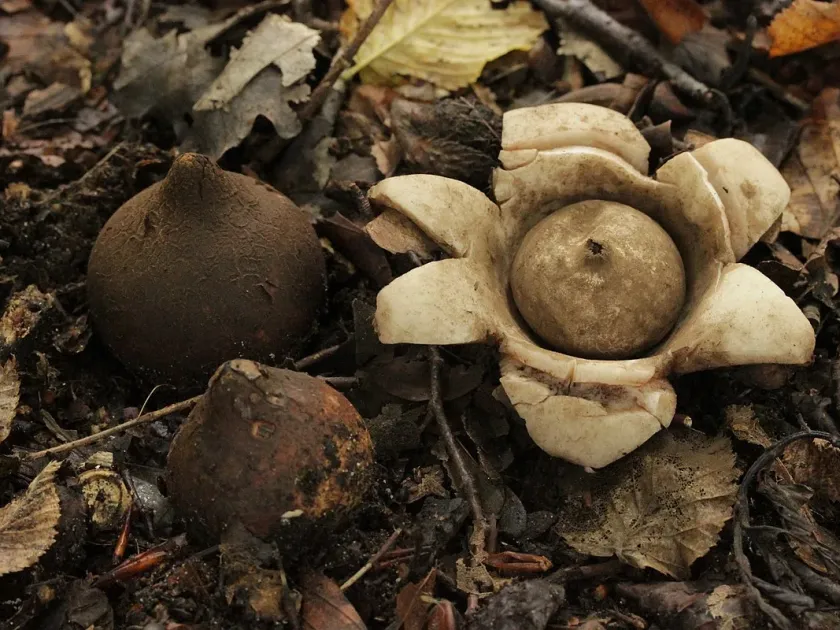
Geastrum, commonly known as the earthstar, is a genus of fungi often mistaken for a plant pathogen due to its unique appearance. Its primary sign is the formation of a star-shaped fruiting body that emerges from the soil after its outer layer splits into distinct lobes.
During the early stages of development, the fungus appears as a small, bulbous mass partially buried in soil or leaf litter. As it matures, the outer shell (exoperidium) splits and peels back, revealing the central spore-bearing globe, which sits atop the star-shaped base.
These fungi do not cause leaf spotting, stem rot, or root damage on living plants. They appear on the surface of the soil, often near wood chips, bark, or decaying organic matter, which are their primary nutritional sources.
The color of the fruiting bodies typically ranges from light tan to dark brown, helping them blend into the natural garden environment. They are often found in small clusters in shaded, damp areas where organic decay is active.
It is crucial to distinguish these organisms from parasitic fungi. The appearance of geastrum is simply an indicator of high organic content in the soil and is not a sign of any pathology affecting garden crops.
Pathogen
Geastrum is not a plant pathogen; it is a saprotrophic fungus. It survives by decomposing dead plant matter and does not possess the biological capacity to invade or damage living plant tissues.
These fungi play a vital role in the ecosystem as primary decomposers. They produce enzymes that break down complex materials like cellulose and lignin found in dead plant debris, wood, and humus, facilitating the nutrient cycle.
The mycelium of the fungus extends through the soil to extract energy from organic waste. It does not form haustoria or any other structures that penetrate living cells, meaning it cannot cause infection or disease in agricultural crops.
Categorizing geastrum as a disease is biologically incorrect. Its existence is entirely independent of living plant health, as it relies on dead material to complete its life cycle.
Therefore, geastrum should be recognized as a beneficial component of the soil microbiome, contributing to the breakdown of debris rather than acting as a source of harm to the plants growing nearby.
Conditions for development
The development of geastrum fruiting bodies is strictly dependent on specific environmental conditions, primarily high soil moisture and the presence of abundant organic matter. They thrive in gardens with thick mulch layers or areas with significant decaying leaf debris.
Optimal temperatures for their appearance are typically moderate, often coinciding with periods of high rainfall. Shaded or semi-shaded locations that retain moisture for longer periods provide the best habitat for their mycelial growth.
Well-aerated soil rich in humus serves as an excellent substrate. The fungus requires these resources to produce the energy needed for the formation of its striking, star-shaped fruiting structures on the surface.
Spore dispersal is facilitated by wind or raindrops hitting the central globe, which releases clouds of microscopic spores into the air. These spores can remain dormant in the soil for extended periods until moisture conditions become favorable again.
Because they are not host-specific, these fungi can manifest in any environment where dead organic resources are available, regardless of whether cultivated plants are present or not.
Why it matters
Geastrum poses no threat to crops, vegetables, or ornamental plants. It is a completely harmless fungus that maintains a neutral or even beneficial relationship with the surrounding plant life by cycling nutrients.
The fungus does not release toxins, nor does it deplete essential nutrients required by crops. On the contrary, its decomposition activities make essential elements more available to plant roots, supporting overall soil health.
While some gardeners may be alarmed by its sudden appearance, it causes no wilting, lesions, or deformation. It does not compete with plants for sunlight, water, or minerals in a way that would hinder plant growth.
There are no recorded instances of geastrum being involved in the destruction of crops. It is purely an aesthetic phenomenon that gardeners may encounter when conditions are wet and organic resources are plentiful.
In summary, the harm caused by geastrum is non-existent. It is a natural part of the garden ecosystem that performs its role as a decomposer without negatively impacting any agricultural objectives.
Protection
No protective measures are required for geastrum as it is not a pest or a disease. The use of fungicides to eliminate this fungus is unnecessary and counterproductive, as it may negatively impact the beneficial soil microbiota.
If the appearance of the mushrooms is undesirable for aesthetic reasons, they can be simply removed by hand. There is no need for chemical treatment or soil sterilization to manage their presence.
To discourage their growth, one can manage the soil environment by improving drainage and avoiding over-saturation. Reducing the thickness of mulch layers and ensuring good air circulation will also make the soil less inviting for any fungi to fruit.
Preventative practices should focus on general garden hygiene, such as managing excess organic debris if it becomes excessively wet. However, this is more about garden maintenance than disease control.
Focus your efforts on controlling genuine plant pathogens rather than attempting to eradicate a harmless saprotroph. Geastrum is a natural garden guest that poses no risk to your plants.
Discussion
No discussions yet — be the first.