
Geastrales
Geastrales
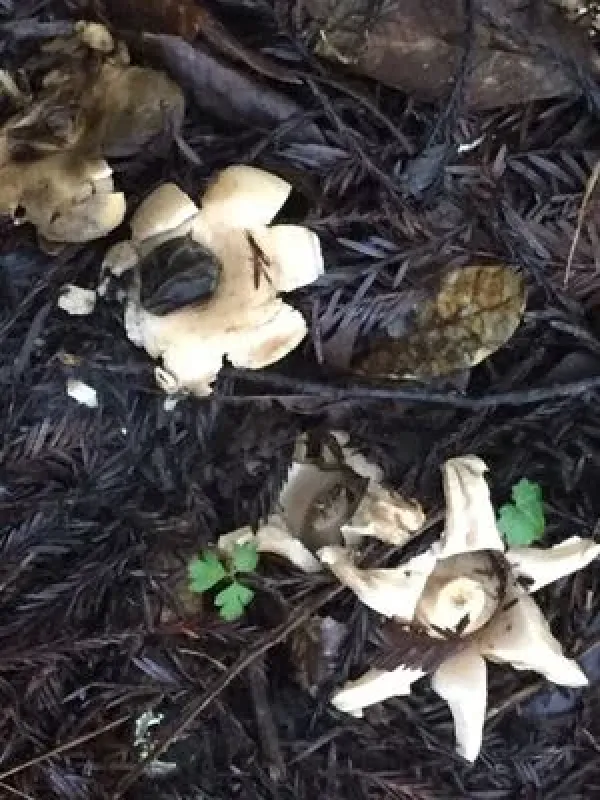
Description
Pathogen
Geastrales is an order of fungi, commonly referred to as "earthstars" due to the star-like appearance of their mature fruiting bodies. They are not plant pathogens.
Biologically, these organisms belong to the division Basidiomycota. They are saprotrophic fungi that play a crucial role in decomposing organic matter within soil and leaf litter.
Unlike parasitic fungi that attack living tissue, Geastrales thrive by breaking down dead plant materials, such as lignin and cellulose, which helps recycle nutrients in the ecosystem.
They do not cause any diseases in agricultural crops, trees, or shrubs. Their presence in the soil is an indicator of ecological balance rather than a sign of infection.
As non-pathogenic fungi, they have no impact on crop yield, plant health, or the structural integrity of agricultural vegetation.
Conditions for development
Geastrales require specific environmental conditions to develop, typically preferring moist, shaded, and organic-rich substrates such as woodland floors.
Their fruiting bodies often emerge after periods of high humidity and rainfall, which provide the necessary moisture for the expansion of the outer peridium.
These fungi are well-adapted to moderate temperature ranges, allowing them to complete their reproductive cycle in environments where moisture is consistently available.
The development of the spores depends on the structural breakdown of the inner sac, which occurs once the fungus has matured within its natural substrate.
They thrive in undisturbed environments where the soil composition supports stable fungal networks, often found in soil rich in decomposing plant matter.
Why it matters
Geastrales pose no threat to agriculture. They are strictly saprotrophic and cannot parasitize or damage any form of cultivated plants.
There is no economic harm associated with this order of fungi, as they do not compete with crops for resources and do not transmit any plant pathogens.
Attempts to eradicate these fungi in agricultural settings are unnecessary and ecologically counterproductive, as they contribute to soil health and fertility.
They are not considered a pest in any capacity, and their biological activity is entirely isolated from the growth cycles of agricultural commodities.
Farmers and agronomists do not need to implement any protective or preventive measures against Geastrales, as they are harmless components of the soil microbiome.
Discussion
No discussions yet — be the first.