
Geastraceae
Geastraceae
Description
Symptoms
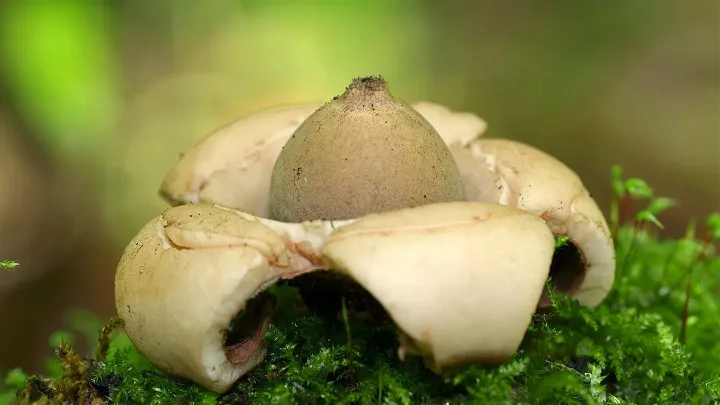
Geastraceae, commonly known as earthstars, are a group of basidiomycete fungi. Their most distinctive feature is the unique shape of the fruiting body, which starts as a ball and later splits into petal-like lobes that bend outwards.
The central part contains the spore chamber, which elevates above the star-shaped lobes. Spores are released through an apical pore, often triggered by physical impacts such as raindrops hitting the chamber.
Fruiting bodies have a tough, parchment-like texture. They are remarkably persistent and can often survive throughout the winter on the soil surface, distinguishing them from many other mushroom species.
Their color ranges from light cream and grey to deep brown or black. The size of mature specimens varies from two to ten centimeters in diameter depending on the specific genus.
Since the mycelium grows hidden within the substrate, these fungi are usually observed only during their active fruiting stage, which typically occurs in late summer and autumn.
Pathogen
It is important to clarify that members of the Geastraceae family are not phytopathogens. They do not cause diseases in agricultural crops, as they belong to the saprophytic group of organisms.
Biologically, these fungi specialize in decomposing organic matter, primarily lignin-containing components, leaf litter, and humus. They serve as an essential component of the soil microbiota.
Their life cycle is deeply integrated into soil formation and mineralization processes. Unlike parasitic fungi, they do not infiltrate living plant tissues or extract sap, posing no threat to crop development.
They belong to the order Geastrales and do not form mycorrhizal relationships with agricultural crops, preferring to develop in decaying organic matter or rich forest soil.
From an agronomic perspective, they act as beneficial decomposers that improve soil structure and facilitate the nutrient cycle within the agroecosystem.
Conditions for development
The development of Geastraceae depends on the presence of sufficient organic debris in the soil. They thrive in loose, well-aerated substrates with a neutral or slightly acidic pH.
Optimal conditions for fruiting body formation include high air humidity and moderate temperatures. They are most frequently found in shaded areas, under tree canopies, or in well-managed garden beds.
In agricultural settings, the appearance of these fungi often indicates good humus accumulation and a healthy soil microbial balance, which is generally a positive ecological sign.
They are resilient to temperature fluctuations, though direct sunlight and rapid drying of the topsoil can hinder mycelium development and spore organ formation.
Intensive application of mineral fertilizers and chemical fungicides tends to suppress saprophytic fungi, as these practices alter the natural balance of the soil environment.
Why it matters
As saprophytes, Geastraceae cause no harm to agricultural crops. They do not compete with plants for water or nutrients and do not secrete toxins that could inhibit root growth.
There is no agricultural damage associated with these fungi. On the contrary, their presence is a indicator of biological diversity and a lack of excessive chemical stress in the soil.
There are no recorded instances of Geastraceae causing crop lodging, rot, or stunted growth. They are not pathogenic to field or vegetable crops.
By decomposing cellulose, they actually promote soil health, converting stubborn organic remains into bioavailable mineral forms.
Consequently, there is no need to worry about their presence in fields or gardens, as they act as natural allies of the soil ecosystem.
Protection
Because Geastraceae are not pests or pathogens, specific control measures or chemical treatments are neither necessary nor recommended.
If removal is desired for aesthetic reasons, simply harvesting the fruiting bodies from the soil surface will prevent further spore dispersal in that specific area.
Prevention involves standard good agronomic practices, such as proper tillage, avoiding excessive accumulation of unrotted debris, and maintaining balanced soil fertility.
While the use of broad-spectrum fungicides for other diseases may reduce the number of saprophytes, such measures are excessive unless a specific phytopathological threat exists.
Maintaining a healthy soil balance is encouraged, as the presence of decomposer fungi contributes to a more stable environment for growing healthy agricultural products.
Discussion
No discussions yet — be the first.