
Gastrosporium asiaticum
Gastrosporium asiaticum
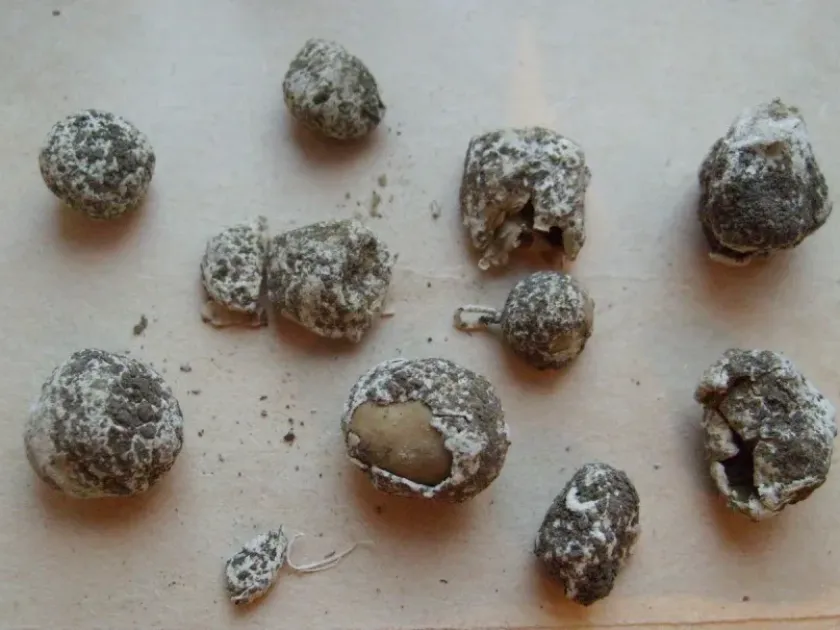
Description
Symptoms
The primary symptom is the replacement of seeds or entire spikelets with a dusty mass of grey or brownish spores. Visually, the affected ear or panicle appears deformed.
Symptoms often become apparent only during the heading or flowering stages. Healthy parts of the plant may appear stunted or chlorotic due to the metabolic diversion caused by the fungus.
A distinctive sign is the rupture of the glumes, exposing the spore mass to the environment. Unlike other types of smut, the affected plant parts may retain their primary structure until complete disintegration.
In cases of severe infection, shortened internodes are frequently observed, giving the plant a dwarfed or unnatural appearance. Excessive tillering without the formation of productive stems is also a common observation.
- Deformation of the ear or panicle.
- Emergence of dark, dusty spore masses.
- Stunted growth and delayed development.
- Premature drying of affected plant organs.
Pathogen
The causal agent of this disease is the basidiomycete fungus Gastrosporium asiaticum. This pathogen belongs to the smut fungi group, which primarily affects the reproductive organs of various cereal crops.
The lifecycle of the fungus is closely linked to the developmental stages of the host plant. Infection usually occurs at the early growth stages, followed by systemic spread of the pathogen through plant tissues.
During the maturation phase, the fungus replaces healthy ear or panicle tissues with a mass of spores. These spores serve as the primary inoculum for the next growing season.
The pathogen exhibits high adaptability to temperature fluctuations and environmental stresses, allowing it to survive in the soil for extended periods without losing its infectivity.
Morphologically, the spores are highly resistant to adverse conditions, which complicates control efforts through standard crop rotation practices alone.
Conditions for development
The development of the disease is highly correlated with weather conditions during seed germination. Moderate temperatures and high soil moisture at the time of sowing are optimal for infection.
The fungus typically infects the host simultaneously with seed germination. Spores present in the soil or on the seed surface are activated by the same environmental cues that trigger seedling growth.
Microclimate factors within the agroecosystem are also significant; dense crop stands and poor aeration contribute to more intensive spread of the infection throughout the field.
Soil type has an indirect impact, but the presence of moisture during critical development phases is the defining factor for successful pathogen colonization.
Prolonged rainfall during the heading period can exacerbate the situation, potentially leading to secondary infection of adjacent plants within the field.
Why it matters
The economic impact of Gastrosporium asiaticum is primarily due to total yield loss on infected plants. As the fungus replaces grain tissues with its spores, the productivity of these plants is effectively zero.
Beyond direct grain loss, the presence of spores reduces the overall quality of the harvested crop, complicating processing and storage and necessitating additional cleaning costs.
The infection leads to premature tissue senescence, which weakens the plant's natural immune response and makes it more susceptible to secondary pathogens.
Infested areas become long-term sources of infection. Producers are often forced to avoid planting susceptible crops on these fields for several years, which disrupts farm management planning.
Economic damage also encompasses the costs associated with sanitizing agricultural machinery and storage facilities to prevent the further spread of spores.
Protection
The foundation of disease control is the use of certified, disease-free seed material. Systematic seed treatment with modern fungicides is an essential step in crop preparation.
Adhering to a robust crop rotation schedule, including non-host crops, significantly reduces the pathogen's pressure in the soil over time.
Effective weed management and planting at optimal times are crucial to minimizing the environmental conditions favorable for seedling infection.
Deep tillage practices can help bury spores into deeper soil layers, where their viability is reduced due to limited access to host root systems.
If disease hotspots are identified, it is recommended to isolate or mow the affected areas before spore release occurs, effectively containing the pathogen's spread.
Discussion
No discussions yet — be the first.