
Autumn skullcap
Galerina autumnalis
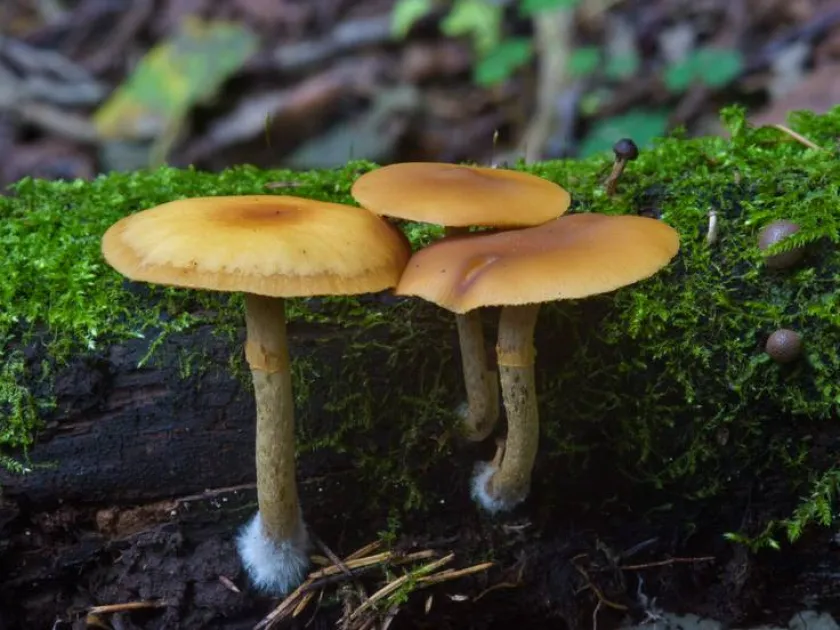
Description
Pathogen
Galerina autumnalis, commonly known as the autumn skullcap, is a species of gilled mushroom belonging to the Hymenogastraceae family (often synonymous with Galerina marginata).
This fungus is a saprotroph that specialized in the decomposition of decaying coniferous and hardwood timber, playing a vital role in forest ecosystem nutrient cycling.
The organism reproduces through spores released from its gills, which disperse through air currents to colonize new moisture-rich wood surfaces.
Its mycelium extends deeply into wood tissues, utilizing powerful enzymatic mechanisms to break down lignin and cellulose components.
It is not a phytopathogen for living crops, as its biological life cycle is strictly tied to already dead or highly compromised plant biomass.
Conditions for development
High moisture levels are the most significant factor for the growth and fruiting of this fungal species in forest environments.
Ample substrate availability, including decaying logs, stumps, and fallen forest debris, provides the necessary nutrients for the mycelial network to flourish.
The fungus prefers mild temperatures, commonly appearing during the autumn months when atmospheric humidity is consistently elevated.
Poorly ventilated areas with thick canopy cover facilitate the microclimate conditions required for the fungus to complete its reproductive stage.
Persistent rainfall contributes to the saturation of wood, significantly shortening the interval between spore germination and the development of new fruiting bodies.
Why it matters
The primary concern regarding this fungus is its severe toxicity, as it contains lethal amatoxins identical to those found in the death cap mushroom.
Accidental ingestion by humans or animals leads to grave health consequences, making this species a significant public health hazard in forested regions.
In terms of forestry, while it helps break down wood, its rapid colonization of freshly cut timber or stored wood can accelerate structural decay.
The presence of the fungus in residential areas or recreational parks poses a non-negligible risk for those who may confuse it with edible species.
Because the toxins are heat-stable, traditional cooking or drying methods fail to detoxify the mushroom, maintaining its threat level even after processing.
Protection
Effective management focuses on site sanitation, specifically the removal of decaying stumps and large pieces of deadwood in areas frequently visited by people.
Mechanical disposal of fruiting bodies found in populated zones is recommended to mitigate the accidental ingestion risk for vulnerable groups.
Improving drainage and promoting airflow through forest thinning can create a drier microclimate, which naturally discourages the growth of the fungus.
Public awareness programs are critical for educating people on the identification of poisonous mushrooms to prevent accidental harvest and consumption.
Monitoring wood storage areas is advisable, as the presence of high-moisture timber can lead to the rapid proliferation of the fungal mycelium.
Discussion
No discussions yet — be the first.