
Fusoidiella depressa
Fusoidiella depressa
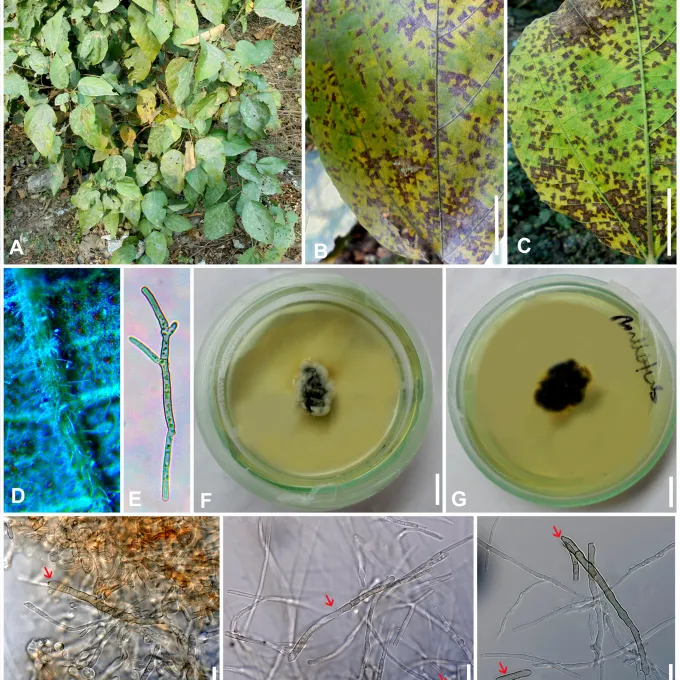
Description
Symptoms
The primary symptom of this disease is the appearance of characteristic necrotic spots on the leaf blades, which often present with a defined border.
As the infection progresses, these spots tend to enlarge and may merge, causing significant tissue death across the foliage surface.
Visible signs of sporulation appear as small, dark pustules or raised structures within the necrotic zones, which are indicators of the pathogen's active development.
Premature yellowing and desiccation of leaves are common observations, significantly reducing the plant's overall photosynthetic capacity.
In severe infections, the disease can affect petioles and stems, leading to plant deformities and a noticeable reduction in growth rates.
Pathogen
The pathogen is identified as the fungus Fusoidiella depressa, a microscopic organism recognized as a specialized agent of plant disease.
It primarily targets plant species within the Apiaceae family, utilizing these hosts for its nutritional development and completion of its biological cycle.
The fungus survives the off-season by remaining in infected crop debris, where it persists as mycelium or spores until the next growing season.
The primary inoculum is spread through natural environmental factors such as wind gusts, splashing rain, and mechanical contact with contaminated agricultural tools.
The fungus penetrates host tissues through stomata or mechanical wounds, systematically colonizing the internal cellular structures to disrupt plant metabolism.
Conditions for development
The disease thrives in warm and humid environments, with high relative humidity serving as the primary catalyst for rapid fungal proliferation.
Temperatures ranging from +18°C to +25°C are optimal for spore germination and the successful establishment of the pathogen within the host tissues.
Extended periods of rainfall or persistent dew create the necessary surface moisture for the fungus to initiate infection cycles repeatedly throughout the season.
Poorly ventilated fields or high plant densities lead to localized moisture buildup, which creates an ideal microclimate for the disease to spread rapidly.
Inadequate sanitation practices, such as leaving crop waste on the field, allow the pathogen to maintain high population levels in the soil.
Why it matters
The core economic impact of Fusoidiella depressa is the reduction in yield due to the extensive destruction of leaf area essential for plant development.
Plants affected by this fungus often show significant stunting, reduced quality of the harvestable parts, and lower nutrient storage capacity.
The loss of photosynthetic efficiency forces plants to consume stored reserves, leading to overall physiological weakness and susceptibility to secondary stressors.
Weakened plants become increasingly vulnerable to opportunistic pathogens and pests, which can further aggravate the overall plant health decline.
In cases of severe epiphytotics, entire crop segments may experience total loss, resulting in direct financial strain on agricultural production.
Protection
Effective management begins with robust crop rotation practices to break the fungal life cycle and reduce the initial inoculum load in the field soil.
Sanitary measures, including the thorough incorporation of crop residue into the soil after harvest, are critical to eliminating wintering grounds for the fungus.
The use of fungicide treatments during the early stages of infection is a standard chemical strategy to manage the spread and severity of the disease.
Regular field monitoring and scouting are essential for the early detection of symptoms, allowing for timely intervention before the disease reaches a critical threshold.
- Utilizing disease-resistant crop varieties
- Optimizing plant spacing to improve airflow
- Controlling weed populations that act as alternative hosts
- Maintaining balanced mineral nutrition for plant vitality
Discussion
No discussions yet — be the first.