
Fusoidiella anethi
Fusoidiella anethi
Description
Symptoms
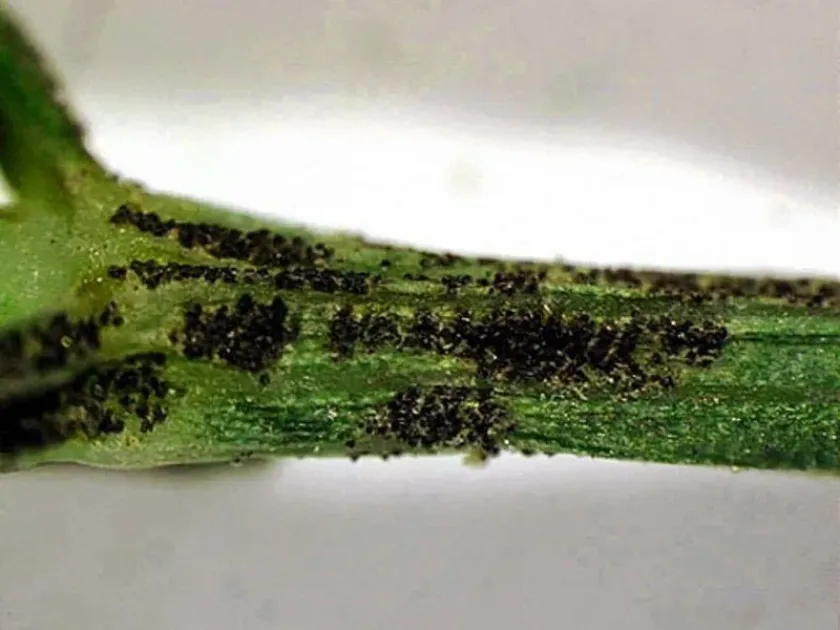
The initial symptoms manifest as small, dark-colored spots appearing on the stems and leaves of the dill plant. Over time, these spots expand in size and become more irregular in shape.
Affected tissues often display chlorosis, followed by necrosis, as the infection progresses. A fine, fuzzy fungal growth may be visible under high humidity, indicating active sporulation.
As the disease advances, the leaves turn yellow, curl up, and eventually wither. Stem integrity is compromised, leading to premature wilting and lodging of the entire plant.
Diagnostic features include the necrotic lesions having distinct, often darker borders. This pattern helps distinguish the disease from common environmental stressors or nutrient deficiencies.
In severe cases, the entire plant canopy shows signs of blight, turning brown or black, rendering the crop entirely unsuitable for harvest or consumption.
Pathogen
The disease is caused by the fungus Fusoidiella anethi. This pathogen is a specialized parasite that primarily targets plants within the Apiaceae family, including dill.
The fungal mycelium invades the host tissue, disrupting physiological functions and causing localized cell death. The pathogen is highly efficient at extracting nutrients from the host plant during its growth.
Reproduction occurs through conidia, which are easily disseminated by wind, water splashes, and mechanical contact during agricultural operations. This leads to rapid spread within a field.
Fusoidiella anethi can persist in the soil and on crop debris for several seasons. This environmental resilience makes it a persistent threat to farmers and gardeners alike.
The life cycle of the pathogen is closely tied to the host's vegetation period, allowing it to quickly adapt to the development phases of the crop and optimize its infection strategy.
Conditions for development
The development of Fusoidiella anethi is favored by high humidity and prolonged moisture on plant surfaces. Frequent rainfall or heavy dew creates an optimal environment for infection.
Mild temperatures ranging between 15°C and 22°C are ideal for the rapid germination of fungal spores. During such weather conditions, the spread of the disease can become epidemic.
Poor aeration in dense plantings significantly contributes to the proliferation of the disease. When plants are crowded, moisture remains trapped, providing a perfect incubation chamber.
Inadequate soil management and failure to practice crop rotation lead to the accumulation of pathogen inoculum in the soil, which increases infection pressure over successive years.
Plants experiencing nutritional stress or those weakened by insect attacks are significantly more susceptible to the entry and colonization of the fungus.
Why it matters
The primary economic harm is the total loss of marketability of the dill crop. Diseased plants are aesthetically unpleasing and lack the quality required for fresh market sales.
Significant reductions in yield occur when the disease is left unmanaged. Farmers may lose a substantial portion of their harvest, leading to decreased profitability of the entire production site.
The disease negatively impacts the overall health of the crops, reducing their growth vigor and leaving them vulnerable to secondary infestations by other pests and pathogens.
Infested areas become a biosecurity risk, as the pathogen remains in the soil, making it difficult to grow high-quality herbs or other Apiaceae crops in the near future.
If the disease spreads to seed production areas, the quality and germination rate of the resulting seeds can be significantly diminished, causing long-term agricultural issues.
Protection
Crop rotation is the most effective preventative measure. Avoiding the planting of Apiaceae crops (like dill, carrots, or parsley) in the same soil for at least 3-4 years is essential.
Using certified, healthy, and treated seeds is a critical starting point to prevent the introduction of the pathogen into clean fields or garden plots.
Maintaining proper spacing between plants ensures adequate airflow and quick drying of foliage after irrigation or rainfall, which limits the potential for fungal germination.
When environmental conditions suggest a high risk, the application of preventative or curative fungicides, specific to local regulations, may be necessary to suppress the disease.
Post-harvest sanitation is vital. Removing and destroying all infected crop residues reduces the primary inoculum source and helps break the pathogen's life cycle in the field.
Discussion
No discussions yet — be the first.