
Fusarium head blight
Fusarium vorosii
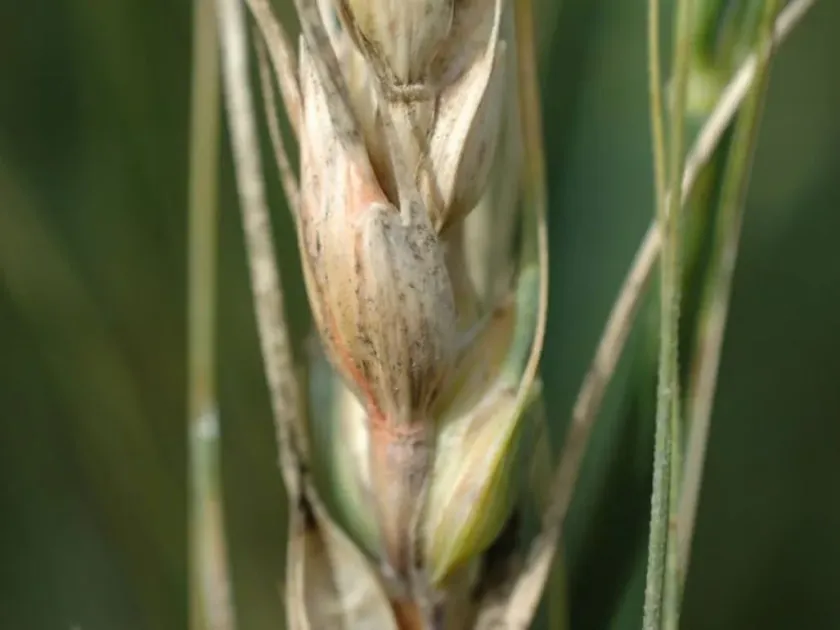
Description
Symptoms
The first signs of Fusarium head blight include the premature bleaching of spikelets. A portion of the head may turn white, while the rest of the head remains green, creating a stark contrast.
Under humid conditions, a characteristic orange or pinkish fungal growth, known as sporodochia, becomes visible at the base of the spikelets. This indicates the mass production of spores.
Infected kernels appear shriveled, discolored, and often lighter than healthy grains. They are frequently covered in white or pink mold, making them easily distinguishable from healthy kernels.
If the infection reaches the rachis, the entire upper portion of the spike dies, often resulting in a blank spike that lacks any viable grain filling.
Small black fruiting bodies, known as perithecia, may form on the surface of the infected spike tissues late in the season. These are the overwintering structures of the fungus.
Pathogen
The disease is caused by a complex of Fusarium fungi species, including Fusarium vorosii. These pathogenic fungi primarily survive as mycelium or spores on crop debris and in the soil.
Infection occurs mainly during the flowering stage of cereals. The fungal spores are spread by wind and rain splashes, landing on the wheat spikes and entering through the anthers during anthesis.
Once inside the plant tissue, the fungus grows and spreads through the rachis of the spike. It interferes with nutrient and water uptake, leading to the characteristic symptoms of the disease.
These pathogens are highly adapted to changing environmental conditions. They produce diverse types of spores that allow them to remain dormant for long periods until conditions are right for infection.
Crop residues such as wheat straw or corn stalks are the primary source of inoculum. If these residues are left on the soil surface, the fungus can easily produce new spores in the following season.
Conditions for development
The development of Fusarium head blight is heavily dependent on moisture. High humidity (above 80%) and rainfall during the flowering period are the most significant triggers for infection.
Moderate temperatures, typically ranging from 20°C to 25°C, are optimal for the growth of the fungus. Extended periods of warmth and moisture during anthesis create the perfect conditions for epidemics.
Field history plays a major role; planting cereals after susceptible crops like corn or wheat in a monoculture system drastically increases the risk of the disease.
Dense crop canopies that limit air circulation retain moisture longer, which facilitates fungal growth. Proper spacing and crop management can help reduce these local humidity levels.
Inadequate soil drainage can also contribute to higher moisture levels in the field, keeping the environment conducive to fungal survival and spread throughout the growth season.
Why it matters
Fusarium head blight causes significant yield losses by preventing grain fill and reducing the overall weight and quality of the harvested grain crop.
The primary concern is the production of mycotoxins, such as deoxynivalenol (DON), which are poisonous to humans and livestock. Contaminated grain is often rejected for food or feed use.
Grain affected by the fungus loses its viability, making it unsuitable for use as seed. This leads to poor germination and weak seedling growth if planted without proper treatment.
Economic impact is twofold: direct losses due to reduced yields and indirect losses due to the costs of grain cleaning, testing for toxins, and price penalties for contaminated loads.
Total crop failure in severe epidemic years is possible, especially when environmental conditions remain favorable for the pathogen throughout the entire reproductive stage of the plant.
Protection
Integrated disease management is essential. The most effective approach involves using resistant varieties that are specifically bred to withstand Fusarium infection.
Crop rotation is a fundamental practice. Planting non-host crops like soybeans or oilseed rape helps to reduce the inoculum level in the field significantly over time.
Fungicide application at the onset of flowering is the most critical chemical control measure. Proper timing and application coverage are necessary to prevent the fungus from entering the spikes.
Tillage practices that incorporate crop residues deep into the soil can speed up the decomposition of infected straw, thereby reducing the amount of overwintering inoculum.
Management practices include:
- Monitoring weather forecasts during the flowering stage.
- Using certified, fungicide-treated seeds.
- Timely harvesting to avoid prolonged exposure to rain.
- Thorough grain cleaning and drying to safe storage moisture levels.
Discussion
No discussions yet — be the first.