
Fusarium wilt
Fusarium regulare
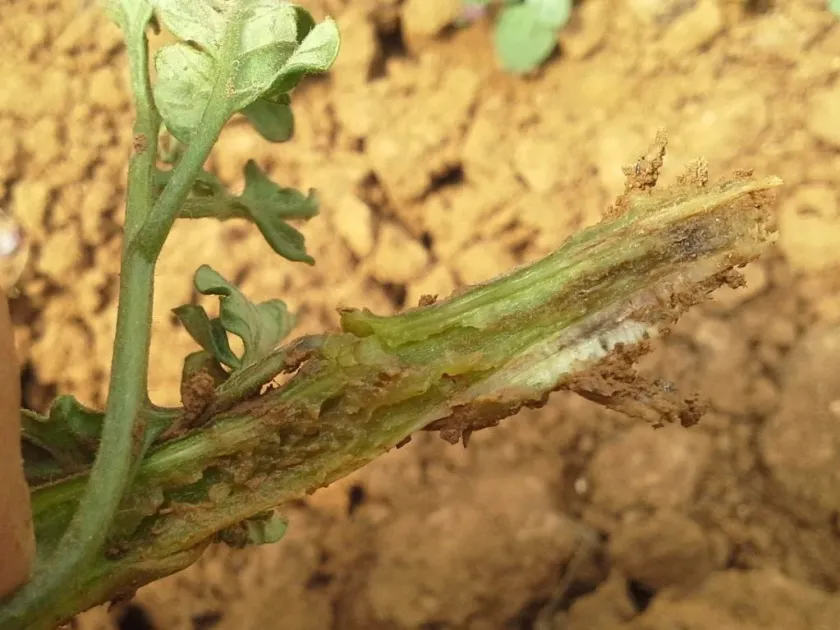
Description
Symptoms
The primary symptom is the wilting of leaves during the hottest part of the day, with recovery often occurring at night. As the infection advances, the wilting becomes permanent.
A diagnostic sign is the internal browning or darkening of the vascular tissue, which can be observed by making a cross-section cut near the base of the stem.
Yellowing or chlorosis usually begins on the lower leaves and progresses upward. Often, the yellowing may occur on only one side of the plant or even on specific branches.
Root systems of infected plants often appear stunted and decayed. In humid conditions, a characteristic white or pinkish fungal mycelium may develop near the stem base.
- Wilting and drooping of foliage during daylight hours.
- Yellowing of lower leaves progressing to necrosis.
- Vascular discoloration seen in cut stems.
- Stunting of the overall plant height and vigor.
- Premature defoliation and death of the plant.
Pathogen
Fusarium wilt is caused by various species of the soil-borne fungus Fusarium, specifically including Fusarium regulare. This pathogen is highly persistent, capable of surviving for years in soil and on plant debris.
The fungus invades the plant through the root system, typically entering via root hairs or small wounds caused by soil-dwelling pests or mechanical cultivation.
Once inside, the pathogen migrates into the vascular system (xylem), where it colonizes and multiplies. It secretes specific mycotoxins that interfere with the plant's metabolic processes.
The disease cycle involves the production of resilient survival structures known as chlamydospores, which allow the fungus to endure unfavorable environmental conditions in the soil.
Spread is facilitated by contaminated irrigation water, movement of infested soil, infected tools, and even the movement of infected transplant seedlings across regions.
Conditions for development
Fusarium wilt is highly favored by warm soil temperatures, generally between 25°C and 30°C, and moderate to high moisture levels in the root zone.
Soil structure plays a critical role; compacted, poorly drained soils restrict root oxygenation and encourage the pathogen to invade the weakened root system.
Plants under environmental stress or those weakened by nutrient imbalances are significantly more susceptible to infection by the Fusarium fungus.
Continuous cropping of the same susceptible species leads to a rapid buildup of the pathogen population in the soil, making it increasingly difficult to manage over time.
Mechanical damage to roots during field operations acts as a pathway for the fungal spores to enter the host plant, accelerating the onset of the disease.
Why it matters
The disease poses a severe threat to agricultural production, often causing significant mortality in both open-field crops and greenhouse environments.
In addition to physical yield loss, infected plant parts can accumulate toxins, rendering the produce unsafe for consumption or animal feed purposes.
Fusarium wilt necessitates long-term management strategies, as the soil remains infested and unsuitable for host crops for several years.
The economic impact includes not only lost crops but also the increased cost of fungicide applications and the need for specialized disease-resistant breeding programs.
The patchy distribution of the disease in a field often leads to uneven harvest quality and reduced overall farm profitability.
Protection
The most effective strategy is the use of disease-resistant varieties and hybrids, which are developed specifically to suppress the growth of Fusarium.
Crop rotation remains a fundamental practice. Rotating with non-host crops for several years helps in starving the pathogen and reducing its levels in the soil.
Implementing rigorous sanitary measures, such as removing and destroying infected plants promptly, helps prevent the pathogen from spreading to neighboring areas.
Seed treatment with authorized systemic fungicides provides an essential early-season barrier, protecting the plant during its most vulnerable germination stage.
The application of biological control agents, such as beneficial fungi or bacteria like Trichoderma, can effectively compete with the pathogen and minimize its establishment in the rhizosphere.
Discussion
No discussions yet — be the first.