
Fusarium rot
Fusarium proliferatum
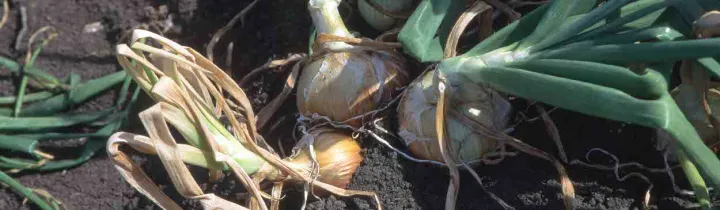
Description
Symptoms
The initial sign of Fusarium rot is gradual wilting, often starting with the yellowing of lower leaves. Over time, the condition progresses, eventually leading to the total collapse and death of the plant.
Affected tissues frequently exhibit a visible fungal growth, which can range from white to pale pink in color. This represents masses of mycelium and spores, indicating active infection.
Examination of the root system reveals browning, thinning, and decay of both primary and secondary roots. In many cases, the infection extends to the stem base, causing rotting.
In cereal crops, the disease may manifest as empty ears or stunted grains, which often take on a pinkish or greyish hue due to fungal colonization of the spikelets.
A cross-section of the stem typically reveals darkening of the vascular bundles, confirming the systemic nature of the infection and the resulting blockage of nutrient and water transport.
Pathogen
The causative agent of the disease is the soil-borne fungus Fusarium proliferatum, which belongs to the class of fungi imperfecti. This pathogen is widely distributed and can persist in the soil for long periods as chlamydospores or mycelium.
The fungus is characterized by high aggressiveness and the ability to produce dangerous mycotoxins, such as fumonisins. These toxins pose a significant risk to both plant health and the quality of agricultural commodities.
The disease is classified as a systemic vascular and root infection. The fungus invades plant tissues through damaged areas or root hairs, spreading systemically through the xylem.
The pathogen's microscopic structure includes the production of microconidia, which facilitate rapid secondary spread during the growing season. Efficient dispersal occurs through wind, water splashes, and infested crop residues.
Biologically, the fungus exhibits a flexible lifestyle, capable of switching from saprotrophic growth on decaying organic matter to parasitic colonization of living plant tissues.
Conditions for development
Intensive development of Fusarium proliferatum is driven by high soil and air moisture combined with moderate to warm temperatures, typically in the 20–28°C range.
Stress factors, such as drought or waterlogging, weaken the plant's natural defenses, making tissues more susceptible to fungal penetration during critical growth stages.
The presence of abundant crop residues in the soil serves as a primary reservoir for the pathogen. Continuous cropping of susceptible plants on the same field drastically increases the risk of outbreaks.
Soil pH imbalances can indirectly contribute to disease development by lowering the general vigor and immunity of the host plant.
High planting density and poor canopy ventilation create a stagnant, humid microclimate that is ideal for spore germination and rapid spread across the field.
Why it matters
The primary economic impact of Fusarium rot is a substantial reduction in yield, which can lead to total crop loss in severe cases. The disease impairs vital physiological processes, hindering grain filling and fruit development.
The accumulation of mycotoxins renders the harvest unsuitable for food or feed, leading to significant financial losses and compliance issues in export markets.
Severe infestations result in stand thinning, which allows weeds to proliferate and reduces the overall efficiency of land use.
Seed quality is significantly degraded; seeds harvested from infected fields often show poor germination rates and low seedling vigor, leading to poor establishment in the following season.
The infection compromises the plant's immune system, making it more prone to secondary infections from other pathogens and environmental stressors.
Protection
The cornerstone of management is strict adherence to crop rotation, avoiding the replanting of susceptible cereal crops in the same field for at least 3–4 years.
Seed treatment with high-quality fungicides is essential to protect emerging seedlings from early-season infection and to ensure better field establishment.
Cultural practices, such as thorough soil tillage and the proper incorporation of crop residues, help accelerate decomposition and reduce the amount of inoculum present in the field.
Balanced plant nutrition, particularly ensuring adequate phosphorus and potassium levels, strengthens cell walls and enhances the plant's physical resistance to fungal invasion.
- Application of foliar fungicides at the first sign of disease symptoms.
- Integrated pest management to control insects that cause root or stem damage.
- Selection of resistant varieties and hybrids when available.
- Optimizing sowing dates to avoid conditions that favor pathogen development.
Discussion
No discussions yet — be the first.