
Fusarium wilt
Fusarium neocosmosporiellum
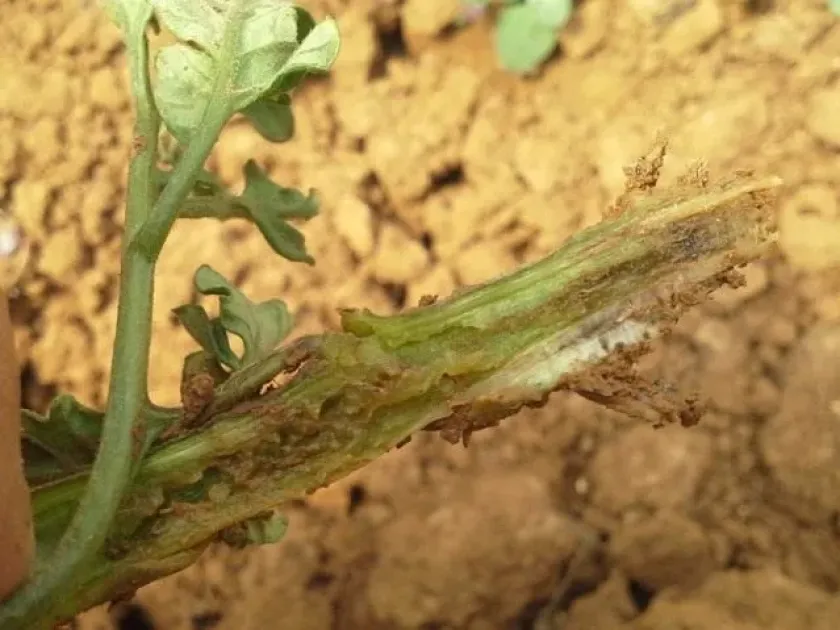
Description
Symptoms
The first visible signs of the disease include chlorosis of the lower leaves, often accompanied by one-sided yellowing of the leaf blade. Gradually, the process covers the entire plant, leading to loss of turgor and wilting of the stems.
During the day, when air temperatures are at their highest, plants appear wilted, but turgor may temporarily recover at night or early in the morning. As the disease progresses, this recovery ceases, and the plant eventually dies.
A characteristic diagnostic sign is browning or darkening of the vascular bundles in the basal part of the stem. When cross-sectioning the stem, a clear brown ring of affected tissues can be observed.
Root system decay is often observed, accompanied by the softening of tissues and color changes. Under high humidity, a subtle mycelial coating may appear on the surface of the affected areas.
In advanced cases, the affected stem tissues become hollow, and the roots deteriorate, leading to a complete loss of the plant's ability to absorb water and mineral nutrients from the soil.
Pathogen
The pathogen is the soil-borne fungus Fusarium neocosmosporiellum, which belongs to the class of imperfect fungi. This pathogen is highly plastic and can survive in the soil for a long time in the form of chlamydospores.
The fungus penetrates the plant primarily through the damaged root system, root hairs, or natural cracks. Once inside, the mycelium actively grows within the plant's vascular system.
During its life cycle, the pathogen secretes specific toxins called fusariotoxins. These play a key role in clogging the plant's vascular system and causing systemic poisoning of the plant organism.
The pathogen can spread via seeds, plant debris, as well as through irrigation water and agricultural machinery. It remains viable in the soil for several years, even in the absence of host plants.
The development of the fungus is closely linked to the physical and chemical properties of the soil. It prefers acidic and slightly acidic soils, where it actively competes with other soil microflora.
Conditions for development
Optimal conditions for infection and active spread of Fusarium wilt are a combination of high air temperatures and increased soil moisture. The pathogen shows maximum activity at temperatures ranging from +20°C to +30°C.
Excessive irrigation, leading to water stagnation in the root zone, creates a favorable environment for spore germination. Poor soil aeration, caused by compaction, accelerates the development of necrosis.
Deficiencies in micronutrients, especially potassium, as well as high concentrations of salts in the soil solution, make crops more vulnerable to fungal infection penetration.
Frequent root damage during agricultural activities (tilling, weeding) opens direct entry points for the infection. Under these conditions, even a small amount of pathogen in the soil can trigger a disease outbreak.
Failure to rotate crops and continuous monocropping contribute to the accumulation of infectious material in the soil. Year by year, the spore concentration increases, making infection almost inevitable.
Why it matters
The harmfulness of Fusarium wilt lies in a sharp decrease in the productivity of affected crops. Depending on the infection severity, yield losses can range from 20% to 80% of the total output.
The disease disrupts photosynthesis and transpiration processes, leading to premature aging and death of the plant's above-ground parts. Yield mass loss becomes noticeable even at early stages of infection.
Beyond direct yield loss, Fusarium significantly degrades produce quality. Infected fruits and seeds often contain mycotoxins that are hazardous to human and animal health, rendering them unsuitable for processing.
When seed crops are affected, seed germination and vigor are significantly reduced. Using seeds from infected fields is a primary pathway for spreading the pathogen to new areas.
Affected plants often become more susceptible to other fungal and bacterial diseases, leading to comprehensive crop degradation and total loss during early vegetation stages.
Protection
The foundation of protection is strict adherence to crop rotation, excluding susceptible crops from infested fields for 3–5 years. It is recommended to introduce Fusarium-resistant varieties or green manure crops that improve soil structure.
A crucial preventive measure is the use of high-quality, treated seed material. Using fungicides for seed treatment helps suppress the infection during the earliest stages of development.
Agrotechnical measures include maintaining an optimal soil pH level and liming acidic soils to reduce fungal activity. It is necessary to ensure proper drainage and timely loosening to prevent moisture stagnation.
Biological control involves the use of bio-preparations based on antagonistic fungi, such as species of the genus Trichoderma. They suppress pathogen growth and contribute to the health of the root zone.
- Regular removal and destruction of diseased plants along with their root balls.
- Timely disinfection of tools and agricultural machinery.
- Balanced application of mineral fertilizers, especially potassium.
- Control of root pests, whose damage facilitates fungal infection.
Discussion
No discussions yet — be the first.