
Fusarium root rot
Fusarium kyushuense
Description
Symptoms
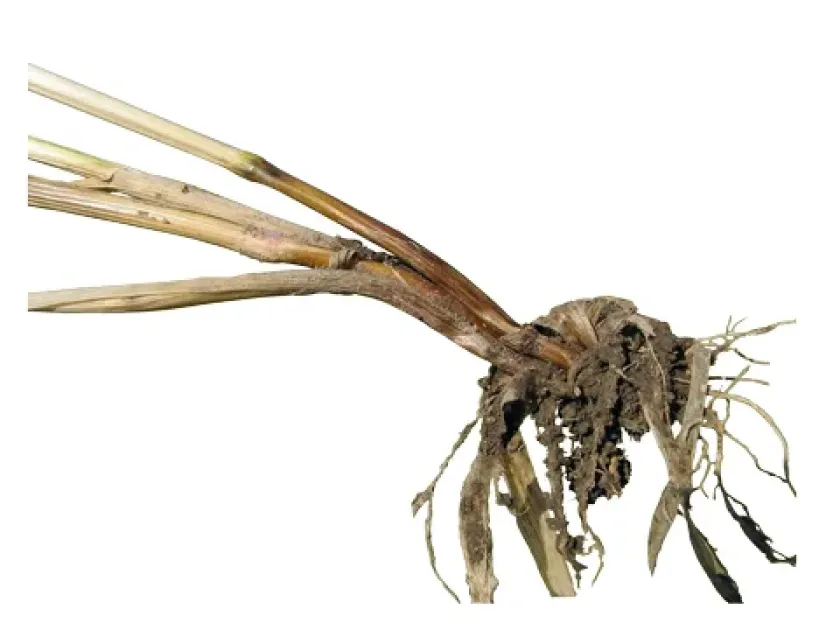
The initial symptoms are typically observed as browning at the crown or the stem base near the soil line. These tissues soon lose their integrity, appearing necrotic and water-soaked.
Under humid conditions, a characteristic mycelial mat—ranging from white to pinkish in color—develops on the affected stem surfaces. This sign is a visual confirmation of the fungus's reproductive activity.
Above-ground symptoms often include chlorosis (yellowing) and premature wilting. As the pathogen colonizes the vascular system, the plant struggles to transport water, leading to a rapid decline in vigor and eventual death.
Root systems exhibit extensive necrosis; lateral roots may rot away entirely. Because the root architecture is severely compromised, the plant is easily uprooted by wind or light manual pressure.
Internally, longitudinal sections of the stem often reveal brown streaks within the vascular bundles, indicating that the fungus has successfully colonized the conductive tissue of the host plant.
Pathogen
The causative agent of this disease is the fungus Fusarium kyushuense, a member of the diverse Fusarium genus. It is a soil-borne pathogen that persists in agricultural fields as mycelium, spores, or resistant structures in organic debris.
The pathogen is highly effective at colonizing host tissues, utilizing specialized enzymes to degrade plant cell walls. During infection, it secretes mycotoxins that interfere with the plant's metabolic pathways.
Morphologically, the fungus produces conidia, which are the primary means of dispersal within a field via water, machinery, or even insect vectors. Its ability to produce multiple spore types ensures its survival across varying conditions.
The life cycle of Fusarium kyushuense is intricately linked to its environment. It excels at competing with other soil microorganisms, allowing it to remain dominant in the rhizosphere for extended periods.
Taxonomic classification of this species has evolved, but it remains a significant concern for phytopathologists globally due to its potential to cause yield losses in various cereal and broadleaf crops.
Conditions for development
Development is most aggressive under moderate temperatures, generally between +18°C and +25°C. Temperature fluctuations often exacerbate plant stress, creating windows of opportunity for fungal infection.
Moist soil conditions are essential for the germination and spread of spores. Areas with poor drainage are particularly susceptible to rapid disease development and the formation of localized infection foci.
Monoculture practices significantly favor the buildup of the pathogen population in the soil. Without appropriate crop rotation, the level of inoculum increases yearly, leading to higher disease pressure.
Mechanical damage to roots, whether from cultivation tools or soil-dwelling pests, significantly eases the entry of Fusarium kyushuense into the root tissue, bypassing natural barriers.
Imbalanced nutrient availability, specifically high nitrogen application, can lead to excessive, succulent growth that is physically weaker and more prone to penetration by fungal hyphae.
Why it matters
The primary economic impact is a reduction in plant density (stand loss), which directly limits the total yield potential of the field early in the growing season.
Plants that survive but remain infected typically produce stunted, shriveled grain with low test weights, severely compromising the quality and market value of the harvest.
The presence of mycotoxins in harvested grain poses a significant risk to human and animal health, often rendering the yield unsuitable for food or feed markets and leading to total financial loss.
The infection forces the plant to allocate energy to defense mechanisms rather than growth, making it more susceptible to secondary stressors like moisture deficit or thermal stress.
Infested land may require several years of non-host crop rotation, restricting the farmer's planting options and increasing long-term operational costs.
Protection
The cornerstone of management is strict crop rotation. Including non-host species in the sequence helps to break the life cycle of the fungus and reduce soil inoculum levels.
Utilizing high-quality, fungicide-treated seeds is crucial. Seed treatments provide an essential shield during the vulnerable germination stage, preventing early colonization by soil pathogens.
- Deep tillage to bury infected stubble and residue.
- Balanced fertilization, especially phosphorus and potassium.
- Monitoring and control of soil-borne pests.
- Use of certified resistant or tolerant crop varieties.
Biocontrol agents, such as beneficial fungi or bacteria applied to the soil, can help suppress the pathogen's activity by competing for resources and space in the rhizosphere.
Regular field scouting is necessary to identify early symptoms. If hotspots are found, targeted chemical applications or localized removal of diseased plants can help mitigate further spread.
Discussion
No discussions yet — be the first.