
Fusarium rot
Fusarium flocciferum
Description
Symptoms
Initial symptoms are characterized by wilting, which often begins with the lower leaves. As the infection progresses, the leaves turn yellow, curl up, and eventually dry out completely.
Examination of the root system reveals severe browning and softening of the tissues. In many cases, the roots decay completely, causing the plant to be easily pulled from the soil during scouting.
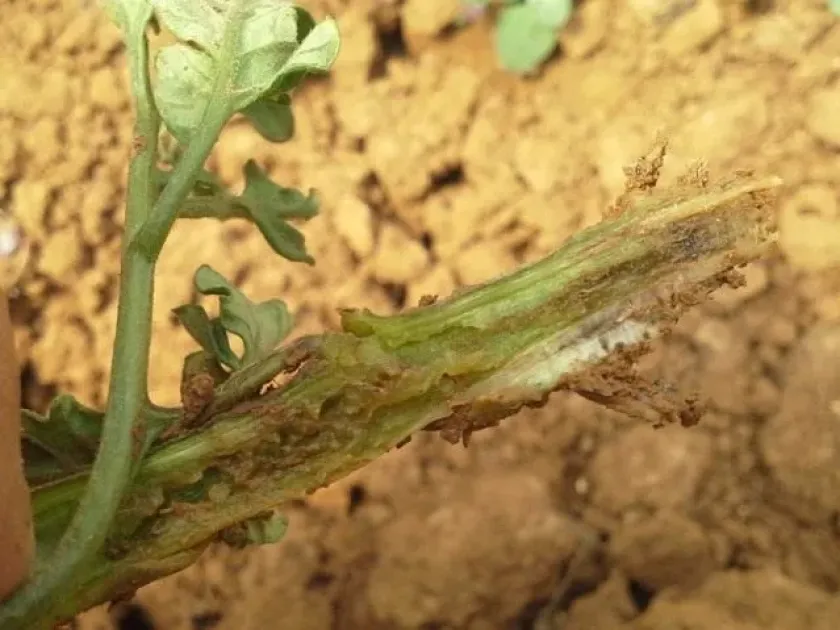
A visible fungal growth, appearing as a white, pink, or yellowish mycelial mat, can often be seen on the stem base near the soil line, especially in high-humidity environments.
Cross-sections of the lower stem will show distinct vascular browning. This discoloration confirms that the pathogen has obstructed the plant's vascular system, preventing proper hydration and nutrient distribution.
Affected plants are typically stunted and show signs of severe stress. They frequently fail to reach the productive stages of growth, resulting in significantly lower fruit or grain yield.
Pathogen
The disease is caused by the fungus Fusarium flocciferum, a versatile soil-borne pathogen. It is capable of surviving for long periods in soil and plant debris by forming resting structures like chlamydospores.
This fungal species exhibits significant ecological adaptability, allowing it to infect a wide range of host plants, including major cereals, legumes, and various vegetable crops grown in different climate zones.
Infection primarily occurs through the root system or small wounds in the stem base. Once the fungus enters the host, it colonizes the vascular tissues, effectively disrupting water and nutrient transport.
The biology of Fusarium flocciferum is centered on the production of specialized enzymes and mycotoxins. These biochemical agents degrade host cell walls, causing rapid tissue necrosis and systemic weakening of the plant.
Dissemination happens via water runoff, wind, or contaminated farm equipment. Furthermore, the pathogen is frequently introduced to new fields through infected seeds, making strict seed testing essential.
Conditions for development
Fusarium flocciferum thrives in conditions characterized by high soil moisture combined with moderate temperatures, typically between 18 and 25 degrees Celsius.
Periods of prolonged rainfall that lead to waterlogged soil create an ideal environment for spore germination. Poor soil aeration during these wet periods significantly increases susceptibility to root colonization.
Failure to implement a proper crop rotation cycle allows the pathogen to build up in the soil. Planting susceptible crops too frequently in the same plot drastically increases the risk of an outbreak.
Mechanical damage to roots caused by agricultural machinery or soil-dwelling pests provides entry points for the fungus, making timely pest management a vital part of disease control.
Nutritional imbalances, particularly an over-application of nitrogen fertilizers, result in succulent, soft tissues that are more vulnerable to penetration by the fungus compared to well-balanced, hardy tissues.
Why it matters
Fusarium rot poses a significant threat to agricultural productivity, causing substantial yield losses in affected fields. In severe cases, infestations can destroy up to half of the total crop.
Beyond yield volume, the quality of the harvest is severely impacted. Grain or vegetables from infected plants are often undersized, discolored, and generally unsuitable for market requirements.
A critical issue associated with this pathogen is the production of mycotoxins. These toxins remain in the produce, posing serious health risks to both livestock and human consumers if the crop enters the food supply.
The disease leads to high operational costs, as farmers must invest in additional fungicides and protective measures to halt the spread of the infection within the field.
Persistence of the pathogen in the soil forces farmers to limit their choice of future crops, disrupting standard agricultural planning and potentially impacting long-term farm profitability.
Protection
- Ensure all seeds are treated with high-quality systemic fungicides.
- Practice diverse crop rotation to break the pathogen's life cycle.
- Implement integrated pest management to protect root integrity.
- Maintain optimal soil fertility, emphasizing balanced potash and phosphorus levels.
- Monitor crops closely and apply fungicides at the first sign of wilting or stem damage.
Discussion
No discussions yet — be the first.