
Fusarium wilt
Fusarium annulatum
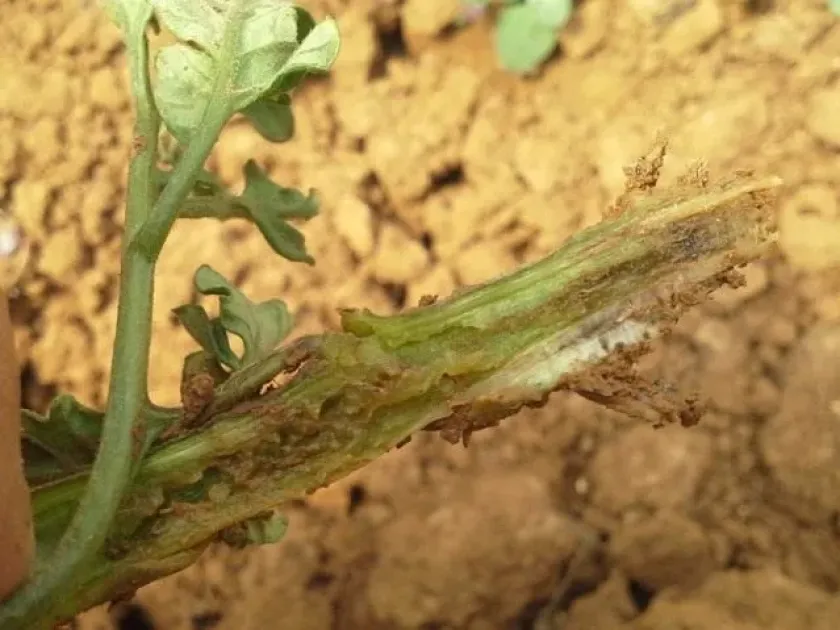
Description
Symptoms
The primary symptom of Fusarium wilt is the chlorosis of the lower leaves, often manifesting as an asymmetrical yellowing on one side of the plant.
As the infection progresses, the yellowing spreads upwards, followed by premature wilting of the foliage, even when soil moisture is adequate.
A diagnostic sign is the internal browning or reddish-brown discoloration of the vascular bundles, which can be observed when cutting the stem crosswise.
Under conditions of high humidity, a white, pink, or yellowish mycelial growth may appear at the base of the stem, indicating active sporulation.
In the final stages, the plant loses turgor pressure entirely, dries out, and dies, leading to significant yield loss and reduced fruit or seed quality.
Pathogen
The disease is caused by soil-borne fungi of the genus Fusarium, most notably Fusarium oxysporum, which is highly specialized to infect specific plant hosts.
These fungi are capable of surviving in the soil for many years by producing resilient structures known as chlamydospores or sclerotia.
The pathogen enters the plant through the root system, frequently utilizing wounds caused by root-feeding nematodes or other mechanical damage.
Once inside, the fungus colonizes the xylem tissue, effectively clogging the plant's water-conducting vessels and preventing the flow of nutrients.
The pathogen also releases potent toxins, such as fusaric acid, which degrade cell walls and disrupt normal physiological processes, accelerating the wilting process.
Conditions for development
Fusarium wilt thrives in warm soils, with optimal infection temperatures typically ranging between +22°C and +28°C.
Excessive soil moisture is a critical factor that promotes the germination of spores and the rapid expansion of the fungal mycelium.
Soil pH plays a significant role in disease severity; the pathogen is generally more aggressive in acidic soils, making soil liming a useful management tool.
Poor soil aeration and stress factors such as nutritional imbalances significantly increase the susceptibility of plants to Fusarium colonization.
Continuous monocropping allows the pathogen population to build up in the soil, eventually leading to a heavily infested environment where susceptible crops fail.
Why it matters
Fusarium wilt causes severe economic impact by leading to widespread seedling mortality and the death of mature, high-yielding plants.
The infection severely limits the plant's ability to perform photosynthesis, resulting in stunted growth and drastically reduced harvest outputs.
Seeds harvested from infected fields often carry the fungus, facilitating the long-distance spread of the disease to previously clean areas.
Managing the disease is challenging because once the soil is infested with Fusarium, it remains a permanent threat to susceptible agricultural crops.
The inability to control the pathogen once it has established within the vascular system makes prophylactic measures the only reliable way to save the crop.
Protection
The cornerstone of control is a rigorous crop rotation plan, excluding susceptible host species from infested land for a minimum of 5 to 7 years.
Utilizing genetically resistant or tolerant crop varieties is the most effective and sustainable strategy for managing Fusarium wilt in modern agriculture.
Seed treatment with professional-grade fungicides provides essential protection during the early establishment phase of crop growth.
Good agricultural practices, such as maintaining soil fertility and moisture drainage, help improve plant vigor and mitigate the risks of infection.
- Integration of biological control agents like Trichoderma
- Prompt removal and destruction of infected plant debris
- Regular monitoring and rapid isolation of disease patches
Discussion
No discussions yet — be the first.