
Tungi fungus
Fomes
Description
Symptoms
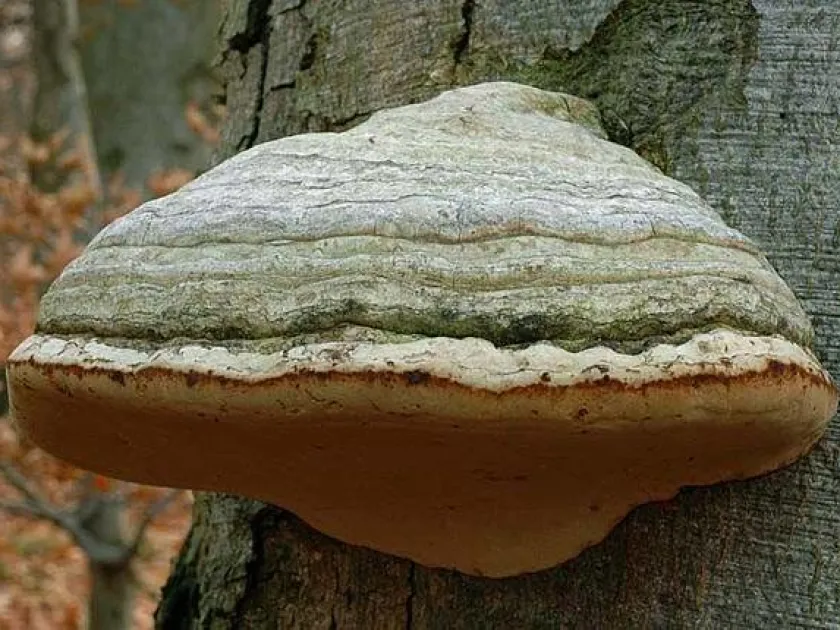
The most visible symptom is the appearance of woody, hoof-like brackets on the trunks of affected trees. They often appear near old branch stubs or mechanical injury points.
Internally, the wood becomes soft and brittle, exhibiting a characteristic bleached appearance associated with white rot. Thin, dark, zone lines are often visible within the decay.
As the rot progresses, the tree may show signs of canopy decline, including sparse foliage, yellowing leaves, and the dying off of major branches.
The structural integrity of the trunk is compromised, leading to a high risk of stem failure. Trees infected by this fungus are prone to collapsing during high winds.
The bark surrounding the fruiting body often cracks and dies, revealing the crumbling wood beneath, which provides a clear indication of a deep-seated fungal infection.
Pathogen
The causal agent is the wood-decay fungus Fomes fomentarius, a member of the Basidiomycota phylum. This fungus is a persistent parasite known for causing white heart rot in various broad-leaved trees.
The fungal mycelium penetrates the host tree through bark injuries, pruning cuts, or frost cracks. Once inside, it actively breaks down the lignin and cellulose within the wood structure.
The fungus produces large, hoof-shaped, perennial fruiting bodies. These sporocarps are extremely tough, with a grey, stratified upper surface and a porous underside.
Reproduction is achieved via the release of millions of microscopic spores from the fruiting bodies. These spores are wind-dispersed and can travel significant distances to find new hosts.
Fomes fomentarius is highly adaptable and can survive as a saprotroph, meaning it continues to consume the woody substrate long after the tree has reached senescence.
Conditions for development
The fungus thrives in high humidity and moderate temperatures. Shaded environments in forests or dense orchards provide optimal conditions for mycelial growth.
Infection is most likely to occur when spores land on fresh wounds. Common entry points include broken branches, pruning cuts left untreated, or wounds from maintenance machinery.
Trees that are already stressed due to drought, poor soil conditions, or other pests are significantly more susceptible to successful colonization by the fungus.
The duration of moisture on a wound surface is critical; standing water can help spores germinate and successfully penetrate the wood tissue.
Prolonged growing seasons and mild winters can extend the period of active fungal growth, allowing the pathogen to spread more rapidly throughout the heartwood.
Why it matters
This fungus causes severe economic losses by significantly reducing the quality and volume of merchantable timber in infected trees.
In landscape or orchard settings, infected trees pose a hazard to property and people due to their unpredictable structural failure and potential for falling.
The presence of fruiting bodies turns the tree into a persistent inoculum source, endangering surrounding healthy trees within the immediate vicinity.
In fruit-bearing species, energy allocation shifts from fruit production to defense mechanisms, leading to reduced yields and inferior crop quality.
The pathogen invites a secondary complex of insects and other fungi, accelerating the decomposition process and necessitating expensive removal of dead wood.
Protection
The primary control strategy involves the manual removal and destruction of all fruiting bodies. These should be disposed of by burning to prevent further spore dispersal.
Sanitation practices such as regular pruning must be followed by immediate sealing of large cuts with protective agents to prevent fungal colonization.
All gardening or forestry tools should be cleaned and disinfected between uses to ensure that fungal spores are not spread from diseased to healthy trees.
Maintenance of tree vigor through appropriate fertilization and water management is essential for strengthening natural defenses against fungal wood decay.
Monitoring is crucial; early detection of small fruiting bodies allows for localized treatment and provides a better chance of prolonging the life of the tree.
Discussion
No discussions yet — be the first.