
Flavoparmelia
Flavoparmelia
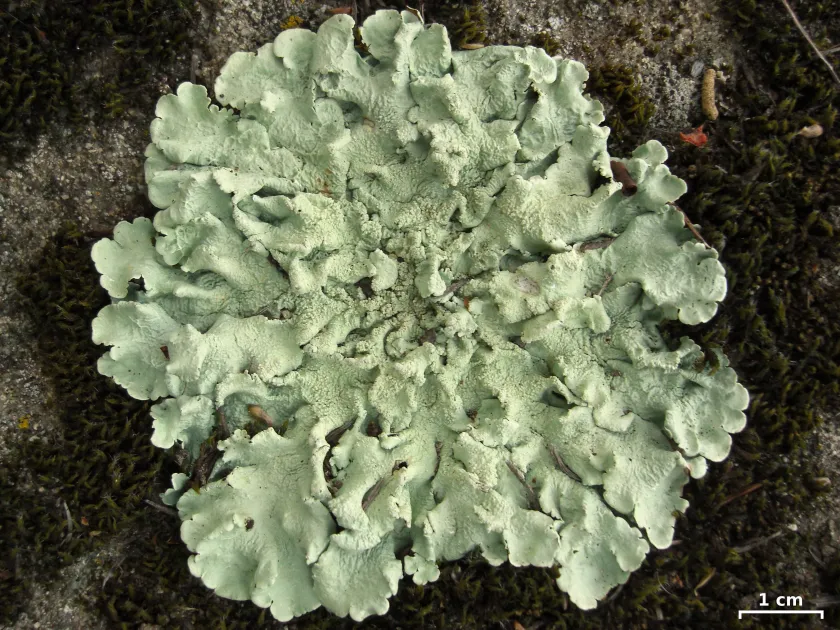
Description
Symptoms
The primary visual sign is the presence of flat, foliose plates that are yellow-green to gray-green in color, tightly adhering to the bark surface.
The thallus of Flavoparmelia typically exhibits a lobed structure. The margins of these lobes can be slightly raised, giving the bark a distinctive "crusty" or lichenized appearance.
Unlike pathogenic fungi that cause rot or cankers, this lichen does not penetrate the cambium or wood, remaining strictly on the outer layer of the bark.
While the presence of lichen may coincide with peeling or rough bark, this is usually a symptom of the tree's advanced age or poor vigor, rather than a direct result of the lichen's growth.
The colonization process is slow and incremental, often starting as small circular patches that slowly expand and merge over several growing seasons.
Pathogen
Flavoparmelia is not a plant disease pathogen in the biological sense, but rather a genus of foliose lichens. It is a symbiotic organism comprised of a fungus and an alga or cyanobacterium.
In agronomy, lichens are often incorrectly identified as a disease because they predominantly colonize weakened or stressed trees. However, they do not act as parasites on the plant.
These organisms are epiphytes. They use the tree bark merely as a substrate for physical support and do not derive nutrients from the host plant's tissues.
Reproduction occurs through spores dispersed by wind or rain. When these spores land on bark with suitable moisture and acidity levels, they germinate to form a new thallus.
Because they require sunlight for the algal component to perform photosynthesis, they are most commonly found on the branches and trunks of aging or sparsely foliated trees.
Conditions for development
High relative humidity is the most critical factor for the successful establishment and growth of Flavoparmelia. In arid or very dry climates, their growth is significantly restricted.
Poor airflow, caused by overgrown and unpruned tree crowns, creates the stagnant, humid microclimate that these organisms prefer.
The health status of the host tree is also a contributing factor. Trees that have slow bark renewal rates or are suffering from environmental stress are more prone to colonization.
Flavoparmelia is known to be somewhat sensitive to air pollution; therefore, its healthy growth is often an indicator of good local air quality.
Shaded environments within the orchard canopy encourage the development of lichens, as they prefer surfaces that stay damp for extended periods.
Why it matters
Flavoparmelia causes no direct harm to the tree's health. It does not extract sap, nor does it excrete toxic metabolites that would damage the plant.
However, the physical structure of the lichen thallus provides shelter for various overwintering pests, such as scale insects, aphids, and mites, which can increase the pest load.
In cases of very heavy colonization, the thick layer of lichen can potentially interfere with the tree's gas exchange through the lenticels, although this is rarely a significant problem.
From an aesthetic perspective, heavy lichen growth is often perceived as a sign of neglect, which may detract from the commercial value or visual appeal of an orchard.
The greatest risk associated with lichen is that it serves as a visual distraction, potentially hiding the early signs of genuine diseases or insect infestations.
Protection
The best long-term management strategy is to maintain tree vigor through proper pruning, thinning, and balanced fertilization to ensure good airflow and light penetration.
Mechanical removal using a stiff brush or a specialized scraping tool is effective for cleaning bark. This should be done carefully to avoid wounding the living tissue.
Applying a whitewash to the trunk and main branches can help sanitize the bark surface and create an environment that is unfavorable for lichen re-establishment.
Early spring treatments with copper-based fungicides or iron sulfate solutions can be used to control lichen populations on the trunks and branches.
- Prune regularly to reduce canopy density and increase sunlight.
- Ensure adequate nutrition to promote vigorous bark growth.
- Monitor the bark during routine garden inspections for pests hidden by lichen.
Discussion
No discussions yet — be the first.