
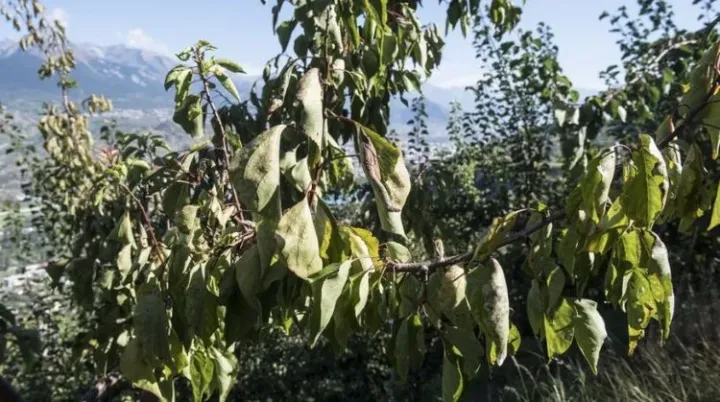
Description
Symptoms
A primary symptom is the distinctive yellowing or chlorosis of the foliage during the summer months. Leaves may appear brittle and curled, often leading to premature leaf drop which severely compromises the tree's photosynthetic capacity.
Another classic sign is the formation of "witches' brooms." These are clusters of thin, stunted, and poorly developed shoots arising from dormant buds, creating a bushy, disorganized appearance in the tree canopy that is easily recognizable.
Fruit development is significantly impacted, leading to smaller, deformed, and poor-quality fruits. For almonds, the disease often results in reduced kernel size and poor overall nut quality, rendering the harvest commercially non-viable.
Early stages of infection are often asymptomatic or localized to a single branch. As the disease progresses over several seasons, the colonization of the vascular system leads to systemic collapse and eventual death of the entire tree.
Weakened trees become susceptible to various abiotic stressors, particularly winter frost. Increased sensitivity to cold temperatures is a common trait of ESFY-infected trees, often serving as the final factor in the tree's premature demise.
Pathogen
The causal agent of European stone fruit yellows (ESFY) is a phytoplasma known as Candidatus Phytoplasma prunorum. This obligate parasite resides in the phloem tissue of the host plant, effectively hijacking the tree's nutrient transport system.
As a phytoplasma, it cannot survive outside the host or its specific insect vector. Transmission occurs primarily through the activity of psyllids, particularly Cacopsylla pruni, which acquire the pathogen while feeding on infected sap.
A wide range of stone fruit trees are susceptible, including apricots, peaches, plums, and almonds. The pathogen's ability to infect various species within the Prunus genus makes it a significant threat to deciduous fruit orchards globally.
The life cycle of the pathogen is synchronized with the tree's physiology. During dormancy, the phytoplasma is concentrated in the root system, while active colonization of the aerial parts begins in early spring when sap flow increases.
This is classified as a systemic disease. Because the pathogen spreads throughout the vascular system, there is currently no known way to cure an infected tree. Once the phytoplasma is established, the tree remains a permanent reservoir for the disease.
Conditions for development
The spread of the disease is heavily dependent on the presence of the Cacopsylla pruni psyllid. The population dynamics of this insect determine the rate of disease transmission within an orchard and to neighboring healthy trees.
Environmental conditions that favor psyllid breeding and activity significantly increase the risk of infection. Warm, temperate climates provide ideal conditions for both the insect vector and the rapid replication of the phytoplasma within the plant tissues.
The primary pathway for the introduction of ESFY into new areas is through infected nursery stock. Because the disease often remains latent, infected trees can be planted into healthy orchards, serving as a primary source of inoculum.
Orchard management practices such as high-density planting and poor weed control can create microclimates that favor psyllid populations. Neglected orchards often act as hotspots for the disease, facilitating spread to more productive farms.
Tree vigor plays a role in the progression of the disease. Trees stressed by poor irrigation, nutrient deficiencies, or soil conditions tend to succumb to the effects of the infection more rapidly than well-maintained specimens.
Why it matters
The economic impact of ESFY is profound, as it directly reduces yield and fruit quality. The inability to cure infected trees forces growers to remove entire orchard blocks to prevent further spread, representing a total loss of investment.
Chronic depletion of the tree's resources leads to metabolic dysfunction. Over time, the tree stops producing viable fruit altogether, effectively becoming a liability that must be removed to protect the remaining orchard.
The presence of ESFY triggers strict quarantine measures in many regions. These restrictions limit the ability of nurseries to sell stock and impact the movement of horticultural products, causing widespread disruption to the agricultural supply chain.
Beyond direct economic loss, the disease increases the management burden. Continuous monitoring, insect control, and the diagnostic costs associated with identifying asymptomatic trees add significant overhead to standard orchard maintenance.
As the tree declines, it becomes a hub for secondary pathogens. The systemic weakening caused by the phytoplasma makes almond trees more vulnerable to fungal infections and wood-boring insects, further accelerating the need for tree removal.
Protection
The most effective strategy is the exclusive use of certified, phytoplasma-free nursery stock. Implementing strict biosecurity protocols when acquiring new trees is essential for preventing the initial introduction of the disease.
Integrated Pest Management (IPM) is critical for controlling insect vectors. Regular monitoring of psyllid populations and timely application of insecticides during peak activity periods can significantly reduce the probability of disease transmission.
Prompt eradication of infected trees is necessary to protect the rest of the orchard. When removing a tree, it is vital to extract the root system to prevent any remaining tissue from serving as a reservoir for the pathogen.
Maintaining high horticultural standards is a key prophylactic measure. Proper fertilization, balanced irrigation, and stress mitigation help trees maintain a robust immune response, potentially slowing the colonization process.
Ongoing surveillance and early detection programs are essential. By identifying and removing latent carriers before they show severe symptoms, growers can manage the disease risk and maintain the long-term productivity of their almond orchards.
Pathogens and affected parts
Affects crops · 1
Discussion
No discussions yet — be the first.