
Tropical soot mold
Euantennaria tropicicola
Description
Symptoms
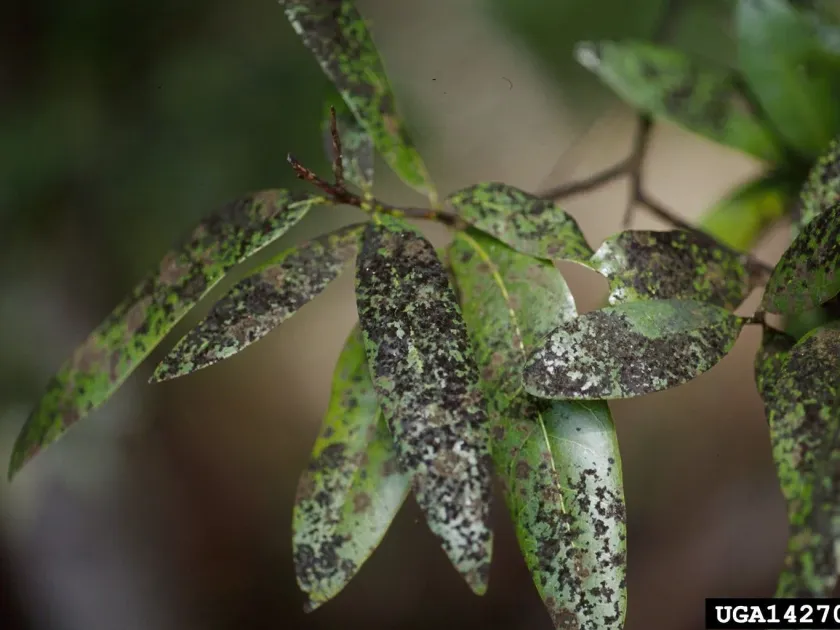
The primary symptom is the presence of a superficial, velvety, black or soot-like layer covering the leaves, stems, and sometimes fruit.
This coating may appear as irregular patches or, in severe cases, cover the entire leaf surface, giving the plant a blackened appearance.
The fungal mat can be rubbed off by hand, revealing healthy green tissue underneath, as the fungus does not directly invade the host cells.
Sooty mold is almost always associated with the presence of sticky honeydew deposits on the plant surface.
Affected plants often show signs of general stress, including chlorosis or stunted growth, resulting from restricted photosynthesis.
Pathogen
The disease is caused by the fungus Euantennaria tropicicola, a member of the capnodiaceous group, commonly known as sooty mold.
This organism is a saprotrophic fungus that thrives on the surface of plant parts without penetrating the internal cellular structure of the host.
It survives by utilizing the honeydew secreted by sap-sucking insects, such as aphids, scale insects, and whiteflies, as a nutritional base.
The fungus produces a thick, dark, mycelial network rich in melanin, which protects it from intense solar radiation and desiccation.
Dissemination primarily occurs via wind-borne conidia and rain splash, allowing for rapid spread throughout infested plantations.
Conditions for development
The development of Euantennaria tropicicola is strictly dependent on the availability of insect honeydew, which serves as its primary food source.
High relative humidity and consistent moisture levels in tropical environments facilitate the rapid growth and sporulation of the fungus.
Poor ventilation and dense canopy foliage provide an ideal microclimate, preventing the leaves from drying out and promoting fungal colonization.
Areas with limited direct sunlight and heavy rainfall that redistributes honeydew across the foliage create favorable conditions for the disease.
The absence of seasonal temperature variations in tropical regions allows the fungus to proliferate continuously throughout the year.
Why it matters
The presence of a thick sooty layer blocks sunlight, significantly reducing the plant's capacity for photosynthesis and energy production.
This reduction in carbon assimilation leads to reduced yields, smaller fruit size, and compromised plant vigor over the long term.
The physical barrier created by the fungal mat interferes with stomatal function, impairing gas exchange and water transpiration.
Marketability is severely impacted, as the aesthetic quality of leaves and fruit is ruined, requiring expensive cleaning before distribution.
- Reduced photosynthetic activity due to light obstruction.
- Diminished fruit quality and market value.
- Increased vulnerability to secondary stressors.
Protection
The most critical control strategy is the integrated management of sap-sucking insect populations, such as aphids and scale insects, to eliminate honeydew.
Implementing proper pruning practices improves canopy aeration and light penetration, creating an environment unfavorable for fungal growth.
Application of copper-based fungicides can effectively inhibit fungal development and disinfect the foliage surface.
Washing plants with insecticidal soaps can help remove both the honeydew deposits and the sooty mold layer effectively.
Regular monitoring for early signs of insect infestation is essential to prevent the conditions that lead to Euantennaria tropicicola outbreaks.
Discussion
No discussions yet — be the first.