
Blueberry powdery mildew
Erysiphe vaccinii
Description
Symptoms
The characteristic sign of powdery mildew is a white to grayish-white dusty appearance on the leaves. Initially, these symptoms appear as isolated, circular spots that eventually expand to cover the entire leaf surface.
Affected leaves often show signs of chlorosis, curling, or distortion as the infection progresses. In severe cases, the foliage may die back prematurely, which significantly reduces the plant's ability to undergo photosynthesis.
Young shoots are particularly susceptible and may appear stunted or twisted. The white powdery layer can also develop on these succulent stems, causing them to become brittle and eventually necrotic.
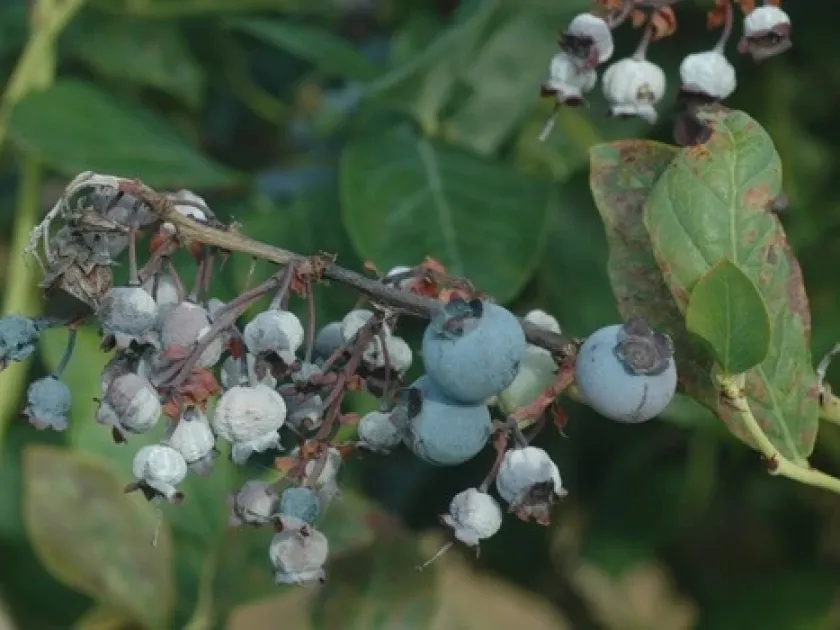
While infection on the berries is less common, it can occur when environmental conditions are ideal for the pathogen. Infected fruits may show a patchy white surface, losing their aesthetic appeal and market value.
The overall vigor of the blueberry bush declines noticeably as the fungus drains vital resources. Plants exhibiting high infection rates typically show a decreased rate of growth and poor branch development.
Pathogen
The causal agent of this disease is an obligate parasite fungus known as Erysiphe vaccinii. This pathogen relies entirely on living plant tissues of the Vaccinium genus, such as blueberries and cranberries, to extract nutrients.
The fungus develops a superficial mycelium network on the leaves, shoots, and sometimes fruits. It anchors itself into the epidermal cells using specialized structures called haustoria, which penetrate the surface to siphon water and sugars.
The life cycle involves the production of conidia (asexual spores) that are dispersed by wind throughout the growing season. This leads to rapid cycles of infection, especially during favorable weather conditions.
To survive the winter, the fungus forms cleistothecia, which are small, dark, resistant fruiting bodies. These persist on fallen leaves and stem debris, acting as the primary inoculum for the following spring.
Biological adaptability of E. vaccinii is significant, allowing it to thrive across diverse environmental conditions. Its reliance on the host makes it highly destructive to non-resistant blueberry cultivars in commercial orchards.
Conditions for development
Powdery mildew thrives in warm, humid weather, with temperatures ranging between 18°C and 25°C. High humidity levels without significant air movement provide the perfect environment for spore germination.
Crowded plantings that prevent proper air circulation are highly prone to infection. When blueberry bushes are planted too closely, the microclimate inside the canopy remains moist for long periods, facilitating fungal growth.
Excessive application of nitrogen fertilizers contributes to the development of soft, succulent growth. These lush tissues are much easier for the fungal hyphae to penetrate compared to hardened, well-nourished stems.
Dry and windy periods are essential for the dispersal of conidia. These spores can travel long distances on air currents, ensuring that the pathogen spreads effectively throughout an entire commercial plantation.
Lack of proper sanitation in the blueberry field ensures that the fungus persists season after season. Failing to clear leaf litter means that the source of the next year's infection remains within the field.
Why it matters
The primary economic impact is a reduction in total yield. A severely infected plant lacks the energy to produce high-quality, large berries, leading to a significant loss in financial returns for growers.
Powdery mildew compromises the cold hardiness of the blueberry bushes. Because the plant cannot store adequate carbohydrate reserves due to damaged foliage, it becomes much more susceptible to winter frost damage.
Fruit quality is degraded, which is a major issue for fresh market sales. Discolored or deformed berries cannot be sold as top-grade produce, forcing farmers to divert crops to lower-value processing channels.
Increased expenditures on protective fungicides represent a significant portion of annual maintenance costs. Reliance on heavy chemical usage also complicates integrated pest management strategies.
Over time, chronic disease pressure causes the premature decline of the plantation. Infected plants are less likely to survive extreme weather events and are more susceptible to secondary wood-rotting diseases.
Protection
Choosing resistant blueberry cultivars is the most effective long-term control method. Growers should prioritize genetics that show proven immunity or high tolerance to regional strains of powdery mildew.
Good agricultural practices such as thinning and pruning are vital. By maintaining an open canopy structure, growers ensure that sunlight penetrates the foliage and that air moves freely to discourage humidity buildup.
Rigorous sanitation measures, including the removal and disposal of all fallen leaf debris, are necessary to eliminate the overwintering sites of the fungus. This reduces the primary inoculum for the next spring.
Fungicide programs should be implemented as a preventative measure. It is essential to rotate between different chemical classes to avoid the development of fungicide resistance within the fungal population.
Regular field scouting allows for the early detection of infection foci. Quick action, such as removing a few infected branches, can prevent a minor outbreak from becoming a widespread epidemic across the entire field.
Discussion
No discussions yet — be the first.