
Powdery mildew of lilac
Erysiphe syringae-japonicae
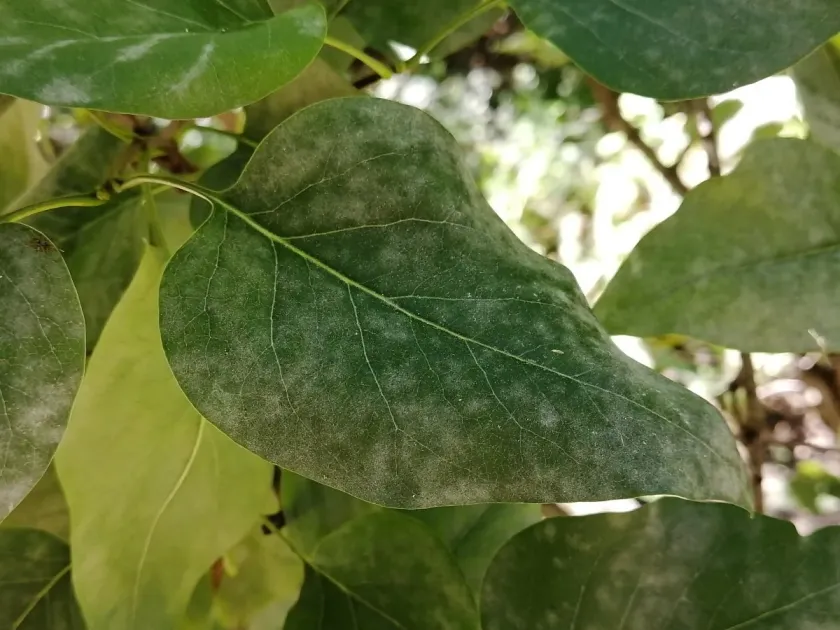
Description
Symptoms
The primary symptom is the appearance of white, dusty patches on the upper surface of leaves. As the disease progresses, these patches expand and merge to cover the entire leaf surface.
Infected leaves often become distorted, curled, and brittle. Severe infections can lead to the yellowing and necrosis of tissues, severely damaging the ornamental quality of the shrub.
Young, succulent shoots are also highly susceptible. They may become stunted or malformed due to the fungal pressure, which prevents proper growth of the stems and flower buds.
Black dots (cleistothecia) appear later in the season, embedded within the white mycelial mat. These indicate that the fungus has completed its reproductive cycle and is preparing to overwinter.
When floral buds are infected, the lilac may fail to bloom correctly or produce distorted flowers in the following spring, as the plant reserves have been depleted by the parasite.
Pathogen
The causative agent of this disease is the ascomycete fungus Erysiphe syringae-japonicae. It is an obligate parasite specifically targeting the Syringa genus by extracting nutrients through haustoria.
The fungus develops a superficial mycelium on the surface of leaves and shoots. It does not penetrate deep into the plant tissues but remains attached to the epidermis, spreading rapidly during the growing season.
By the end of the season, the fungus produces black, pinpoint-sized fruiting bodies known as cleistothecia. These structures allow the pathogen to survive the winter on fallen leaves and woody debris.
The dissemination of the fungus occurs via conidia, which are asexual spores carried by wind currents. These spores can easily settle on healthy lilac bushes, initiating new infection cycles.
Powdery mildew is a common fungal disease that can become persistent in garden environments if the environmental conditions remain favorable for fungal growth throughout the summer months.
Conditions for development
Powdery mildew thrives in conditions of high humidity combined with moderate temperatures. Frequent dew, morning mists, and rainy periods create an ideal environment for spore germination.
Temperatures ranging from 18°C to 25°C are optimal for the rapid growth of the mycelium. Under these conditions, the disease can spread across an entire garden very quickly.
Poor ventilation within the plant canopy is a critical factor. When bushes are planted too close together or have dense, unpruned foliage, humidity remains high, promoting severe infections.
Shaded areas are more susceptible to mildew because direct sunlight acts as a natural inhibitor for the fungus. Additionally, excess nitrogen fertilization can lead to soft, vulnerable growth.
Drought stress can sometimes slow down fungal development, but sudden changes in humidity and temperature often trigger flare-ups that can overwhelm an already weakened plant.
Why it matters
The main harm caused by this disease is the disruption of photosynthesis due to the fungal layer blocking the light and the stomata on the leaf surface, leading to reduced vigor.
Premature leaf drop is a major consequence of severe infection. This prevents the plant from accumulating enough nutrients for the winter, making the shrub more susceptible to frost damage.
Constant infection over several years results in the decline of the shrub, characterized by dieback of twigs and stunted growth. The overall ornamental value is lost, ruining the landscape.
The plant spends valuable energy trying to defend itself and repair tissues, which results in fewer or no flowers in the subsequent growing seasons, affecting the lilac's purpose.
Without intervention, the pathogen remains in the garden environment, infecting other related species and ensuring that the cycle of disease repeats indefinitely each spring.
Protection
The first line of defense is proper hygiene: pruning the shrub to allow for better air circulation and sunlight penetration, and thoroughly removing and burning fallen leaves each autumn.
Fungicide application is necessary when symptoms appear. Sulfur-based sprays, as well as systemic fungicides belonging to the triazole or strobilurin classes, are highly effective.
- Regular pruning to improve air circulation.
- Sanitation by removing and destroying infected plant debris.
- Application of systemic fungicides at the onset of symptoms.
- Application of balanced fertilizers to strengthen plant tissues.
Biopesticides using beneficial bacteria can be used as a preventative measure. They compete with the fungus for space and nutrients on the leaf surface, reducing the risk of infection.
It is essential to maintain plant health through proper watering and balanced nutrition, as a vigorous plant is naturally more resistant to the initial attachment of fungal spores.
Discussion
No discussions yet — be the first.