
Lilac powdery mildew
Erysiphe syringae
Description
Symptoms
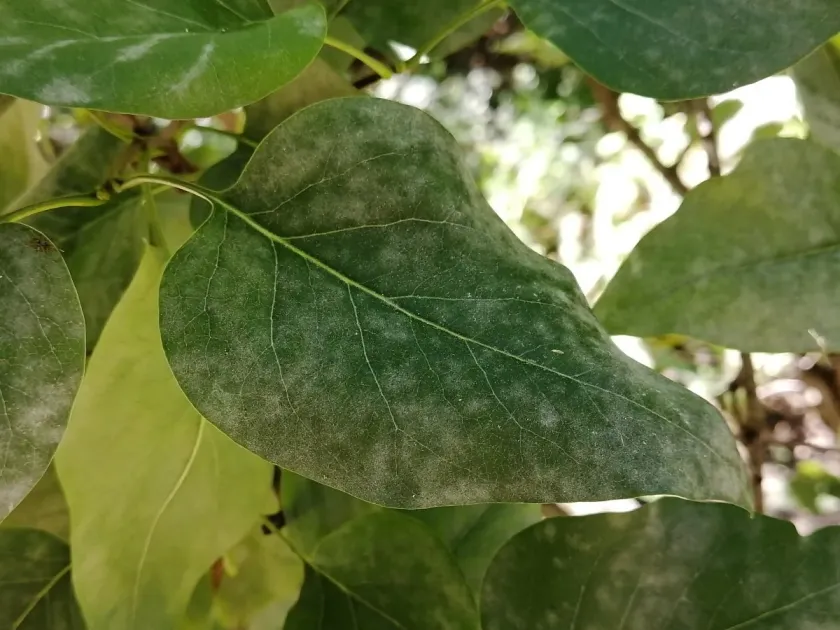
The primary symptom is the appearance of white, web-like fungal growth on both sides of the leaf surface. This eventually thickens into a powdery layer that resembles flour.
As the infection progresses, the white patches may turn greyish or brown. Tiny black dots appear on the surface; these are the fruiting bodies, indicating the advanced stage of the life cycle.
Affected leaves often curl, deform, and lose their vibrant green color. In severe cases, they turn yellow and drop prematurely, significantly impacting the shrub's overall health and appearance.
Young shoots can also be covered in white mycelium, leading to stunted growth, discoloration, and curling of the stem tips, which prevents normal development.
- White powdery patches on leaves.
- Small black specks on older infected areas.
- Curling and deformation of leaf edges.
- Premature yellowing and leaf abscission.
- Stunted growth of new terminal shoots.
Pathogen
The causal agent of lilac powdery mildew is the fungus Erysiphe syringae. It is an obligate biotroph that derives nutrients exclusively from the living cells of its host plant.
This disease belongs to the Erysiphaceae family, characterized by the white powdery fungal growth on leaves. It reproduces via asexual conidia and sexual chasmothecia (formerly known as cleistothecia).
The pathogen overwinters as mycelium within dormant buds or as fruiting bodies on fallen leaves. As spring temperatures rise, the spores spread rapidly to infect young, developing tissues.
While primarily infecting the common lilac (Syringa vulgaris), the fungus can spread to other related shrub species if they are planted in high-density areas with poor airflow.
As a highly specialized parasite, this fungus has evolved a life cycle that perfectly synchronizes with the physiological development of the lilac, ensuring maximum colonization during the growing season.
Conditions for development
Powdery mildew thrives in warm, humid weather conditions. Temperatures ranging from 18 to 25 degrees Celsius are ideal for rapid fungal spore germination and mycelium expansion.
High humidity without direct rainfall favors the fungus, whereas heavy rain can occasionally wash away the conidia, providing a temporary respite for the infected plant.
Poor circulation is a major factor; dense plantings trap moist air around the foliage, creating a microclimate where the fungus can flourish without any interference.
Lack of direct sunlight is another critical factor. Lilacs grown in shade are far more susceptible to infection compared to those exposed to full, drying sunlight for most of the day.
Over-fertilization with nitrogen promotes soft, succulent growth that is physically easier for the fungus to penetrate, making the plant a primary target for Erysiphe syringae.
Why it matters
The presence of the fungal layer blocks essential sunlight from reaching the leaf epidermis, significantly inhibiting photosynthesis and causing the plant to lose energy reserves.
Chronic infection lowers the plant's winter hardiness. An exhausted lilac is much more likely to suffer from frost damage or succumb to secondary pests during the dormant season.
The aesthetic value of the shrub is severely compromised by premature defoliation and the unsightly fungal coating, making it unsuitable for high-end landscape designs.
Reduced photosynthetic activity leads to fewer flower bud initiations, resulting in poor or non-existent blooms during the following spring season.
If left unmanaged for multiple seasons, the persistent stress can weaken the shrub to a point where it may suffer dieback of primary branches and eventually expire.
Protection
Cultural management is the first line of defense. Proper pruning to open up the canopy improves air circulation and increases light penetration, effectively discouraging fungal growth.
Sanitation is crucial; rake and dispose of all fallen leaves at the end of the season to remove the primary source of overwintering inoculum for the following year.
Use fungicides containing sulfur or systemic triazoles at the first sign of white spots. These are highly effective at stopping the spread of the disease across the plant.
When applying chemical treatments, ensure thorough coverage of both sides of the leaves, as the fungus often colonizes the underside before it is visible on top.
Rotate the types of fungicides used to prevent the pathogen from developing resistance. Always follow local horticultural guidelines regarding the safety and application of chemicals.
Discussion
No discussions yet — be the first.