
Powdery mildew of viburnum
Erysiphe hedwigii
Description
Symptoms
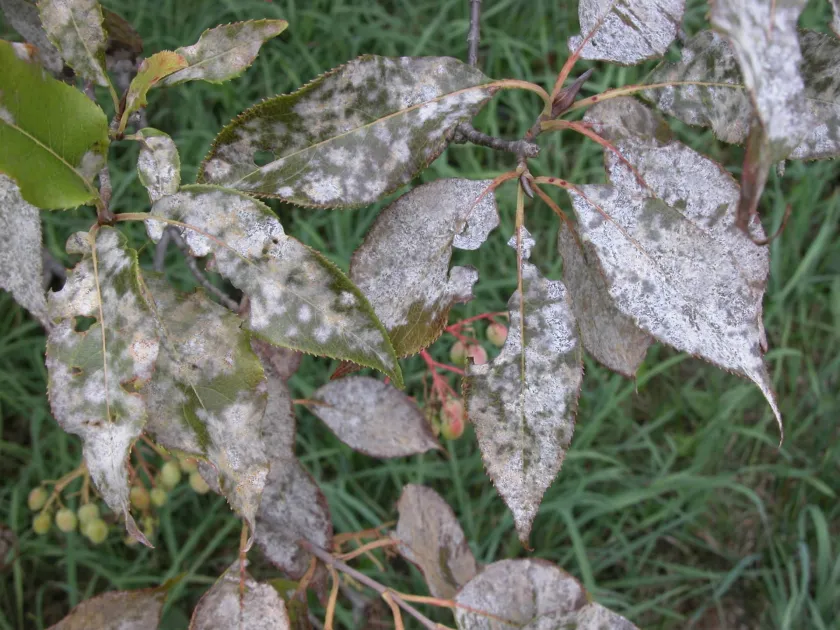
The most distinctive symptom is the appearance of a white, dusty fungal growth on the leaves, petioles, and young stems. This powdery layer consists of the mycelium and spores of the fungus.
As the infection progresses, the leaves may become distorted, curled, or yellowed. In severe cases, the foliage may drop prematurely, causing the plant to lose its typical appearance and vitality.
Young, growing shoots are particularly susceptible; they often become stunted, twisted, and fail to mature properly before the onset of winter dormancy.
Late in the season, tiny black dots (chasmothecia) appear scattered within the white powdery patches. This is a clear indicator that the fungus is preparing to enter its dormant state.
Visible inspection of the leaves reveals that the white powder can be rubbed off, although it will reappear as the fungus continues its vegetative growth on the plant surface.
Pathogen
The causal agent of this disease is the ascomycete fungus Erysiphe hedwigii. It is an obligate parasite that derives its nutrients from the host plant's cells using specialized structures called haustoria.
The fungus is highly host-specific, primarily affecting various species of the Viburnum genus. It spreads across the foliage during the growing season via airborne conidia, which can travel significant distances under windy conditions.
The disease cycle involves both an active growth stage and a dormant overwintering stage. The fungus survives the winter in the form of chasmothecia, which are small black fruiting bodies located on fallen leaves and bark crevices.
When environmental conditions become favorable in the spring, these chasmothecia release ascospores, initiating a new infection cycle on the emerging leaves of the viburnum shrub.
Due to its biological nature, this fungus thrives in high humidity and moderate temperatures, making it a persistent issue in gardens where microclimates are favorable for fungal development.
Conditions for development
The development of powdery mildew is heavily influenced by warm temperatures (18–25°C) and high humidity levels. Unlike many other fungi, it does not require free water on leaf surfaces to germinate.
Fluctuating temperatures between day and night, combined with heavy dew, create an ideal environment for spore germination and rapid mycelial spread across the plant tissue.
Poor air circulation, often caused by overly dense planting or lack of proper pruning, allows humidity to remain trapped around the foliage, significantly increasing infection risk.
High nitrogen fertilization promotes lush, soft vegetative growth. These delicate tissues are more easily penetrated by fungal hyphae, making the plant more vulnerable to Erysiphe hedwigii.
Shaded environments that lack sufficient direct sunlight can weaken the plant's overall defense mechanisms, making it easier for the powdery mildew to take hold and proliferate.
Why it matters
The primary damage results from the interference with photosynthesis. The dense fungal mat blocks sunlight and steals nutrients, leading to decreased vigor and overall health of the viburnum shrub.
Aesthetically, the plant loses its value as the leaves look dirty and damaged. This is particularly problematic for shrubs planted for ornamental purposes in gardens and landscapes.
Because the fungus targets young shoots, it inhibits their hardening. These unhardened tissues are highly susceptible to cold injury during the winter, often leading to dieback of branches.
The plant’s weakened state leaves it vulnerable to opportunistic secondary pests, such as aphids or scale insects, which can further damage an already stressed specimen.
Yield and quality of berries can be severely impacted. The fruit may become smaller, misshapen, or covered in a fungal coating, rendering them unsuitable for consumption or decorative use.
Protection
Effective management begins with good cultural practices. Proper spacing and regular pruning are essential to improve airflow, which prevents the moisture buildup the fungus relies on.
Sanitation is critical; all fallen leaves and infected plant debris must be removed and destroyed (burned or buried) each autumn to eliminate the primary sources of winter inoculum.
Chemical control involving fungicides should be implemented at the first sign of symptoms. Sulfur-based products or systemic triazole fungicides are highly effective at suppressing fungal growth.
- Prune to increase airflow.
- Remove and dispose of infected plant materials.
- Apply appropriate fungicides preventively.
- Maintain balanced soil fertility (avoid excess nitrogen).
- Use biological controls such as neem oil or beneficial microbes.
Consistent monitoring and repeated treatments every 10–14 days are necessary during periods of high humidity to protect new growth and prevent the spread of the infection.
Discussion
No discussions yet — be the first.