
American gooseberry mildew
Erysiphe grossulariae
Description
Symptoms
The earliest symptom is the appearance of white, powdery spots on young leaves and the tips of shoots, which can be easily wiped away during the initial phase.
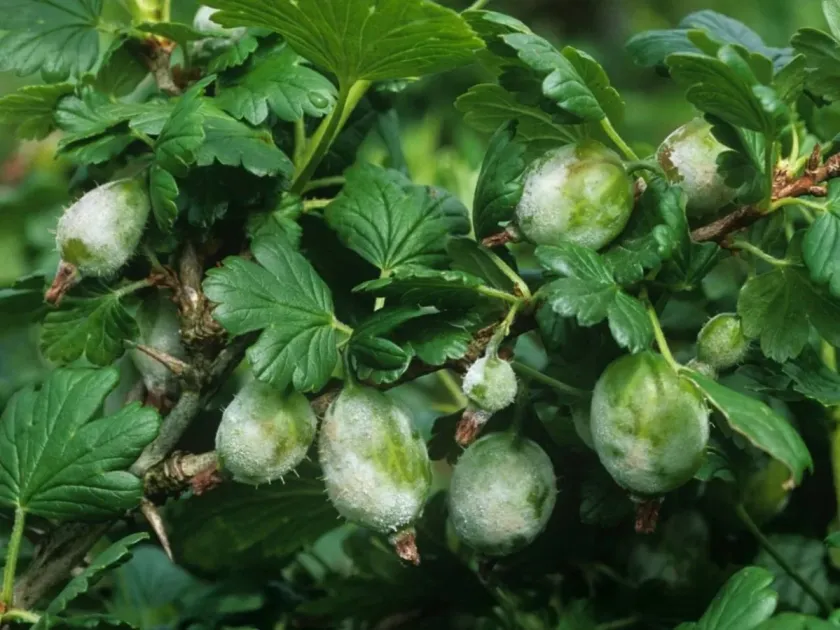
Over time, the white spots thicken into a dense, felt-like, brownish mycelial layer, covering stems and fruits and causing severe tissue deformation.
Infected gooseberry fruits become covered in white patches, stop growing, crack, and frequently fall off before they can reach the stage of maturity.
Affected shoots show stunted growth, curling tips, and chlorotic leaves, which often results in the death of terminal buds and reduced overall plant vigor.
- White powdery coating on foliage and fruits.
- Twisted and stunted shoot tips.
- Dark pinhead-sized spots (cleistothecia) on older mycelium.
- Premature leaf and fruit drop.
Pathogen
The disease is caused by the obligate parasite fungus Podosphaera mors-uvae, which colonizes the epidermal tissues of young leaves, shoots, and developing fruits.
The fungus overwinters as cleistothecia, small dark fruiting bodies found on fallen leaves and within the bark of infected branches, ready to release spores in spring.
The mycelium grows on the plant surface, sending haustoria into the plant cells to absorb nutrients, which eventually leads to tissue dehydration and plant stress.
Conidia are produced in chains and are easily dispersed by wind and splashing rain, allowing the infection to spread rapidly through the orchard during the growing season.
While primarily affecting gooseberries, the pathogen is also a significant threat to black and red currant bushes, making it a widespread problem for berry gardens.
Conditions for development
High relative humidity and frequent rainfall or heavy dew are the primary environmental drivers that favor the rapid development and spread of this fungal disease.
Temperatures ranging between 18°C and 25°C provide optimal conditions for the germination of fungal spores on the surface of young plant tissues.
Poor aeration in dense or unpruned bushes prevents the canopy from drying out, creating a stagnant, humid microclimate that encourages infection development.
Excessive use of nitrogen-rich fertilizers promotes succulent new growth that is highly susceptible to penetration by the fungus's haustoria.
Dry, hot spells can temporarily slow down the disease, but the pathogen persists within the plant tissues, ready to reactivate when humidity levels rise again.
Why it matters
American gooseberry mildew is a destructive disease capable of causing total crop failure if left unmanaged, leading to significant economic losses for growers.
The disease severely impacts the plant's photosynthetic capacity, causing overall weakening and a drastic reduction in the plant's ability to survive harsh winter conditions.
Affected berries lose all market value as they become disfigured, bitter, and covered in an unappealing fungal crust, making them unsuitable for any use.
Chronic infections lead to the cumulative decline of the bush, which may die off completely after several seasons of persistent mildew pressure.
The ease of transmission means that a single infected bush can serve as a reservoir, rapidly endangering the entire planting area and neighboring susceptible species.
Protection
The most effective strategy is the planting of resistant or tolerant gooseberry cultivars, which significantly reduces the reliance on intensive chemical spraying.
Pruning is a critical cultural practice; infected shoot tips must be pruned off and destroyed immediately to eliminate the main overwintering sites of the fungus.
Proper plant spacing and regular thinning of the canopy are essential to ensure adequate airflow and sunlight penetration, which helps keep foliage dry.
Chemical control involving fungicides should be applied proactively or at the very first sign of symptoms, adhering to strictly scheduled intervals during the season.
Biological control using beneficial bacteria like Bacillus subtilis can be used in organic gardens to inhibit the development of the mildew on leaves.
Discussion
No discussions yet — be the first.