
Powdery mildew of spurge
Erysiphe euphorbiicola
Description
Symptoms
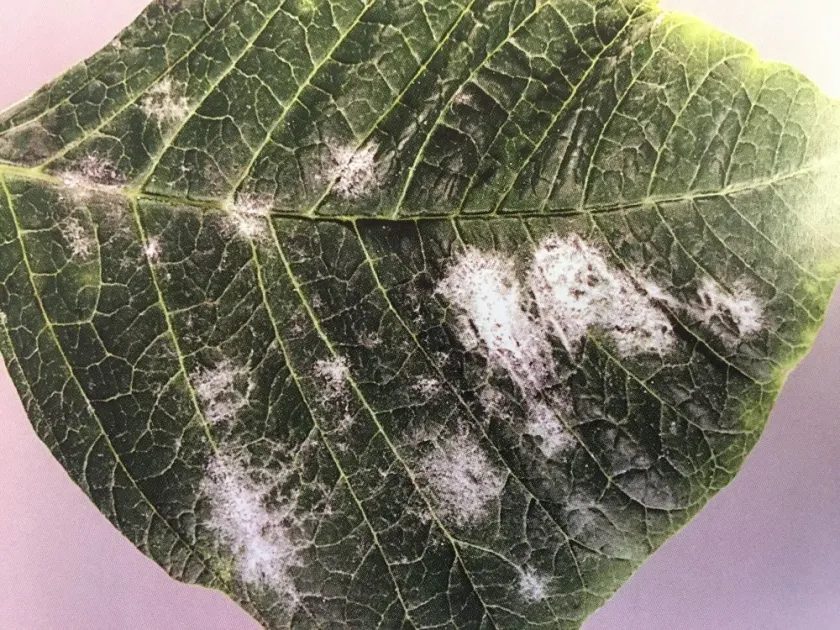
The primary symptom is the emergence of small, white, flour-like patches on the surface of the foliage, which is the hallmark appearance of powdery mildew.
As the infection progresses, these white spots enlarge and coalesce, eventually covering the entire surface of leaves, stems, and sometimes even floral structures with a thick, white fungal web.
Infected leaves begin to yellow, lose turgor pressure, curl up, and drop prematurely, leading to significant defoliation and a thinning of the plant canopy.
Young, actively growing shoots may become stunted, twisted, or distorted, indicating that the fungus is depriving the growing points of vital nutrients.
Upon close inspection, particularly late in the season, tiny black dots may appear within the white fungal mat; these are the cleistothecia representing the sexual stage of the fungus.
Pathogen
The disease is caused by the obligate parasitic fungus Erysiphe euphorbiicola, which specifically targets plants in the Euphorbia genus. As a biotrophic pathogen, it relies on living plant tissues to obtain nutrients through specialized structures known as haustoria.
The fungus develops primarily as an ectophytic mycelium, forming a visible white coating on the surface of the leaves and stems. This white mat consists of hyphae and conidiophores that produce vast amounts of asexual spores.
In the later stages of its life cycle, the fungus produces cleistothecia, small dark fruiting bodies that allow the pathogen to survive during adverse environmental conditions or winter dormancy.
Dissemination occurs mainly through airborne conidia, which are easily transported by wind, water splashes during irrigation, or by contact with gardening tools and insect vectors.
Because the fungus is highly specialized, its presence is a clear indicator of a specific host-pathogen relationship within the Euphorbiaceae family.
Conditions for development
Erysiphe euphorbiicola thrives in environments characterized by moderate temperatures and high humidity, conditions often found in greenhouses and poorly ventilated rooms.
The optimal temperature range for spore germination and rapid mycelial expansion typically falls between 18 and 25 degrees Celsius.
Poor air circulation and overcrowding of plants are significant risk factors, as they create microclimates with stagnant, humid air that favor fungal colonization.
Low light intensity and over-fertilization with nitrogenous compounds weaken the host's physiological defenses, making the tissues more susceptible to fungal entry.
Fluctuating temperatures that lead to dew formation on plant surfaces can also stimulate the release and germination of fungal spores, accelerating the epidemic process.
Why it matters
The infection significantly impairs the plant's ability to perform photosynthesis, as the dense fungal mat physically blocks light from reaching the leaf tissues.
The fungus acts as a resource sink, diverting energy and sugars away from the plant's growth, flowering, and essential physiological processes, leading to overall plant exhaustion.
Severe infestations reduce the aesthetic value of the Euphorbia, which is often the primary reason for cultivating these plants in residential or commercial settings.
The damage caused by the fungus creates entry wounds that can facilitate secondary infections by bacteria or other opportunistic fungi, potentially leading to plant death.
If left unmanaged, the pathogen can spread rapidly through a collection, causing widespread damage and necessitating the culling of entire batches of plants.
Protection
The initial approach to management involves the prompt removal and disposal of infected plant material to reduce the inoculum load within the growing environment.
Systemic fungicides, particularly those containing triazoles or strobilurins, are highly effective at neutralizing the infection by penetrating the leaf tissues and inhibiting fungal growth.
Improving cultural practices, such as ensuring proper spacing between plants and maximizing ventilation, is crucial for changing the microclimate to be less favorable for the fungus.
Balanced fertilization focusing on potassium and phosphorus helps strengthen plant cell walls, thereby increasing resistance to infection by Erysiphe euphorbiicola.
- Sanitary pruning of infected parts
- Application of systemic fungicides
- Enhancing air circulation in the grow area
- Adjusting irrigation to avoid wetting foliage
- Regular monitoring for early signs of infection
Discussion
No discussions yet — be the first.