
Erynia neoaphidis
Erynia neoaphidis
Description
Symptoms
A primary indicator of infection is the altered behavior of aphids: before death, infected insects move to the upper surface of leaves and anchor themselves firmly, which enhances the dispersal of fungal spores.
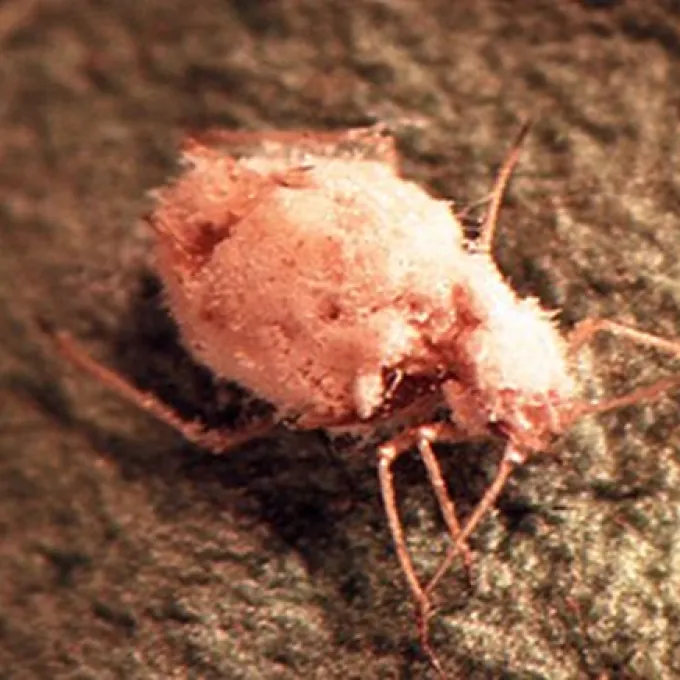
The infected aphid body changes color quickly, often turning brown or grayish. Soon after death, the insect becomes covered with a dense, velvety layer of fungal mycelium, which is clearly visible to the naked eye.
Around the deceased aphid, a characteristic "halo" of discharged conidia may be visible on the leaf surface. This indicates active sporulation and the presence of a fungal outbreak in the colony.
Microscopic examination of affected insects reveals conidiophores protruding through the body segment joints. This structure is a definitive feature distinguishing fungal mycosis from bacterial or viral infections.
In heavily infested colonies, mass mortality results in numerous "mummies" of aphids remaining attached to the foliage. Under dry conditions, these mummies dehydrate and become brittle.
Pathogen
Erynia neoaphidis is a specialized entomopathogenic fungus belonging to the order Entomophthorales. Unlike phytopathogenic fungi that attack plant tissues, this organism is a natural parasite of insects, specifically targeting various species of aphids.
The fungus life cycle begins when conidia attach to the insect's cuticle. After attachment, the fungus germinates and penetrates the host body, using specific enzymes to breach the exoskeleton and absorb nutrients from the hemolymph.
Once inside, the pathogen aggressively colonizes the insect's internal organs. A key characteristic of Erynia neoaphidis is its high host specificity and rapid kill rate, making it an efficient natural regulator of aphid outbreaks.
The fungus can survive adverse conditions by producing resting spores that persist in soil or on plant debris. This capability allows the population to survive periods when aphid density is low, ensuring its presence for future seasons.
Due to its selective nature, Erynia neoaphidis is recognized as an environmentally friendly alternative to broad-spectrum chemical insecticides, promoting biodiversity within agricultural landscapes.
Conditions for development
High relative humidity is the critical factor for the development and spread of Erynia neoaphidis. Optimal infection rates occur when humidity levels are maintained between 80% and 95%.
The fungus thrives within a temperature range of 15°C to 22°C (59°F–72°F). High temperatures combined with low humidity can significantly inhibit the development and transmission of the pathogen.
Host density is essential for the rapid spread of the disease. In dense aphid colonies, conidia are more likely to land on new hosts, accelerating the epidemic process throughout the field.
The presence of free moisture, such as dew or rain, is necessary for spore germination. A thin film of water on the insect's cuticle is required for the pathogen to effectively penetrate the host.
Cultivation practices that result in poor airflow or high humidity within the crop canopy create an ideal microclimate for the natural proliferation of this entomopathogenic fungus.
Why it matters
Erynia neoaphidis is not harmful to plants. Its presence is purely beneficial for crop health, as it functions as a biological control agent that suppresses aphid populations without chemical interference.
Infected aphids stop feeding almost immediately, which protects the plant from sap loss, physical foliage damage, and the transmission of viral diseases frequently carried by aphids.
The economic value of this fungus lies in its ability to manage aphid populations that may have developed resistance to conventional insecticides, providing a sustainable management tool.
While highly effective, the natural mortality rate is dependent on environmental conditions, meaning it may not provide the immediate "knock-down" effect required during massive, rapid-onset pest explosions.
Ultimately, the role of Erynia neoaphidis is to provide long-term stability in the agroecosystem by maintaining pest populations below the economic injury level.
Protection
Encouraging Erynia neoaphidis involves maintaining a balanced ecosystem. Reducing the use of broad-spectrum fungicides and insecticides preserves the natural population of the fungus in the field.
Agricultural practices should support the microclimate conditions favorable to the fungus, such as proper plant spacing and effective weed management to control humidity levels.
Integrated Pest Management (IPM) strategies should include monitoring for signs of naturally occurring mycosis before deciding on chemical intervention.
Ongoing research explores the use of Erynia neoaphidis in commercial biopesticide formulations, although mass production remains a challenge due to the specific requirements of the fungus.
By fostering a healthy environment, farmers can utilize these natural biological controls to achieve consistent yields while minimizing their reliance on synthetic chemical applications.
Discussion
No discussions yet — be the first.