
Epithele typhae
Epithele typhae
Description
Symptoms
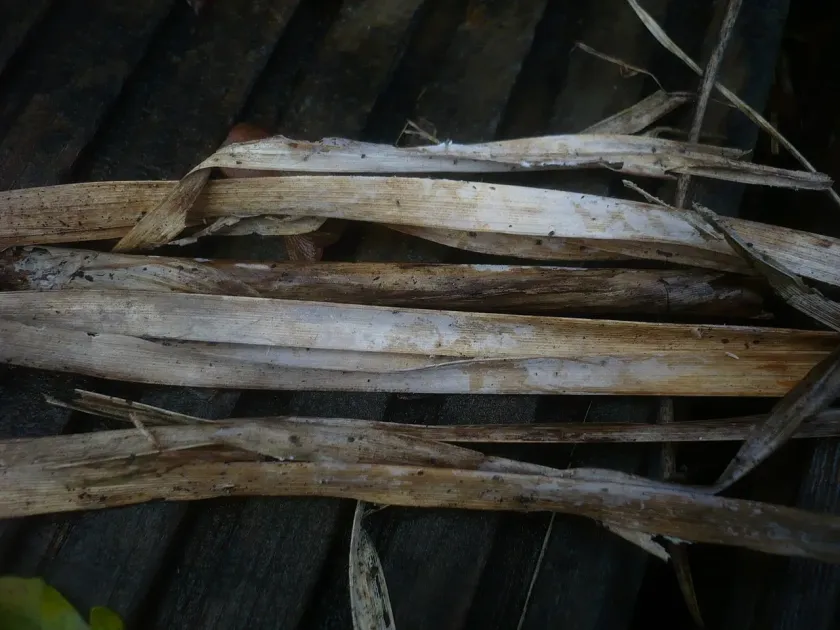
The primary sign of the disease is the appearance of characteristic spots or coatings on the stems and lower leaves of the cattail, which become dense and develop a whitish or creamy hue as the fungus matures.
In areas where spores and fruiting bodies accumulate, the infected plant tissue changes color and texture. Darkening and softening of the tissue are common, indicating an active cellulose degradation process.
As the disease progresses, stems lose their structural integrity, become brittle, and tend to wither prematurely. Visually, this manifests as a large-scale decline of the aerial parts of the plant during the growing season.
Upon closer inspection, tiny fruiting bodies can be observed distributed unevenly across the surface. These may merge into larger patches, covering a significant area of the stem.
Infection often starts from the base of the plant, spreading upwards. In severe cases, complete wilting of individual shoots within dense cattail thickets can be observed.
Pathogen
The causative agent of the disease is the microscopic fungus Epithele typhae, which belongs to the Basidiomycetes class. This pathogen is specialized in infecting tissues of aquatic and semi-aquatic plants, particularly those of the genus Typha (cattails).
The biology of this organism is closely linked to saprotrophic and weak parasitic fungi living on dead or weakened plant parts. The mycelium of the fungus actively penetrates the epidermal layers of the host, gradually decomposing the structure of plant fibers.
During its growth, the fungus forms basidiocarps (fruiting bodies) that appear as flat, membrane-like structures tightly adhering to the surface of the infected stems or leaves.
The life cycle includes a spore-releasing phase where basidiospores are dispersed. These spores act as the primary vector for spreading the infection within plant colonies and to adjacent areas.
Although it is considered a specific species, under favorable environmental conditions, it can colonize large cattail populations, leading to significant degradation of the vegetation cover.
Conditions for development
The development of Epithele typhae is directly dependent on environmental moisture levels. This fungus thrives in areas with stagnant water and high humidity, which are the natural habitats for Typha species.
Optimal temperature ranges for mycelial growth are moderate. Fluctuations in humidity or prolonged periods of rainy weather facilitate the rapid release of spores and the subsequent infection of healthy shoots.
The accumulation of plant debris on the soil surface or in water provides an ideal substrate for the fungus to persist throughout the winter months and spread when conditions become favorable.
Dense thickets or overcrowded cattail populations restrict airflow, creating a microclimate with constant high humidity, which is a critical factor for the rapid spread of the pathogen.
Reduced plant resistance due to water pollution or physical injuries makes it much easier for the fungus to penetrate the host's tissues.
Why it matters
The main impact of the disease is the premature die-back of green biomass, which reduces the productivity of the local ecosystem. Cattails play a vital role in water purification, so their widespread damage negatively affects the aquatic environment.
Economically, if cattails are utilized as fodder or raw material for crafts, fungal infection decreases the quality of the biomass, rendering it unsuitable for processing.
Active fungal growth accelerates stem decay, leading to water pollution by organic waste products, which can trigger secondary ecological issues such as oxygen depletion.
In ornamental water features, the disease ruins the aesthetic appeal, making the plantings look dry and unkempt, which is unacceptable for landscape design purposes.
The spread of the infection can lead to the displacement of healthy plants by other species, altering the structure of the riparian vegetation and reducing overall biodiversity.
Protection
The primary control measure is maintaining the sanitary condition of water bodies and surrounding areas. It is important to timely remove and dispose of severely infected plant debris to limit spore spread.
Thinning out overly dense thickets helps improve air circulation, which lowers the humidity around the shoots and slows down the development of the fungal disease.
When cultivating cattails for commercial or restoration purposes, it is essential to maintain optimal planting density and ensure that water does not stagnate around the root zone.
The use of fungicides in natural water bodies is strictly limited due to environmental risks, therefore emphasis must be placed on cultural management and improving plant resistance.
- Regular sanitation of the shoreline zone.
- Avoiding excessive nitrogen fertilization, which leads to soft and susceptible tissues.
- Continuous monitoring of plant health during high-humidity seasons.
Discussion
No discussions yet — be the first.